Quick Summary
Choosing waterproof rain jackets for OEM and wholesale orders is not only about fabric or price. Buyers should evaluate material type, waterproof coating, seam sealing, breathability, zipper protection, hood design, sizing accuracy, logo customization, packaging, compliance requirements, and supplier stability before bulk production. PU-coated polyester is suitable for lightweight retail and outdoor markets, PVC works better for stronger waterproof protection and workwear use, while TPU laminated fabric is more suitable for premium and comfort-focused rain jacket programs. For importers, distributors, outdoor brands, and promotional buyers, the safest approach is to match the jacket specification to the final market application instead of choosing the cheapest sample. A qualified waterproof rain jacket manufacturer should help buyers reduce leakage risks, sizing problems, branding mistakes, delivery delays, and unsupported sustainability claims before production begins.
When buyers source waterproof rain jackets for retail, outdoor, workwear, school, promotional, or wholesale markets, the real challenge is not simply finding a jacket that looks good in a product photo. The real challenge is choosing the right fabric, coating, seam construction, size range, logo method, packaging plan, compliance support, and production partner before bulk manufacturing begins.
A rain jacket that performs well in light urban rain may not be strong enough for construction workers. A heavy-duty PVC jacket may protect well, but it may feel too stiff for outdoor lifestyle retail. A low-cost promotional jacket may work for short-term event use, but it may not meet the expectations of a private-label brand. This is why OEM and wholesale buyers need a practical selection method instead of choosing only by unit price.
This guide explains how to evaluate materials, waterproof performance, seam sealing, breathability, customization, quality control, sustainability claims, and supplier capability when ordering custom waterproof rain jackets. It is written for importers, distributors, outdoor brands, workwear buyers, promotional product companies, and private-label buyers who need dependable rainwear supply from a professional manufacturer.
Why Waterproof Rain Jackets Are Different from Basic Raincoats
Many buyers use the terms raincoat, rain jacket, rain shell, waterproof jacket, and rainwear interchangeably. In real product development, these products can serve different markets. A basic raincoat is often designed for simple rain protection and wider body coverage. A waterproof rain jacket is usually designed more like outerwear. It needs better movement, better fit, more functional details, and stronger visual appeal for retail or professional use.
Waterproof Rain Jackets Are Designed for Movement, Fit, and Market Positioning
A waterproof rain jacket is usually shorter and more active than a traditional long raincoat. It may include an adjustable hood, front zipper, storm flap, elastic cuffs, ventilation details, taped seams, inner mesh lining, reflective tape, drawstring hem, side pockets, or custom branding. These details help the product fit specific markets such as outdoor retail, urban commuting, industrial workwear, school uniforms, travel accessories, or promotional campaigns.
For OEM rain jackets, the buyer should not treat design details as decoration only. Each detail affects cost, production difficulty, comfort, function, and quality risk. For example, a waterproof zipper may increase product value but also require better workmanship. A detachable hood may improve flexibility, but adds more production steps. Reflective tape may be necessary for workwear but unnecessary for casual retail. The right design should match the target buyer, not just the factory’s standard sample.
When Buyers Should Choose Rain Jackets Instead of Rain Ponchos or Rain Suits
Rain ponchos are practical for events, tourism, emergency use, stadiums, and promotional campaigns because they are easy to pack and distribute. Rain suits are better for full-body protection in workwear or heavy rain conditions. Waterproof rain jackets are more suitable when the product needs a balance of protection, style, comfort, and repeat use.
| Buyer Need | Better Product Choice | Reason |
|---|---|---|
| Outdoor retail apparel | Waterproof rain jackets | Better fit, style, comfort, and brand presentation. |
| Event giveaway | Rain ponchos | Lightweight, compact, cost-efficient, and easy to distribute. |
| Heavy-duty workwear | Rain suits or reinforced rain jackets | Stronger protection and more durable construction. |
| Urban commuting | Lightweight waterproof jackets | More comfortable for daily wear and easier to style. |
| School or kids market | Kids waterproof rain jackets | Better fit, safer details, and more comfortable movement. |
Key Materials Used in Waterproof Rain Jackets
Material selection is one of the most important decisions in OEM rainwear production. The material affects waterproof performance, hand feel, weight, durability, appearance, retail price positioning, sustainability claims, and final user comfort. A good waterproof rain jacket manufacturer should not push one material for every buyer. Instead, the supplier should recommend materials based on application, target market, expected product life, and budget level.
PU-Coated Polyester for Lightweight Retail and Outdoor Use
PU-coated polyester is widely used for lightweight waterproof jackets because it offers a good balance of appearance, flexibility, color options, and production stability. It is suitable for outdoor lifestyle brands, travel rain jackets, commuter jackets, retail collections, and private-label rainwear programs. Compared with heavier materials, PU-coated polyester can create a softer wearing experience and a more apparel-like look.
For buyers developing custom waterproof rain jackets, PU-coated polyester is often a practical starting point. It can support different colors, printed logos, linings, adjustable hoods, elastic cuffs, and retail packaging. However, buyers should still confirm coating quality, seam sealing, fabric weight, and testing requirements. A jacket made from PU-coated fabric may still leak if the seams are not sealed properly.
PVC Rain Jackets for Strong Waterproof Protection
PVC is often used for rainwear that needs strong waterproof protection, easy cleaning, and practical durability. It can be suitable for industrial rainwear, utility workwear, fishing rainwear, traffic control use, and markets where waterproof protection is more important than a soft apparel feel. PVC rain jackets may also be selected for certain economy or heavy-duty product lines.
The main advantage of PVC is its strong water resistance. The limitation is that it may feel heavier or less breathable than lighter coated fabrics. For this reason, PVC should be chosen according to the final market. It is not always the best choice for fashion retail, but it can be a strong choice for practical protection and tough working environments.
TPU Laminated Fabric for Higher Comfort and Performance
TPU laminated fabric is often used when buyers want a higher-performance jacket with better flexibility, comfort, and potential waterproof-breathable characteristics. It may be suitable for higher-value outdoor rain jackets, premium retail programs, and private-label collections where the product needs to feel more technical and more comfortable.
TPU options may cost more than basic coated fabrics, so they should be matched with the right market. If the buyer sells through retail stores, outdoor channels, or branded e-commerce, TPU can help improve product positioning. If the buyer needs low-cost promotional rainwear, TPU may be unnecessary.
Recycled or Eco-Oriented Fabrics for Sustainability-Focused Buyers
Sustainability is becoming more important in the textile and apparel industry, especially for buyers selling into Europe, North America, and branded retail channels. Buyers may request recycled polyester, reduced-risk chemical finishing, verified material claims, recyclable packaging, or documentation that supports environmental statements.
However, sustainability should not be treated as a simple marketing label. Claims such as “eco-friendly,” “green,” or “sustainable” need supporting evidence. Buyers should ask their supplier what material is being used, whether recycled content can be documented, whether chemical restrictions are considered, and whether product labels and packaging claims match the actual material. Unsupported sustainability claims may create brand risk, retailer risk, and consumer trust issues.
| Material Option | Best For | Main Advantage | Buyer Watch Point |
|---|---|---|---|
| PU-coated polyester | Retail, outdoor, commuter, travel | Lightweight, flexible, good appearance | Confirm coating quality and seam sealing. |
| PVC fabric | Workwear, industrial use, strong rain protection | Strong waterproof performance and easy cleaning | May be heavier or less breathable. |
| TPU laminated fabric | Premium rain jackets and technical outerwear | Comfort, flexibility, and higher product positioning | Higher cost should match the target market. |
| Recycled polyester options | Sustainability-focused brands | Supports more responsible material claims | Claims should be supported by documentation. |
Waterproof Rating, Seam Sealing, and Breathability Explained
Waterproof performance does not come from fabric alone. A jacket can use waterproof fabric and still fail in real use if rain enters through stitching holes, zipper openings, hood gaps, sleeve cuffs, or poor construction. For OEM buyers, the most common mistake is asking only for “waterproof material” without confirming the whole garment structure.
Waterproof Rating: Why Fabric Alone Is Not Enough
Waterproof rating is often discussed through water pressure resistance, but buyers should avoid treating one number as the whole story. A higher waterproof rating can be useful, but the final performance also depends on seam sealing, coating consistency, fabric construction, garment design, and quality control. For light city rain, a moderate specification may be enough. For outdoor work, longer exposure, or heavier rainfall, stronger construction is required.
When sourcing wholesale rain jackets, buyers should clearly explain the expected use. Will the jacket be worn for short commutes, outdoor sports, school use, road work, logistics, fishing, tourism, or promotional events? A supplier can only recommend the right structure when the application is clear.
Seam Sealing Is Critical for OEM Rain Jackets
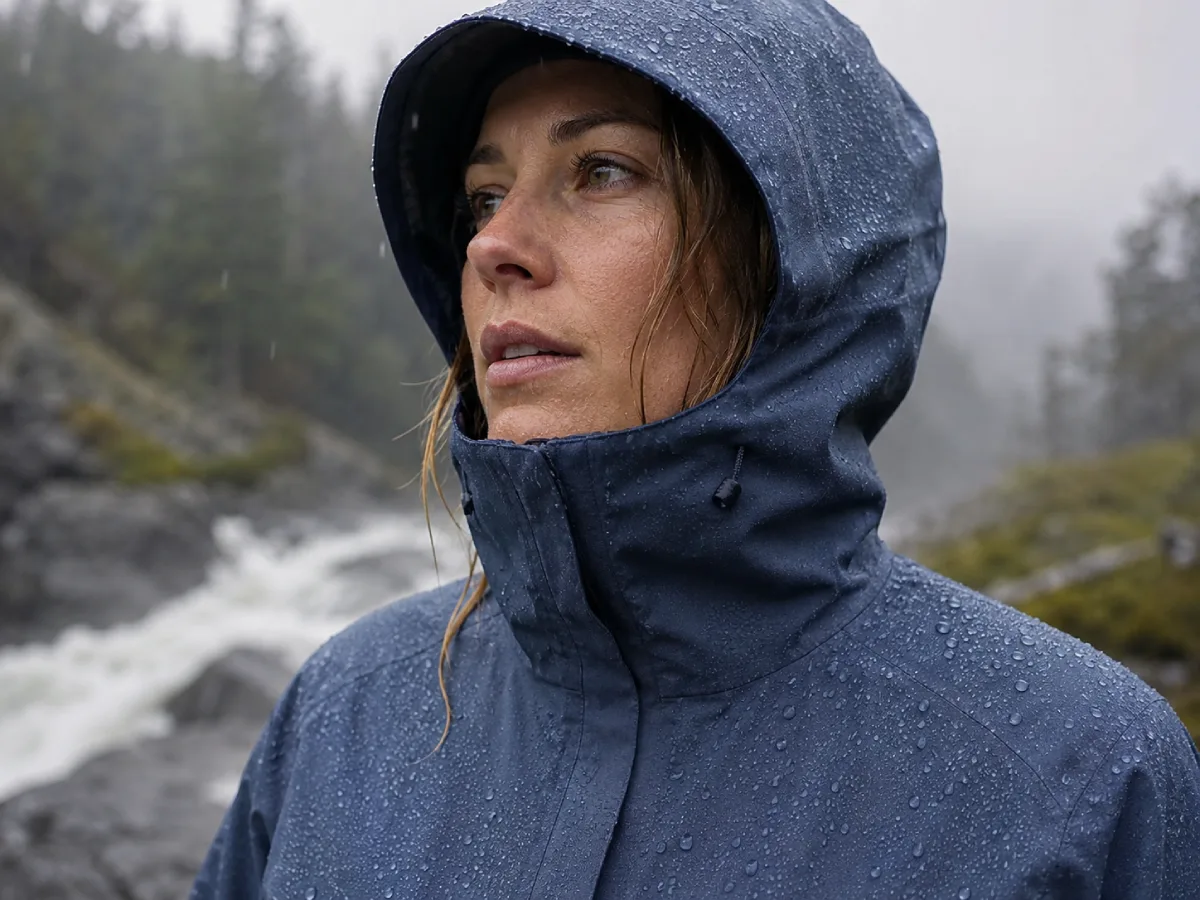
Seam sealing is one of the most important details in waterproof rain jacket production. Sewing creates needle holes in the fabric. If those holes are not sealed properly, water can enter through the shoulder seams, side seams, sleeve seams, hood seams, or zipper area. This is why a jacket may appear waterproof in fabric testing but still leak during real use.
For outdoor brands and workwear buyers, seam sealing should be confirmed during the sample stage. Buyers should check whether the supplier can apply seam tape consistently, whether the seam tape matches the fabric, whether curved areas are handled correctly, and whether the finished sample is tested before mass production. Ignoring this step can lead to customer complaints that are expensive to solve after shipment.
Breathability Matters for Retail and Outdoor Markets
Breathability helps reduce moisture buildup inside the jacket. This is especially important for outdoor, travel, commuting, and active-use products. If the jacket blocks rain but traps too much heat and sweat, the wearer may feel uncomfortable and assume the jacket is “wet inside,” even when rain has not penetrated from outside.
For industrial rainwear, breathability may be less important than durability and water protection. For lifestyle retail, comfort can strongly affect customer reviews and repeat purchases. Buyers should decide whether breathability is a main selling point or a secondary feature before choosing material and construction.
| Specification Factor | What It Means | Buyer Risk If Ignored |
|---|---|---|
| Waterproof coating | Helps block rain penetration through the fabric surface. | The fabric may wet through faster than expected. |
| Seam sealing | Helps prevent water from entering stitch holes. | The jacket may leak at the shoulders, sleeves, or side seams. |
| Breathability | Helps reduce inner moisture buildup during movement. | Wearers may feel hot, wet, or uncomfortable. |
| Zipper protection | Reduces water entry at the front opening. | Rain may enter through the zipper area. |
| Hood adjustment | Improves coverage and fit around the head. | Poor hood fit can reduce actual rain protection. |
| Sleeve cuff design | Helps reduce water entry at the wrist. | Water may run into sleeves during work or movement. |
How to Choose Waterproof Rain Jackets by Market Application
The best rain jacket for one market may be wrong for another. A successful OEM project starts with understanding where the jacket will be sold and how it will be used. This is also where many buyers make costly mistakes. They select a good-looking sample without confirming whether the specification matches the customer group.
For Outdoor Brands
Outdoor brands usually need a more refined balance of waterproof performance, comfort, fit, and appearance. The jacket should feel light enough for travel and active use, but strong enough to handle repeated wear. Adjustable hoods, functional pockets, smooth zippers, breathable fabric options, and clean stitching can improve product value.
For this market, buyers should avoid overly stiff materials unless the product is designed for heavy-duty use. A jacket that looks technical but feels uncomfortable may receive poor reviews. Outdoor customers often care about freedom of movement, packability, and whether the jacket remains comfortable after longer wear.
For Workwear and Industrial Buyers
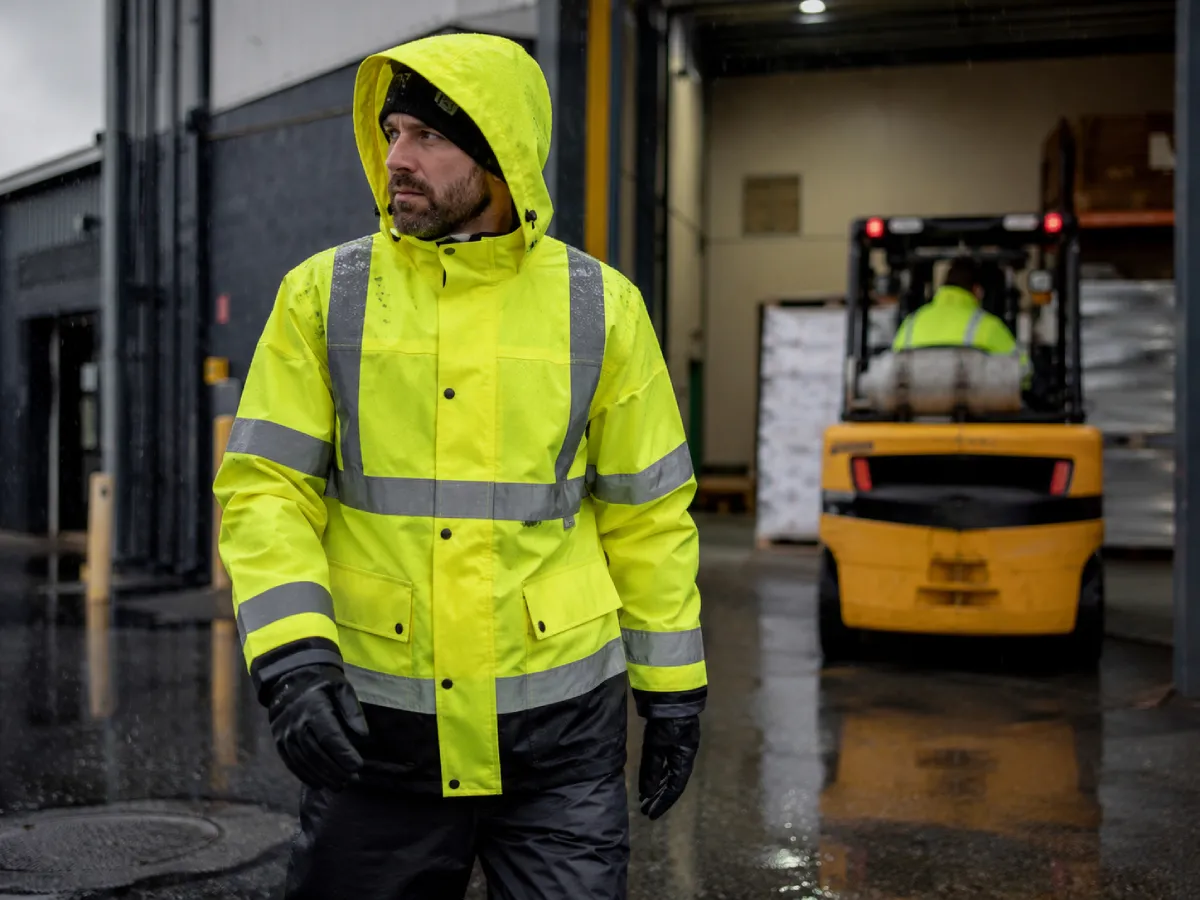
Workwear buyers need durability, protection, and practical safety details. Depending on the application, the jacket may require high-visibility colors, reflective tape, reinforced seams, snap closures, larger sizing, stronger zippers, or thicker materials. Workers may use these jackets in road construction, logistics, airport ground service, utility maintenance, traffic control, agriculture, or outdoor facility management.
In this market, appearance still matters, but product failure matters more. If the jacket leaks, tears, restricts movement, or loses reflective performance too quickly, the buyer may face complaints from end users. A good manufacturer should help workwear buyers balance protection, mobility, durability, and cost.
For Wholesale and Import Distributors
Wholesale buyers often need products that are easy to reorder and easy to distribute. Stable sizing, repeatable color, reliable carton packing, barcode support, clear labeling, and consistent product specifications are important. A distributor may not need the most advanced fabric, but they need a product line that can be sold repeatedly without frequent quality surprises.
For wholesale rain jackets, buyers should ask whether the supplier can maintain fabric consistency for repeat orders, whether multiple colors can be produced under the same size chart, and whether mixed-size cartons can be arranged. These details directly affect inventory planning and customer satisfaction.
For Promotional and Event Orders
Promotional rain jackets are used for brand campaigns, outdoor events, tourism programs, sports activities, school events, and company giveaways. The product may need a printed logo, custom color, compact packaging, fast delivery, and controlled production cost. In this case, the buyer should focus on practical design, reliable logo printing, and clear packaging requirements.
The biggest mistake in promotional rainwear sourcing is overcomplicating the product. If the order needs to be delivered quickly and used for short-term campaigns, the design should be simple and production-friendly. If the buyer wants a higher-value branded jacket, then better fabric, better finishing, and retail-style packaging should be considered.
OEM and Custom Options Buyers Should Confirm Before Production
Customization can increase product value, but it can also create risk if details are unclear. Buyers should confirm customization requirements before sampling, not after production has started. A professional supplier should guide buyers through fabric, color, logo, size, trim, packaging, and inspection details.
Fabric Weight, Coating, and Hand Feel
Fabric weight affects cost, comfort, durability, and perceived quality. A fabric that is too thin may feel cheap and may not perform well in repeated use. A fabric that is too heavy may feel hot or stiff, especially for outdoor retail and travel products. Coating quality affects water resistance, flexibility, and long-term performance.
Hand feel is also important. Buyers often focus on technical data but forget that the end user touches and wears the product. If the jacket feels noisy, sticky, stiff, or uncomfortable, it may hurt customer satisfaction even if the waterproof function is acceptable.
Logo Printing and Branding Methods
Common branding options include screen printing, heat transfer, embroidery, woven labels, rubber patches, hangtags, care labels, and custom packaging. Each method has a different effect on appearance, cost, durability, and production time. For waterproof jackets, logo placement should also consider fabric coating and seam construction.
For example, embroidery may look premium, but it creates needle holes and may not be suitable for all waterproof areas unless handled correctly. Heat transfer can create a clean, branded look, but the supplier should confirm whether the transfer material works well with the selected fabric. Screen printing may be efficient for promotional orders, but artwork and color accuracy must be confirmed before mass production.
Size Chart and Fit Confirmation
Size problems are one of the most common causes of complaints in apparel sourcing. Buyers should confirm body measurements, garment measurements, tolerance, fit style, and size range. A rain jacket worn over normal clothing may need a different fit from a fashion jacket. Workwear jackets may need extra room for movement or layering.
Before approving mass production, buyers should review samples carefully. If the product is sold in Europe or North America, the size standard should match local expectations. A jacket that fits too small may create returns. A jacket that is too large may look poor and reduce perceived quality.
Color Matching and Bulk Consistency
Color is not only a design issue. It affects brand identity, retail consistency, and repeat order planning. Buyers should provide Pantone references or approved color samples when possible. For repeat orders, buyers should also ask whether the supplier can maintain similar colors across production batches.
High-visibility colors, dark colors, and special brand colors require extra attention. If the color shifts too much between samples and bulk production, the buyer may face product rejection or inconsistent shelf presentation. This is especially important for private-label programs and uniform projects.
Packaging for Retail, Wholesale, and E-Commerce
Packaging should match the sales channel. Retail buyers may need individual polybags, hangtags, barcode stickers, size labels, and carton marks. E-commerce sellers may need compact packaging and clear SKU identification. Wholesale buyers may need mixed-size cartons or specific packing ratios. Promotional buyers may need custom-printed bags or event-ready packaging.
Poor packaging can damage the buyer's experience even when the jacket itself is acceptable. Incorrect labels, unclear carton marks, or mixed sizes packed incorrectly can create warehouse problems and delivery delays. For OEM orders, packaging details should be treated as part of the product specification.
Common Mistakes Buyers Make When Ordering Waterproof Rain Jackets
Most sourcing problems happen before production, not during production. Buyers who only compare unit price may miss important specification differences. Two jackets may look similar in photos, but the material, coating, seam sealing, zipper, lining, printing method, packing, and inspection standard can be completely different.
Mistake 1: Choosing the Cheapest Fabric Without Testing
A cheaper fabric may reduce the first quotation, but it can create higher costs later. Poor fabric may feel thin, wrinkle easily, smell unpleasant, lose coating performance, or fail during use. For retail buyers, this may lead to negative reviews. For workwear buyers, it may lead to practical performance complaints. For distributors, it may create return pressure.
Buyers should compare fabric options with samples, not only price sheets. If the product will be sold as a reliable waterproof jacket, the material must support that promise.
Mistake 2: Ignoring Seam Sealing
Seam sealing is often invisible in product photos, but it can decide whether the jacket truly works in the rain. A buyer may choose waterproof fabric and still receive complaints if water enters through stitch holes. This is especially common around shoulders, sleeves, hood seams, and front openings.
For higher-value OEM rain jackets, seam sealing should be discussed clearly during sample development. Buyers should ask whether all major seams need sealing or only critical seams. The answer depends on target price, application, and expected performance level.
Mistake 3: Copying a Retail Design Without Considering Bulk Production
Some buyers provide a complex reference design without considering production difficulty. Multiple panels, special pockets, unusual zippers, complicated hood structures, mixed materials, and premium trims may look attractive, but they can increase cost, sample time, defect risk, and delivery pressure.
A better approach is to identify which design elements are truly necessary for the target market. Keep the features that affect function and brand value. Simplify the details that increase risk without improving buyer satisfaction.
Mistake 4: Using Vague Eco-Friendly Claims
Sustainability is important, but vague claims can create risk. Buyers should avoid using broad claims such as “100% eco-friendly” or “green rain jacket” unless they have clear documentation. Environmental claims should be specific, supportable, and connected to actual materials or packaging.
For example, “recycled polyester shell fabric” is more specific than “eco-friendly jacket.” “Recyclable packaging” is more specific than “green packaging.” If a buyer plans to sell into regulated retail channels, the claim should be reviewed carefully before printing hangtags, labels, or online product descriptions.
Mistake 5: Not Checking Market Compliance Before Ordering
Compliance requirements may include textile fiber labeling, care labels, chemical restrictions, packaging rules, and retailer-specific documentation. Buyers selling into the EU, US, UK, or major retail chains should confirm requirements before bulk production. A factory can support production, but the buyer should also understand the destination market’s expectations.
For waterproof apparel, chemical restrictions and sustainability claims are becoming more important. Buyers should ask early about material documentation, labeling support, and whether the supplier can cooperate with required tests. Waiting until the goods are ready to ship may be too late.
Compliance and Sustainability Trends Affecting Waterproof Rain Jackets
Rainwear buyers are facing a changing market. Buyers no longer evaluate only price, fabric, and delivery. They also need to consider product durability, chemical management, textile labeling, environmental claims, and retailer documentation. These topics are especially important for brands selling into Europe and North America.
Textile Labelling Requirements for Export Markets
Textile products sold in many markets need clear labeling that identifies fiber composition and care information. For EU markets, textile products generally need to show fiber composition when marketed to consumers. For importers and private-label buyers, this means labels should be planned before production, not treated as an afterthought.
Label mistakes may delay shipment, create retail compliance problems, or require repacking. Buyers should confirm label language, fiber names, care symbols, country of origin requirements, and packaging information according to the destination market.
PFAS-Free Waterproofing Is Becoming More Important
PFAS-related restrictions are becoming more important in textile and apparel supply chains. Waterproof and water-repellent products are often reviewed carefully because some historical finishing technologies used fluorinated chemicals. Buyers should ask suppliers what water-repellent treatment is used, whether PFAS-free options are available, and whether supporting documents can be provided when required.
This does not mean every rain jacket requires the same treatment. It means buyers should match chemical requirements with market expectations. If the product is sold to large retailers, outdoor brands, or regulated markets, documentation and chemical management may become part of the buying decision.
Sustainability Claims Need Evidence, Not Just Nice Words
The market is moving toward more responsible textiles, but buyers should avoid turning sustainability into empty language. If a product uses recycled polyester, the buyer should ask how the recycled content is documented. If the product claims reduced environmental impact, the buyer should understand what exactly is reduced: material impact, packaging waste, chemical concern, product lifespan, or something else.
Clear evidence helps protect the buyer’s brand. It also helps sales teams explain the product more confidently. For OEM rainwear projects, a supplier that can support material options, labels, packaging, and testing discussions is more valuable than a supplier that only offers a low quotation.
If You Need X, Choose Y: Practical Selection Guide
The easiest way to select a waterproof rain jacket is to start from the application. Do not ask, “Which jacket is best?” Ask, “Which jacket is best for this customer, this market, this price level, and this usage condition?” The table below gives a practical starting point.
| If Your Order Is For… | Choose This Type of Waterproof Rain Jacket | Why It Works |
|---|---|---|
| Outdoor retail brand | Lightweight PU-coated or TPU laminated jacket | Balances comfort, appearance, and waterproof performance. |
| Industrial workwear | Heavy-duty PVC or reinforced waterproof jacket | Supports stronger protection and practical durability. |
| Promotional campaign | Cost-effective custom-printed rain jacket | Works well for logo exposure, event use, and controlled budget. |
| School or kids market | Safer, lighter, more comfortable waterproof jacket | Improves comfort and movement for children. |
| Wholesale distribution | Standardized design with stable size and packaging | Makes repeat orders and inventory management easier. |
| Premium private label | Better fabric, sealed seams, custom trims, retail packaging | Creates stronger brand value and better customer experience. |
How to Evaluate a Waterproof Rain Jacket Manufacturer
A strong supplier is not only a factory that can sew jackets. A strong supplier can help buyers reduce mistakes before production starts. The right waterproof rain jacket manufacturer should understand materials, sampling, sizing, waterproof construction, packaging, quality control, and export communication.
Check Product Category Experience
Rainwear has different production details from ordinary apparel. Waterproof fabrics, coated materials, seam sealing, logo printing on coated surfaces, packaging moisture control, and testing requirements all need experience. Buyers should check whether the factory regularly produces rain jackets, ponchos, rain suits, or other waterproof garments.
A supplier with category experience can usually provide more practical suggestions. They can warn buyers when a design detail may cause leakage, when a fabric may be too stiff, when a logo method may not bond well, or when a packaging plan may increase labor cost.
Ask for Material and Sample Options
A reliable supplier should be able to offer different material options instead of one generic quotation. Buyers should request samples or swatches for different fabric weights, coatings, colors, linings, and trims. This allows the buyer to compare hand feel, appearance, function, and cost before making a decision.
Sample development is also the best stage to test communication. If the supplier cannot explain material differences clearly during sampling, the buyer may face larger problems during bulk production.
Confirm OEM and ODM Capabilities
OEM and ODM capability matters when buyers need custom colors, private labels, special sizing, logo application, custom packaging, or new product development. Some suppliers are good at producing standard products but weak in customization. Others can support fabric sourcing, design adjustment, sample development, and packaging planning.
Buyers planning OEM rain jackets should confirm which services are available: pattern adjustment, size grading, color matching, logo method recommendation, trim sourcing, label development, package design, and pre-production sample approval.
Review Quality Control Process
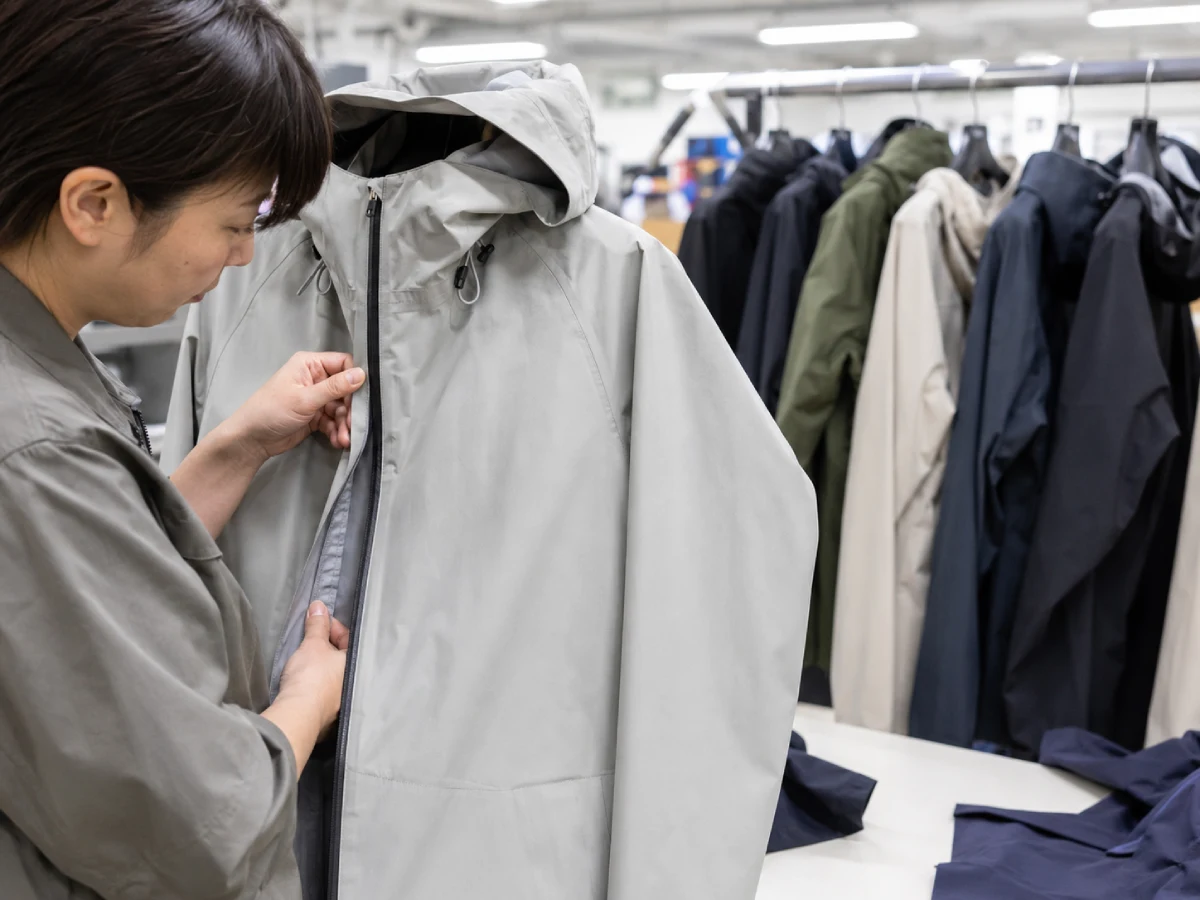
Quality control should cover more than final packing inspection. A practical process may include incoming material inspection, color checking, cutting inspection, sewing inspection, seam sealing review, logo quality checking, measurement inspection, finished garment review, carton packing inspection, and pre-shipment approval.
For rain jackets, buyers should pay special attention to seam sealing, zipper protection, hood construction, sleeve cuffs, pocket openings, and measurement consistency. These details have a direct effect on user experience.
Check Export Support and Communication
Export support is important for OEM and wholesale orders. Buyers may need carton marks, packing lists, invoices, label information, product photos, inspection support, and shipping coordination. Good communication reduces misunderstanding and helps solve problems before they become expensive.
For long-term buyers, supplier communication is part of product quality. A factory that replies clearly, confirms details in writing, and provides practical suggestions can save time and reduce risk across multiple orders.
Why Work with a Rainwear Supplier in China for OEM Orders
China has a mature rainwear supply chain that includes coated fabrics, accessories, sewing production, printing, packaging, and export logistics. For buyers who need multiple styles, colors, sizes, logo options, and packaging plans, working with an experienced rainwear supplier in China can make product development more efficient.
The main advantage is flexibility. Buyers can develop lightweight retail rain jackets, workwear rain jackets, promotional rain jackets, kids rainwear, rain ponchos, rain suits, and custom private-label programs with different materials and packaging requirements. This flexibility is valuable for importers and distributors who need to serve different customer groups.
YOUNGSTAR supports OEM and wholesale rainwear projects with material selection, sample development, logo customization, size planning, and export packaging. For buyers developing custom waterproof rain jackets, the most efficient starting point is to share the target market, expected quantity, preferred material, logo requirements, size range, packaging needs, and delivery schedule. With clear project information, the supplier can recommend a more suitable production solution before sampling begins.
Final Recommendation: Choose Based on Market, Not Only Price
The right waterproof rain jacket is not always the cheapest option, the thickest option, or the most technical option. It is the option that fits the buyer’s market. Outdoor brands should prioritize comfort, appearance, movement, and reliable waterproof construction. Workwear buyers should prioritize durability, safety details, seam strength, and practical protection. Promotional buyers should prioritize logo visibility, delivery speed, packaging, and cost control. Wholesale distributors should prioritize stable sizing, repeatable production, and reliable supply.
Before placing an OEM or wholesale order, buyers should confirm the application first, then select the material, waterproof construction, customization, packaging, and quality control standards. This approach reduces sourcing risk and helps avoid complaints after shipment. A professional manufacturer should not only quote a price. It should help buyers choose a jacket that can actually serve the market.
Buyers planning OEM or wholesale waterproof rain jacket orders can start by preparing a simple project brief: target country, sales channel, application, quantity, fabric preference, color, logo method, size range, packaging requirement, and expected delivery time. With these details, YOUNGSTAR can help recommend suitable rainwear options before sampling and bulk production.
PREGUNTAS FRECUENTES
1. What is the best material for waterproof rain jackets?
There is no single best material for all waterproof rain jackets. PU-coated polyester is suitable for lightweight retail and outdoor jackets, PVC is often used for stronger waterproof protection and workwear, and TPU laminated fabric is a better option for higher-comfort or premium rain jacket programs. Buyers should choose the material based on target market, comfort expectations, durability needs, and budget.
2. Are waterproof rain jackets better than regular raincoats?
Waterproof rain jackets are better when the buyer needs a more fitted, stylish, and functional product for outdoor, retail, commuting, or workwear markets. Regular raincoats may be better for simple rain coverage, basic protection, or lower-cost rainwear programs. The better choice depends on how the product will be used and who will wear it.
3. Can waterproof rain jackets be customized with a logo?
Yes, waterproof rain jackets can be customized with logos through screen printing, heat transfer, embroidery, woven labels, patches, hangtags, and custom packaging. Buyers should confirm the logo method during sampling because different fabrics and coatings may require different branding solutions.
4. What should buyers check before ordering OEM rain jackets?
Before ordering OEM rain jackets, buyers should check fabric type, coating, waterproof performance, seam sealing, zipper protection, hood design, sleeve cuffs, size chart, logo method, sample approval, packaging, lead time, and quality control process. These details help reduce leakage complaints, sizing problems, production delays, and retail rejection risks.
5. What is the difference between waterproof and water-resistant jackets?
Waterproof jackets are designed to block rain penetration more effectively, especially when fabric coating and seam construction are properly handled. Water-resistant jackets can resist light moisture or short exposure, but they may not perform well in heavier or longer rain. Buyers should choose waterproof jackets when rain protection is a core product requirement.
6. How do I choose a waterproof rain jacket manufacturer in China?
To choose a waterproof rain jacket manufacturer in China, buyers should review the supplier’s rainwear experience, material options, sample development ability, OEM customization support, seam sealing knowledge, quality control process, export experience, packaging support, and communication efficiency. A good supplier should help buyers match the jacket specification to the target market instead of only offering the lowest price.
References
1. “EU Strategy for Sustainable and Circular Textiles,” European Commission, European Commission Environment.
2. “Textile Label,” European Commission, Your Europe Business Portal.
3. “OEKO-TEX New Regulations 2025,” OEKO-TEX Association, OEKO-TEX Press Release.
4. “OEKO-TEX New Regulations 2026,” Hohenstein, OEKO-TEX Annual Updates.
5. “Green Guides: Environmental Marketing Claims,” Federal Trade Commission, FTC Business Guidance.
6. “Guides for the Use of Environmental Marketing Claims,” Federal Trade Commission, FTC Guidance Document.
7. “Textile Labelling Regulations in the European Union and the United Kingdom,” Eurofins, Textile and Leather Articles.
8. “Preferred Fiber and Materials Market Report,” Textile Exchange, Industry Market Report.
Final Buyer Insight: How to Choose Waterproof Rain Jackets with Lower Sourcing Risk
How should buyers choose waterproof rain jackets for OEM and wholesale orders?
Buyers should begin with the target market, not the product photo. A jacket for outdoor retail needs comfort, fit, appearance, breathability, and reliable seam sealing. A jacket for industrial workwear needs stronger fabric, reinforced construction, reflective details, and practical water protection. A jacket for promotional campaigns needs controlled cost, clear logo placement, compact packaging, and stable delivery. Once the application is clear, buyers can compare fabric, coating, seam treatment, zipper protection, hood structure, sizing, packaging, and testing requirements in a more accurate way.
Why does material selection affect both performance and buyer satisfaction?
The material determines how the jacket feels, how it protects against rain, how long it can be used, how easily it can be customized, and how the final buyer will judge product value. PU-coated polyester is often chosen for lightweight and retail-friendly custom waterproof rain jackets. PVC is more practical for heavy rain protection, industrial use, and easy-clean workwear. TPU laminated fabric is better suited for premium rainwear programs that require softer comfort and stronger product positioning. Choosing the wrong material may lead to poor comfort, weak waterproof performance, higher return rates, or customer complaints after shipment.
What makes a waterproof rain jacket suitable for international markets?
A market-ready waterproof rain jacket should combine functional performance, stable production quality, clear labeling, practical packaging, and responsible material claims. Buyers selling into Europe, North America, or branded retail channels should pay attention to textile labeling, care instructions, fiber composition, chemical restrictions, and environmental claim accuracy. A jacket that looks acceptable in a sample room may still create problems if the label is incomplete, the packaging is unclear, the seam sealing is weak, or sustainability claims cannot be supported by proper documentation.
What options should buyers compare before confirming OEM rain jackets?
Buyers should compare at least four option groups before confirming OEM rain jackets: material options, construction options, branding options, and packing options. Material options include PU-coated polyester, PVC, TPU laminated fabric, recycled polyester, and different fabric weights. Construction options include seam sealing, hood adjustment, cuff design, zipper protection, pocket structure, lining, and ventilation. Branding options include screen printing, heat transfer, embroidery, woven labels, hangtags, and custom packaging. Packing options include individual polybags, retail hangtags, barcode labels, mixed-size cartons, and export carton marks. These details should be confirmed during sampling, not after bulk production starts.
What should buyers consider when choosing a rainwear supplier in China?
A reliable rainwear supplier China should offer more than a low price. Buyers should evaluate the supplier’s rainwear production experience, fabric recommendation ability, sample development process, seam sealing knowledge, OEM customization support, quality control steps, export packaging experience, and communication efficiency. For wholesale rain jackets, repeatability is especially important. The supplier should be able to maintain stable sizing, consistent colors, clear packaging, and dependable lead time across multiple orders.
Market direction: why waterproof rain jackets are becoming more specification-driven
The rainwear market is moving from basic rain protection toward more specific buyer requirements. Retail brands want better comfort and design. Workwear buyers want stronger safety and durability. Promotional buyers want faster customization and clear logo presentation. Sustainability-focused buyers want more responsible material choices and verifiable claims. This means future sourcing decisions will rely less on generic product descriptions and more on clear specifications, application matching, compliance awareness, and supplier documentation.
Recommended sourcing logic for lower-risk bulk orders
If the target market is outdoor retail, choose lightweight materials, better fit, breathable construction, and clean branding. If the target market is industrial workwear, choose stronger waterproof fabric, reinforced seams, reflective details, and practical protection. If the target market is promotional or event use, choose simple construction, reliable logo printing, compact packaging, and efficient production. If the buyer needs long-term wholesale supply, choose a stable waterproof rain jacket manufacturer that can support repeat orders, consistent quality, and clear communication. YOUNGSTAR can support OEM and wholesale buyers by helping match material, design, customization, packaging, and production planning before sampling begins.