High-Frequency Welding for Rainwear: Why Seam Construction Matters
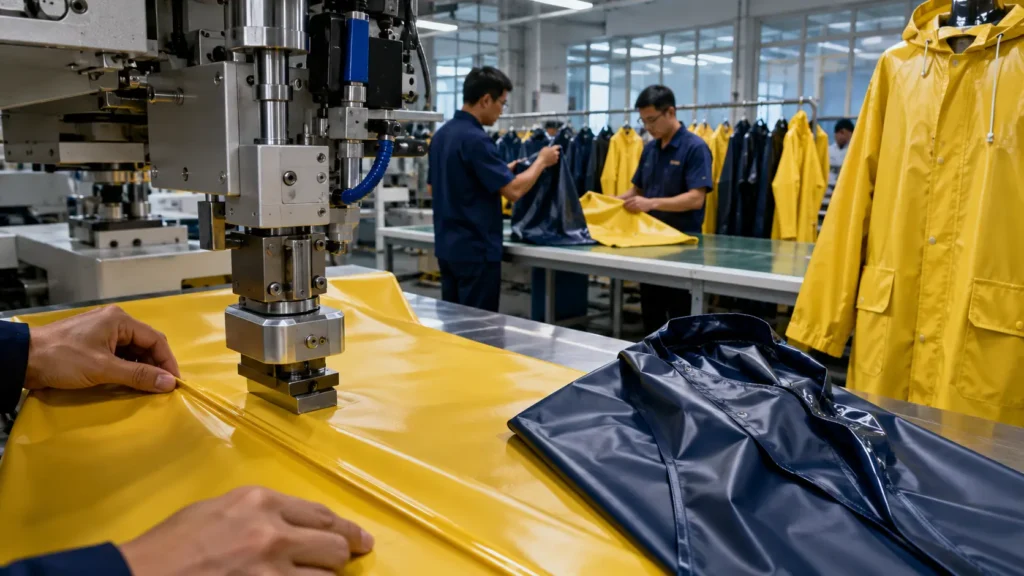
Quick Summary: High-frequency welding helps create stronger waterproof seams by bonding compatible materials through radio-frequency energy and pressure, making it especially useful for PVC rainwear, rain ponchos, industrial rain suits, waterproof workwear, and protective garments. For B2B buyers, waterproof fabric alone does not guarantee waterproof rainwear; real performance depends on rainwear seam construction, waterproof seam […]
Waterproof Rating Guide: How to Choose Hydrostatic Head for Rainwear
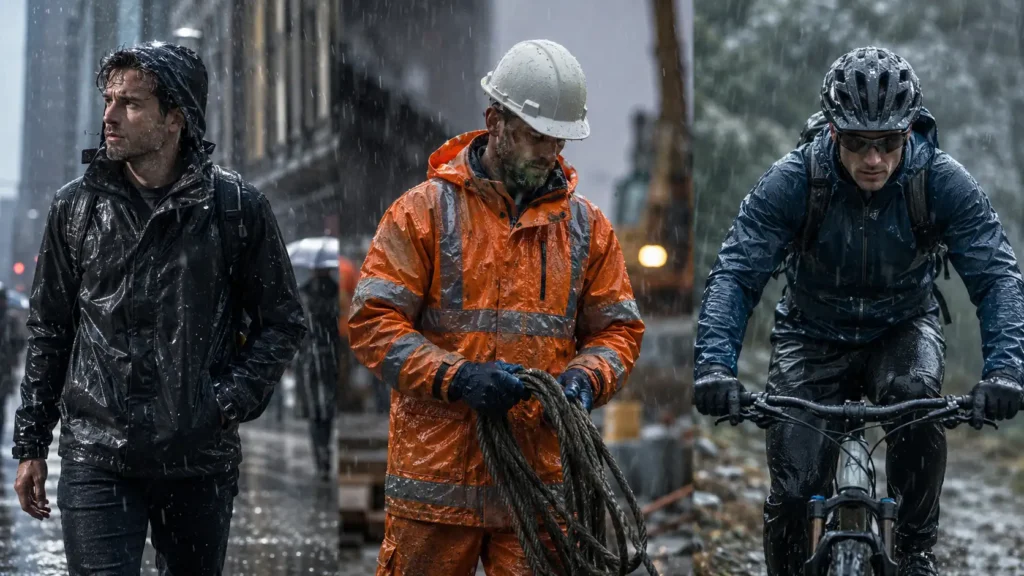
Quick Summary: Waterproof Rating measures how much water pressure a rainwear fabric can resist before leakage, usually expressed in millimeters through hydrostatic head testing. For B2B buyers, the right rainwear waterproof rating depends on product use, rain exposure, seam construction, fabric coating, breathability, compliance needs, and finished garment design. A higher number is not always […]
PU vs. PVC Rainwear: A Technical Comparison for B2B Buyers
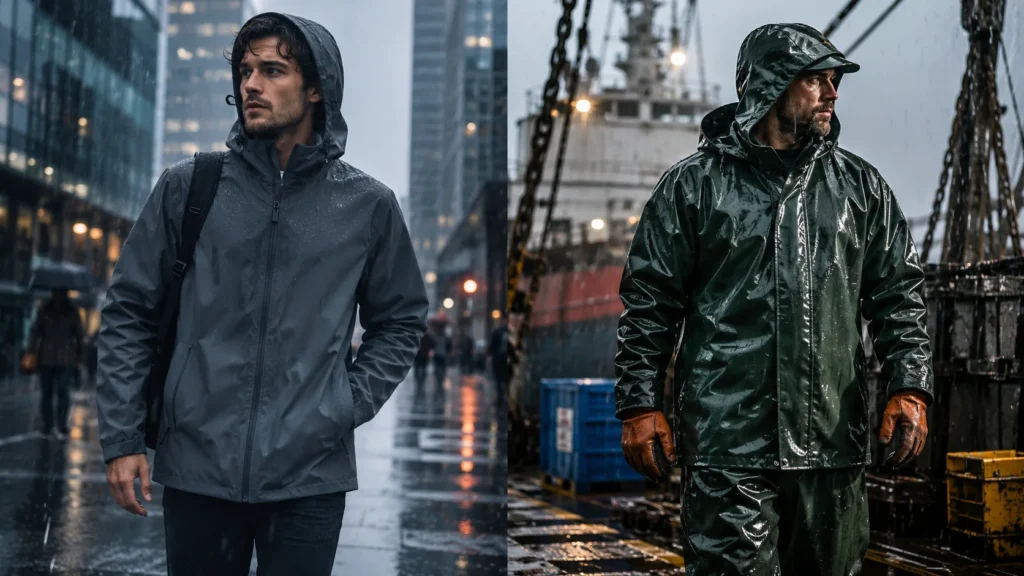
Quick Summary: PU vs PVC rainwear should be selected by product use, comfort expectation, waterproof performance, durability, compliance needs, and sourcing cost—not by material name alone. PU rainwear fabric is usually softer, lighter, and better for retail rain jackets, school rainwear, and private-label waterproof apparel, while PVC rainwear fabric is often more practical for ponchos, […]