Why Rainwear Style Selection Matters for OEM and Wholesale Buyers
Rainwear looks simple from the outside. A hood, a waterproof surface, a closure, maybe a few pockets—done, right? Not quite.
For B2B buyers, rainwear style selection is a commercial decision. It affects material cost, production complexity, waterproof performance, packaging size, comfort, order quantity, compliance risk, and customer complaints. A poorly selected style may look fine in a sample photo but fail in the real market. A rain poncho may be too thin for outdoor retail. A PVC raincoat may be too heavy for travel buyers. A fashionable PU rain jacket may not be durable enough for industrial users. A children’s raincoat may look attractive but create safety or sizing concerns if details are not checked properly.
That is why buyers should not choose rainwear styles only by appearance. Style should match real use conditions. The same supplier may produce rain jackets, rain suits, ponchos, PVC raincoats, PU jackets, and kids rainwear, but each product type requires a different balance of fabric, pattern, seam method, trims, packaging, and inspection.
For OEM and wholesale buyers, the goal is not only to create a good-looking product. The goal is to create a rainwear product that sells well, performs reliably, fits the target market, and can be produced consistently in bulk.
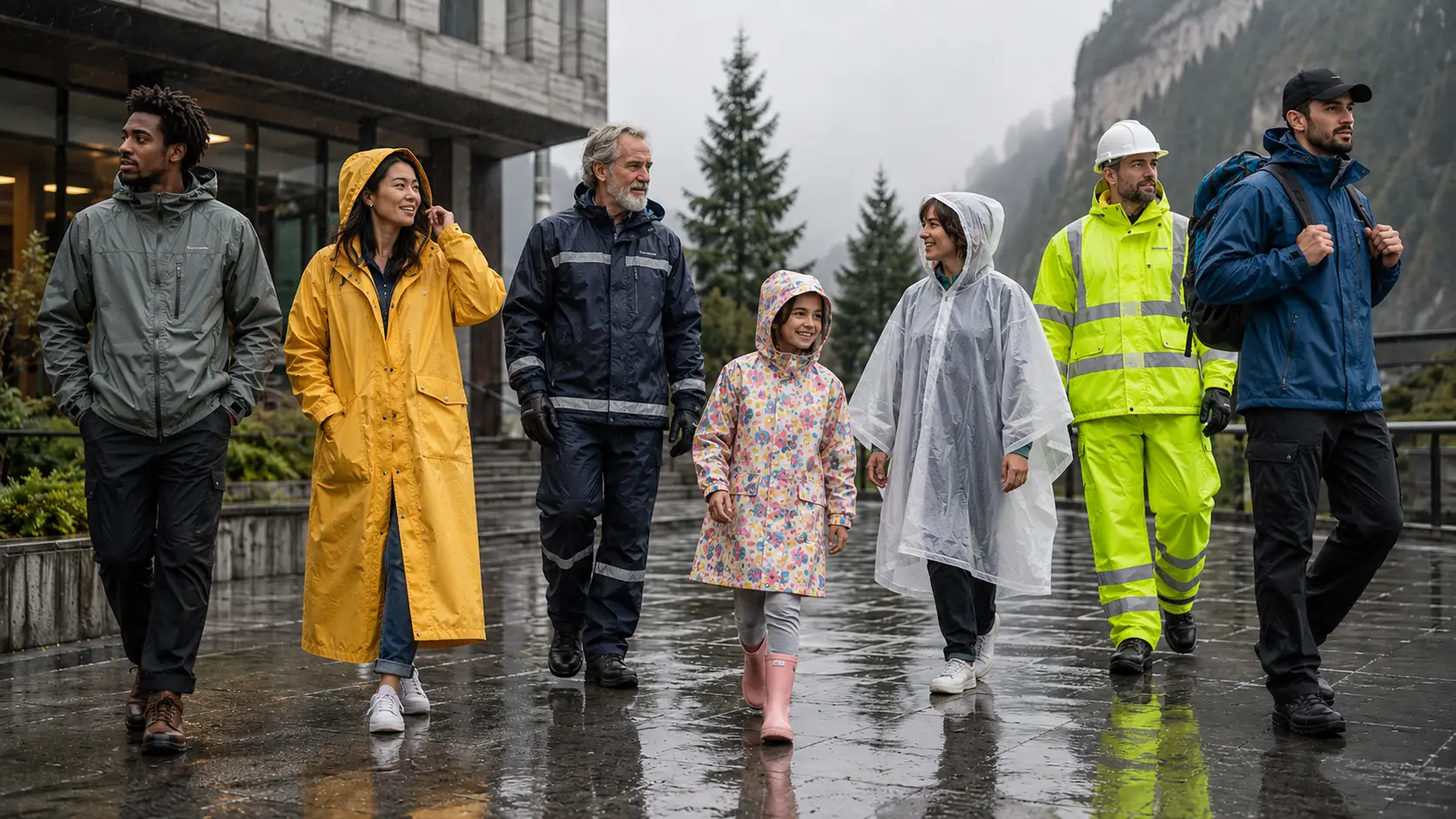
Style Affects the Target Market
Different markets prefer different rainwear designs.
Urban retail buyers often prefer clean silhouettes, lightweight fabrics, neutral colors, and easy-to-match designs. Outdoor buyers may care more about hood structure, sleeve movement, packability, ventilation, and waterproof performance. Workwear buyers usually prioritize durability, reflective details, reinforced seams, strong closures, and easy cleaning. Children’s rainwear buyers focus on color, safety, comfort, prints, and sizing. Promotional buyers often want lightweight ponchos with compact packaging and logo printing.
This is why custom rainwear designs should be developed around the buyer’s sales channel. A product made for a supermarket chain may need bright packaging and multiple sizes. A product made for road workers may need reflective tape and high-visibility colors. A product made for a travel brand may need lightweight material and a small storage pouch. A product made for industrial cleaning may need stronger coated fabric and reliable seam construction.
A good custom rainwear manufacturer should ask where the product will be sold, who will wear it, how long it should last, what climate it will face, and whether the buyer needs retail packaging, private labels, or compliance documents.
Style Affects Material Choice
Rainwear style and material must work together. If the style is wrong for the material, the final product may feel uncomfortable, leak easily, fold poorly, or look cheaper than expected.
PVC is often used for strong waterproof raincoats, industrial rainwear, fishery rainwear, cleaning aprons, and heavy-duty waterproof garments. It provides a stronger waterproof barrier and is easy to wipe clean, but it may feel heavier than PU. PU-coated polyester is often used for lighter rain jackets, padded waterproof jackets, and more comfortable workwear styles. EVA is common for ponchos, children’s rainwear, and promotional rainwear. Polyester and nylon are widely used for outdoor jackets and packable rainwear.
Before selecting a style, buyers should understand rainwear fabric sourcing. A hooded retail rain jacket, a two-piece work rain suit, a kids printed raincoat, and a disposable event poncho should not use the same material logic. The best design comes from matching style, fabric, waterproof requirement, comfort level, and target price range.
Material choice should align with the style and end-use. PVC heavy-duty raincoats and workwear suits require stronger waterproof layers and easy-clean surfaces. PU lightweight jackets offer comfort and flexibility for retail or private-label markets. EVA ponchos suit promotional, travel, or children’s rainwear. Buyers should also consider PVC coated polyester for industrial gear when selecting styles for demanding industrial environments. For buyers evaluating material performance, PU vs. PVC rainwear provides a technical comparison to guide informed OEM and wholesale decisions.
Style Affects Waterproof Construction
A rainwear product is only as reliable as its weakest leakage point. In many cases, the problem is not the fabric surface. It is the seam, zipper, hood opening, front placket, cuff, pocket, or pants connection.
For this reason, buyers should understand hydrostatic head for rainwear, but they should not stop there. Waterproof rating helps measure fabric resistance to water pressure, but the finished garment also depends on seam sealing, welding, stitching, zipper coverage, storm flap design, and garment fit.
Some PVC and coated fabrics may be suitable for high-frequency welding for rainwear, which can reduce needle-hole leakage when the fabric and production process are compatible. Other fabrics may need taped seams, stitched seams, or combined construction. The right method depends on material, garment design, target market, and production budget.
Buyers should avoid the common mistake of approving fabric first and discussing seam construction later. In rainwear, fabric and construction should be selected as one system.
Top 10 Rainwear Styles with Unique Custom Designs
1. Classic Hooded Rain Jacket
The classic hooded rain jacket is one of the most versatile rainwear styles for OEM buyers. It works across retail, outdoor, workwear, school, and private-label markets. Its familiar structure makes it easy for end users to understand, while its design details offer plenty of customization room.
A standard hooded rain jacket usually includes a front zipper or snap closure, adjustable hood, long sleeves, waterproof or water-resistant outer fabric, pockets, and sometimes a storm flap. For retail buyers, the style can be made cleaner and more fashionable. For workwear buyers, it can be strengthened with reflective tape, reinforced cuffs, heavier fabric, and larger pockets.
This style is especially useful for buyers who need custom rain jacket designs because small details can change the product’s market position. A yellow hooded jacket with reflective tape may serve road workers or warehouse crews. A navy PU-coated jacket may fit urban commuting or outdoor retail. A padded waterproof version may target cold-weather workwear buyers.
Best For
Classic hooded rain jackets are suitable for outdoor brands, workwear suppliers, retail buyers, private-label companies, school rainwear programs, and distributors that need a broad, easy-to-sell waterproof garment.
Custom Design Options
Buyers can customize color, fabric weight, hood shape, zipper type, storm flap, cuffs, pocket layout, reflective tape, logo printing, lining, mesh ventilation, size grading, packaging, and hangtags. For brand programs, this style can also support color series development, such as yellow for workwear, navy for outdoor use, transparent panels for fashion markets, or bright colors for family rainwear.
Buyer Should Check
Buyers should check waterproof rating, zipper coverage, hood fit, sleeve movement, pocket leakage risk, fabric hand feel, size tolerance, and seam construction. For workwear programs, reflective tape position and durability should be checked carefully. For retail programs, buyers should test the garment on real body shapes, not only flat measurements.
2. Long Raincoat
The long raincoat offers greater body coverage than a short jacket. It is useful for urban commuting, school markets, travel, cycling, outdoor walking, and light workwear applications. Compared with a short rain jacket, a long raincoat provides better protection for the thighs and upper legs, which can be important in heavy rain or walking conditions.
Long raincoats can be made from PVC, PU, EVA, polyester, nylon, or mixed coated materials. A transparent EVA long raincoat may suit fashion or retail markets. A PVC long raincoat may suit outdoor work, fishery, agriculture, or cleaning environments. A PU long raincoat may offer a softer and more comfortable experience for urban users.
For buyers developing custom raincoat designs, the long raincoat is a flexible style. It can be simple and minimal, bright and promotional, heavy-duty and industrial, or soft and retail-friendly.
Best For
Long raincoats are suitable for urban commuters, school buyers, travel retailers, outdoor wholesalers, cycling markets, and buyers looking for better coverage than a standard rain jacket.
Custom Design Options
Design options include garment length, transparent or solid color material, snap buttons, zipper closure, storm flap, waist belt, side slit, back ventilation, printed logo, adjustable hood, reflective trim, and storage pouch. For school or retail markets, buyers may also add printed patterns, color-blocking, or clear brim hoods.
Buyer Should Check
Buyers should check walking comfort, leg movement, garment weight, storage convenience, button strength, side opening structure, and whether the raincoat is suitable for cycling or only walking. If the raincoat is too long or too stiff, it may restrict movement. If it is too light, it may be blown open easily in windy rain.
3. Two-Piece Rain Suit
A two-piece rain suit includes a jacket and pants. It is one of the most practical rainwear styles for industrial users, outdoor workers, fishing crews, agriculture, logistics, traffic work, and construction environments. Compared with a single raincoat, a rain suit provides more complete body protection and better movement control.
For workwear buyers, this style is often more suitable than a simple rain jacket because workers may need to bend, kneel, carry tools, walk through wet areas, or stay outside for long periods. The pants help keep the lower body dry, while the jacket can be designed with a hood, storm flap, reflective tape, adjustable cuffs, and large pockets.
A two-piece rain suit can be made from PVC, PVC/POLY, PU-coated polyester, or other coated waterproof fabrics. PVC may be selected for stronger waterproof barrier performance and easy cleaning, while PU-coated materials may be preferred when comfort and flexibility matter more.
Best For
Two-piece rain suits are suitable for construction workers, fishing gear distributors, agricultural buyers, municipal projects, logistics teams, road maintenance crews, and industrial workwear programs.
Custom Design Options
Buyers can customize reflective tape, fabric thickness, jacket length, pants waist structure, suspenders, hood design, cuffs, ankle openings, pocket layout, ventilation, color blocking, logo placement, and packaging. For industrial buyers, high-visibility colors such as yellow, orange, and lime green are common choices.
Buyer Should Check
Buyers should check seam strength, crotch durability, knee movement, pants waist comfort, sleeve and ankle closures, fabric flexibility, and whether the rain suit remains comfortable during repeated movement. In workwear, waterproof performance is not enough; the product must also allow workers to move safely.
4. Lightweight Rain Poncho
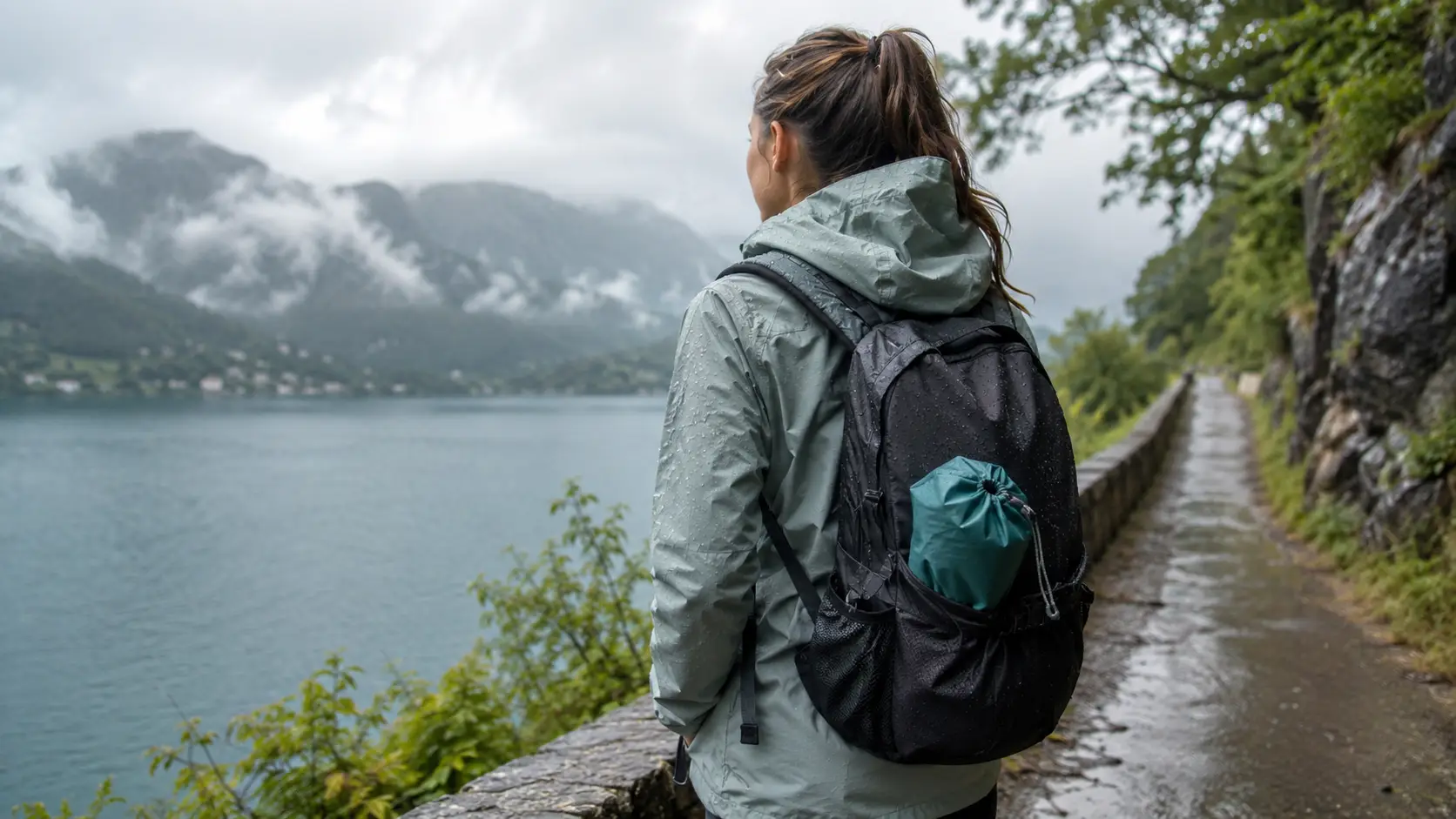
The lightweight rain poncho is one of the most popular rainwear styles for events, travel, emergency kits, tourism, festivals, outdoor sports, and promotional campaigns. Its biggest advantage is simplicity. It can be folded into a compact pouch, distributed easily, worn quickly, and produced in large quantities.
Ponchos can be disposable or reusable. Disposable PE ponchos are often used for events, stadiums, travel packs, and emergency kits. EVA ponchos usually feel softer and more durable than basic PE products. PVC or polyester ponchos may be used for reusable or higher-quality programs.
For buyers sourcing custom rain ponchos, design options are wider than they may appear. The poncho can be transparent, colored, printed, packed in a pouch, folded into a compact retail pack, or customized with event logos and brand colors.
Best For
Lightweight rain ponchos are suitable for event organizers, travel brands, emergency kit suppliers, promotional product buyers, outdoor festivals, sports events, tourism programs, and budget rainwear campaigns.
Custom Design Options
Common options include material thickness, color, logo printing, individual packaging, storage pouch, hood structure, snap buttons, sleeve style, reusable or disposable construction, carton packing, and retail card design.
Buyer Should Check
Buyers should check thickness, size coverage, hood fit, sleeve opening, odor, transparency, printing quality, folding method, packaging strength, and expected use duration. A promotional poncho should not be judged by the same standard as an industrial rain suit. It should be judged by its real purpose: easy distribution, short-term rain protection, compact storage, and acceptable user experience.
5. PVC Heavy-Duty Raincoat
The PVC heavy-duty raincoat is designed for users who need stronger waterproof protection, easier cleaning, and better resistance to dirty or wet working environments. It is commonly used in fishery, agriculture, sanitation, cleaning, industrial work, traffic control, and outdoor labor.
PVC raincoats often have a stronger waterproof surface than lightweight rainwear materials. They can resist rain, splash, mud, and surface contamination well when properly designed. The material can also be wiped clean more easily than untreated fabric, which makes it practical in environments where garments get dirty frequently.
For buyers comparing PVC raincoat styles, the main decision is balance. A heavier PVC raincoat may provide better durability, but it may also feel stiffer. A lighter PVC style may be easier to wear, but may not last as long in demanding work conditions. Buyers should choose based on the user’s work environment, not only product appearance.
Best For
PVC heavy-duty raincoats are suitable for fishery, farming, sanitation, cleaning services, industrial workwear, outdoor labor, construction, road work, and users who need easy-clean waterproof garments.
Custom Design Options
Buyers can customize PVC thickness, surface finish, color, garment length, reflective tape, snap buttons, welded seams, reinforced cuffs, hood shape, ventilation holes, logo printing, and packaging. For industrial markets, yellow, orange, navy, and dark green are common choices.
For buyers developing stronger workwear raincoats, PVC coated polyester for industrial gear is an important material topic because base fabric strength, coating thickness, and seam compatibility affect long-term performance.
Buyer Should Check
Buyers should check softness, odor, low-temperature flexibility, coating stability, seam process, tearing risk, button strength, and comfort during movement. PVC rainwear can be very practical, but poor-grade PVC may become stiff, smell unpleasant, or crack too early. Sample testing matters.
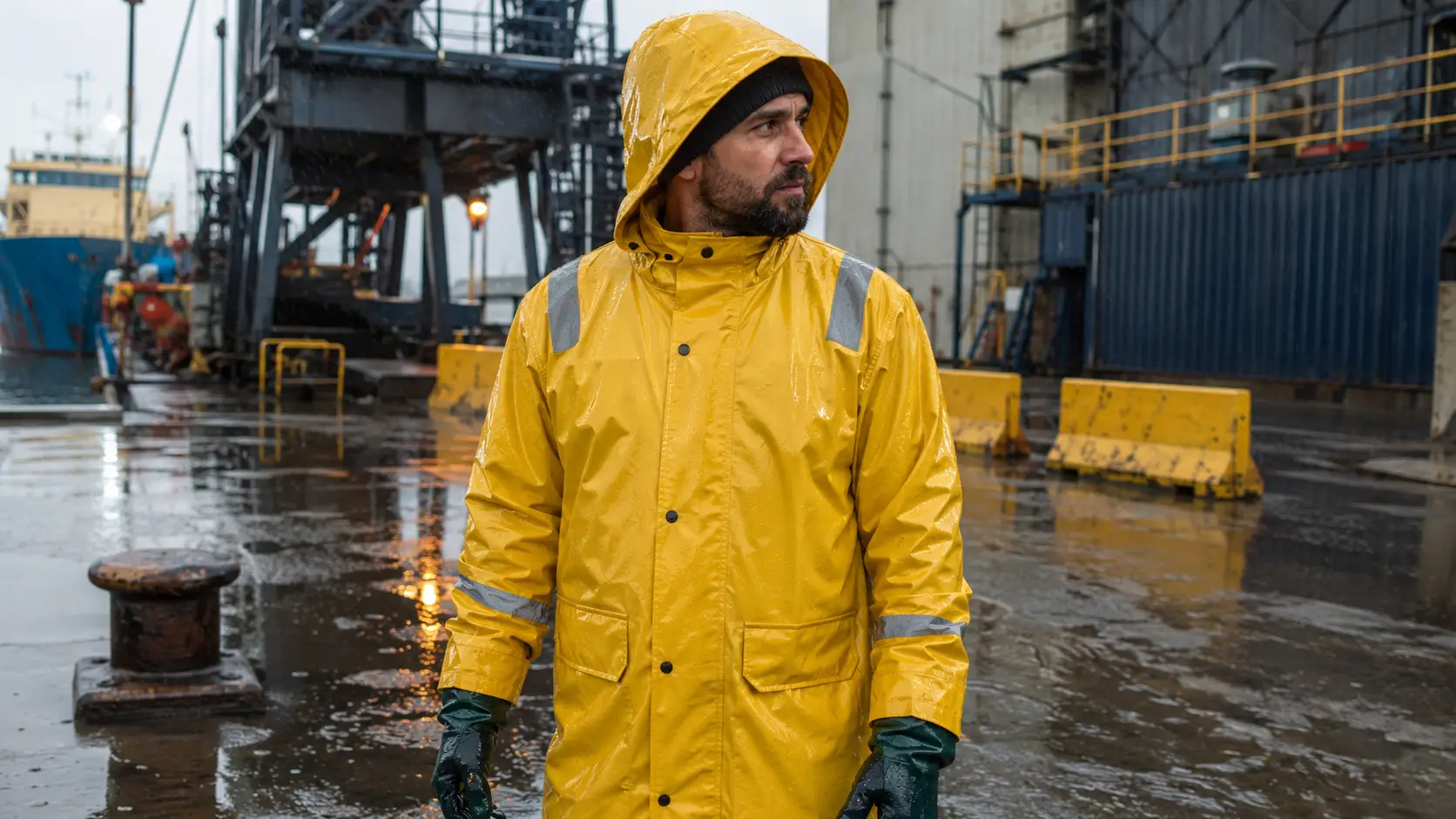
6. PU Lightweight Rain Jacket
The PU lightweight rain jacket is a strong choice for buyers who want a softer, more comfortable, and more retail-friendly rainwear product. Compared with PVC rainwear, PU-coated fabric often feels lighter and more flexible. This makes it suitable for daily rain jackets, outdoor retail, urban commuting, school programs, and private-label apparel brands.
A PU rain jacket can be designed as a simple waterproof shell, a padded work jacket, a lightweight hooded jacket, or an outdoor-style raincoat. It can also include lining, waterproof zippers, adjustable hoods, drawcords, reflective trims, and brand labels.
For buyers comparing PU rain jacket styles, the main advantage is comfort. However, comfort should not be the only decision factor. Buyers should also check abrasion resistance, waterproof rating, seam construction, and long-term coating performance.
Best For
PU lightweight rain jackets are suitable for urban rainwear brands, private-label jacket buyers, outdoor retailers, school rainwear programs, workwear buyers needing lighter jackets, and distributors targeting comfort-focused markets.
Custom Design Options
Options include color series, soft lining, mesh lining, hidden hood, waterproof zipper, pocket structure, logo printing, heat transfer labels, adjustable cuffs, reflective details, drawcords, and retail packaging.
Buyer Should Check
Buyers should compare waterproof performance, hand feel, fabric weight, coating quality, seam sealing, abrasion resistance, and washing or long-term use expectations. For buyers unsure whether PU or PVC is better, PU vs. PVC rainwear should be reviewed before sampling.
7. Reflective Safety Rainwear
Reflective safety rainwear is designed for users working in low-light, rainy, or traffic-related environments. It is commonly used in road work, construction, logistics, warehouse yards, public utilities, municipal work, security, and outdoor labor.
This style combines waterproof protection with visibility. Reflective tape, high-visibility colors, contrast panels, and functional pockets can help workers remain more visible in rainy conditions. For B2B buyers, reflective rainwear is not only a design choice. It can be part of a workplace safety program.
A professional reflective rainwear design should consider where reflective tape is placed. Tape on the chest, shoulders, sleeves, back, and legs may improve visibility from different angles. However, too much reflective tape can increase cost and affect flexibility, so layout should match the work environment.
Best For
Reflective rainwear is suitable for workwear distributors, traffic safety suppliers, road construction teams, logistics workers, warehouse yards, municipal projects, utilities, and outdoor maintenance crews.
Custom Design Options
Buyers can customize reflective tape layout, high-visibility colors, two-tone panels, PVC or PU fabric, detachable hood, name label position, logo placement, pockets, storm flaps, and pants design. Yellow and orange are common choices for safety markets, while navy with reflective tape may suit warehouse or utility buyers.
Buyer Should Check
Buyers should check reflective tape quality, placement, wash durability, garment visibility, seam strength, waterproof construction, and any applicable safety requirements in the target market. If the product will be marketed as certified safety workwear, buyers should confirm testing and documentation before production.
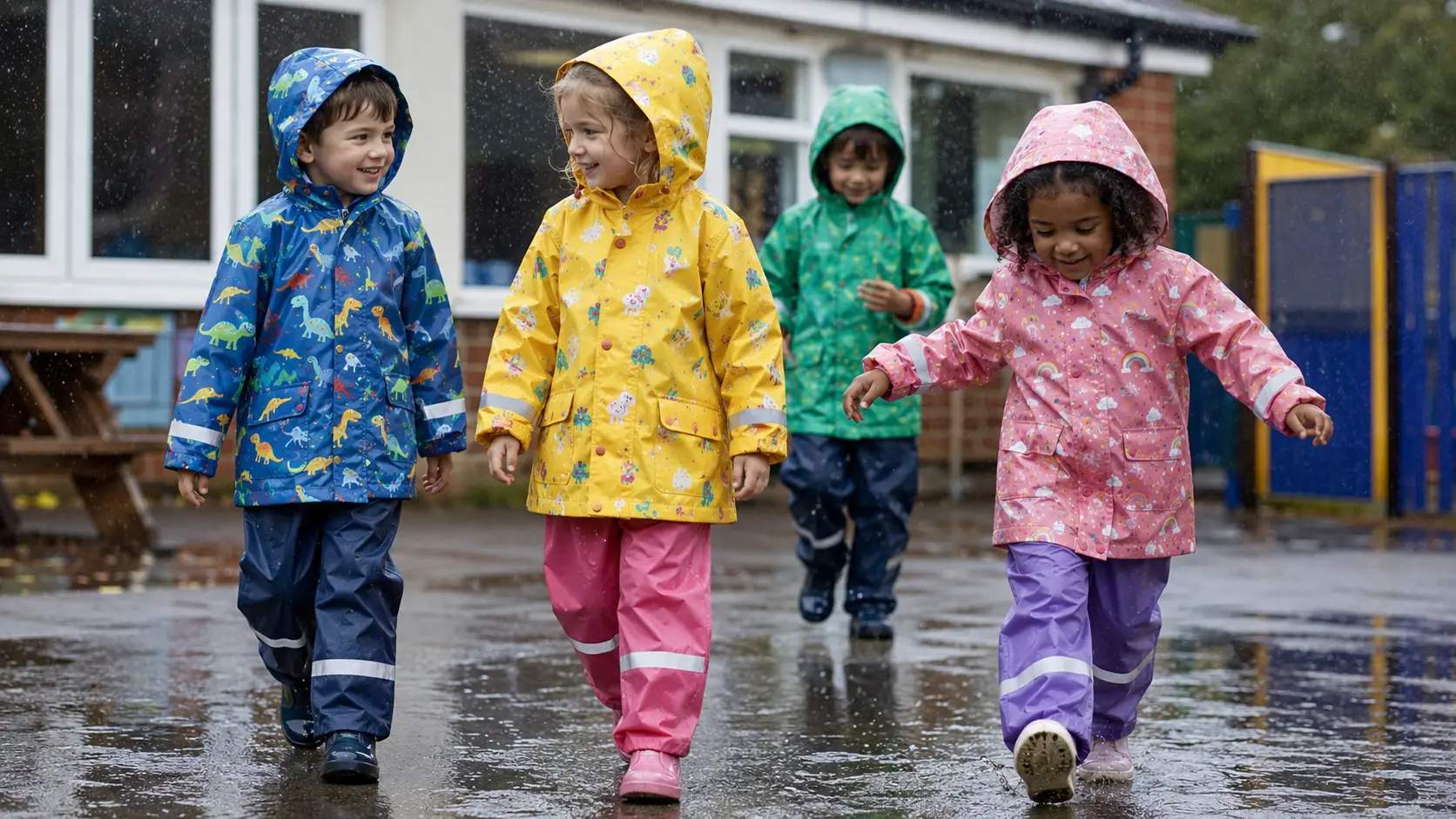
8. Kids Rainwear with Custom Prints
Kids rainwear is a very different category from adult workwear or promotional ponchos. Children’s rainwear must balance appearance, comfort, safety, sizing, and material selection. Bright colors and playful prints can improve retail appeal, but safe accessories and restricted substance control are just as important.
For retailers and school suppliers, kids rainwear designs often include printed patterns, transparent panels, bright colors, cartoon themes, backpack-friendly cuts, soft materials, and easy closures. Parents may care about comfort, easy cleaning, visibility, and whether the rainwear is simple for children to put on and remove.
This category is especially suitable for private-label programs because designs can be developed by season, age group, school use, travel use, or retail collection.
Best For
Kids rainwear is suitable for school suppliers, children’s product brands, retail buyers, supermarket chains, family outdoor brands, and private-label rainwear programs.
Custom Design Options
Buyers can customize prints, color combinations, transparent brim hoods, snap buttons, zipper pulls, sleeve openings, backpack space, reflective details, name labels, retail packaging, and size groups. Some buyers may also request matching rain boots, umbrellas, or school rainwear sets.
Buyer Should Check
Buyers should check material safety, odor, accessory strength, choking risk for small parts, restricted substances, size grading, comfort, hood visibility, and packaging. For children’s products, a cute print is not enough. Safety and comfort must be checked before bulk production.
References
- Rainwear Market Size, Share, Trends and Forecast, IMARC Group
- Best Rain Jackets, GearJunkie Editorial Team, GearJunkie
- Best Rain Jackets for Men and Women, OutdoorGearLab Testing Team, OutdoorGearLab
- Personal Protective Equipment Overview, Occupational Safety and Health Administration, OSHA
- 1910.132 General Requirements for Personal Protective Equipment, Occupational Safety and Health Administration, OSHA
- STANDARD 100 Certification for Textiles and Finished Goods, Hohenstein
- OEKO-TEX STANDARD 100, OEKO-TEX Service GmbH
- The Global Rainwear Market Report, Research and Markets
- Choosing the Right Rainwear for the Right Application, Safeopedia
- Textile and Apparel Product Safety Requirements, SGS Softlines
Rainwear Style Selection Insight
Rainwear styles are not only design choices; they are sourcing decisions. For OEM buyers, wholesalers, private-label brands, and workwear distributors, the right rainwear style affects material selection, waterproof performance, production cost, packaging size, user comfort, retail appeal, and long-term customer satisfaction. A classic hooded rain jacket may suit outdoor retail and workwear markets, while a lightweight rain poncho is better for events, travel kits, and promotional campaigns. A PVC heavy-duty raincoat may fit industrial and fishery use, while a PU lightweight rain jacket may be more suitable for urban, outdoor, and comfort-focused markets.
How should buyers choose the right rainwear style? The safest approach is to define the end-use scenario before selecting the product structure. If the buyer serves construction, logistics, agriculture, or roadwork markets, two-piece rain suits, reflective safety rainwear, PVC raincoats, and padded waterproof work jackets are usually more practical. If the target market is retail, travel, school, or promotional distribution, long raincoats, kids printed rainwear, packable rainwear, and custom rain ponchos may provide better commercial fit. Style selection should always follow the user’s working environment, climate, wearing time, movement needs, and packaging channel.
What options make custom rainwear more competitive? Useful customization options include fabric type, color series, logo printing, reflective tape layout, hood structure, pocket design, zipper type, snap buttons, cuffs, lining, garment length, size grading, storage pouch, hangtag, retail bag, and carton packaging. However, customization should not be added only for decoration. Each option should improve function, market positioning, brand recognition, or buyer confidence. Over-customized rainwear may increase cost, delay production, and create quality-control risks if the sample is not tested carefully.
What should buyers consider before placing bulk orders? Buyers should verify fabric composition, waterproof rating, seam construction, sample quality, garment fit, logo method, packaging details, MOQ, lead time, color tolerance, size consistency, and final inspection standards. For waterproof performance, fabric alone is not enough; zippers, cuffs, pockets, hood openings, storm flaps, and seams can all become leakage points. For workwear and industrial rainwear, seam strength, coating durability, reflective visibility, and movement comfort should be checked before mass production.
Which rainwear style fits which market? Choose classic hooded rain jackets for broad retail and outdoor use. Choose long raincoats for urban, school, and travel markets. Choose two-piece rain suits for workwear, fishery, agriculture, and outdoor jobs. Choose lightweight rain ponchos for events, tourism, emergency kits, and promotional orders. Choose PVC heavy-duty raincoats for industrial use, easy cleaning, and stronger waterproof protection. Choose PU lightweight rain jackets for comfort-focused retail and private-label programs. Choose reflective safety rainwear for roadwork, logistics, utilities, and low-light work environments. Choose kids printed rainwear when safety, sizing, color, and restricted substance control are key priorities.
Final recommendation: The best rainwear styles should be selected by real use conditions, not by appearance alone. Buyers should first define the market, then choose the style, then confirm material, waterproof rating, seam process, logo method, packaging, and inspection requirements. Working with an experienced custom rainwear manufacturer helps turn style ideas into reliable bulk production while reducing material mismatch, leakage complaints, packaging mistakes, and repeat-order inconsistency.