Quick Summary
A poncho is a loose, easy-to-wear rainwear garment designed for fast coverage, backpack protection, outdoor events, travel, hiking, and emergency use. When buyers ask what is a poncho, the practical answer is that it offers wider and quicker rain protection than a fitted raincoat, while a raincoat provides stronger wind resistance, better body fit, and more durable long-term wear. For bulk buyers, the choice between a rain poncho and a raincoat should depend on material, waterproof performance, target users, packaging, logo printing, and real weather conditions.
When people search for what is a poncho, they are usually trying to answer a practical question: “Is a poncho enough for rain protection, or should I buy a raincoat instead?” The answer depends on how the rainwear will be used. A poncho is loose, fast to wear, easy to pack, and useful for sudden rain, outdoor events, travel, hiking, festivals, and emergency use. A raincoat, on the other hand, is more fitted, more protective in wind, and better suited for daily commuting, workwear, industrial use, and long-term outdoor wear.
Both products protect people from rain, but they solve different problems. A rain poncho focuses on wide coverage and convenience. A raincoat focuses on body fit, weather sealing, durability, and a more professional appearance. For individual consumers, the choice is often about comfort and activity. For brands, distributors, retailers, and bulk buyers, the choice also involves material, cost control, packaging, printing, durability, user group, and sales channel.
This guide explains what a poncho is, how it differs from a raincoat, when each option works better, and what buyers should consider before ordering custom rainwear, waterproof ponchos, or raincoats for wholesale.
What Is a Poncho?
Basic Definition of a Poncho
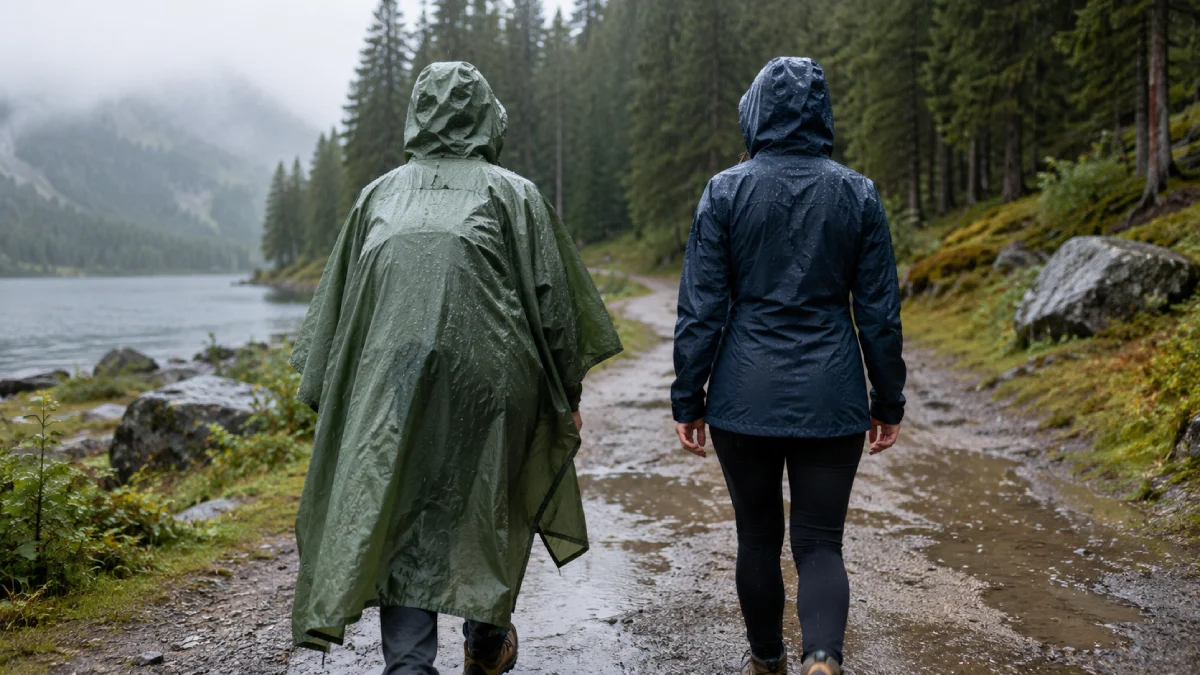
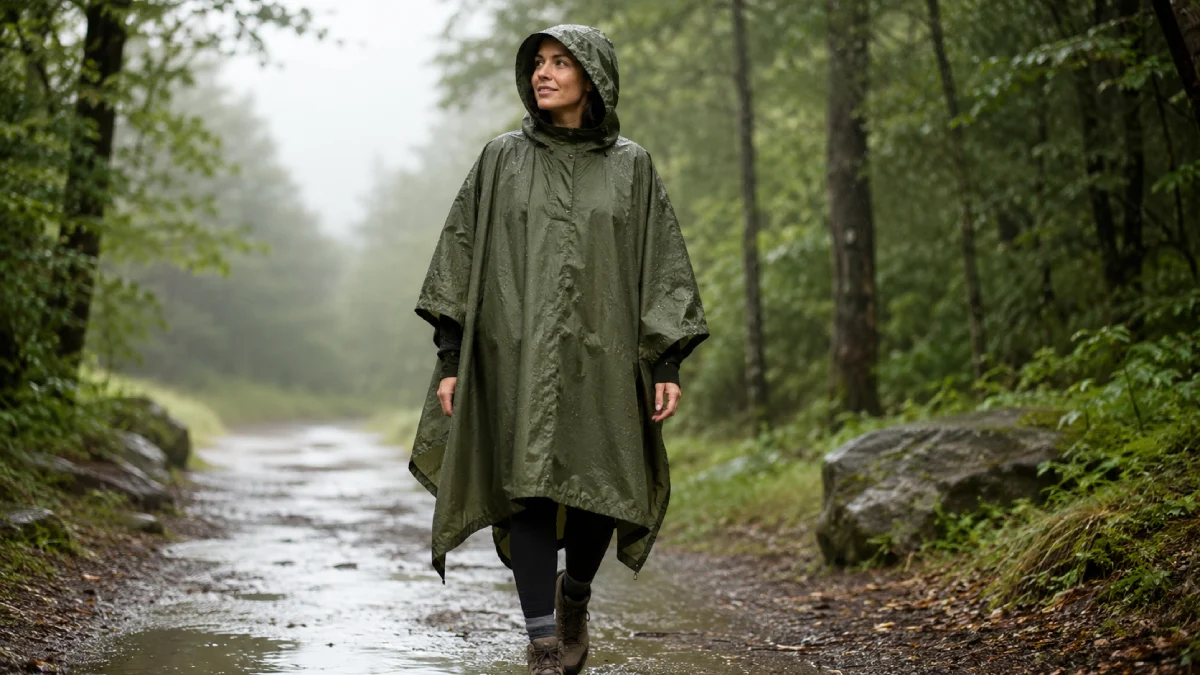
A poncho is a loose outer garment designed to cover the body from rain, wind, or light outdoor exposure. In rainwear, a poncho is usually made from waterproof or water-resistant materials such as PE, EVA, PVC, polyester, nylon, or coated fabric. Most rain ponchos include a hood, an open body shape, and enough length to protect the shoulders, torso, arms, and sometimes a backpack.
Why Ponchos Have a Loose Shape
The biggest feature of a poncho is its simple structure. Unlike a raincoat, it usually does not have fitted sleeves. Instead, it drapes over the body like a protective cover. This makes it easy to put on quickly, even over jackets, backpacks, uniforms, or outdoor clothing. That is why ponchos are common at outdoor events, amusement parks, campsites, hiking trails, schools, sports venues, tourism sites, and emergency kits.
Common Types of Rain Ponchos
A poncho can be disposable, reusable, lightweight, heavy-duty, transparent, colored, printed, packed individually, or customized for brand promotion. For example, a thin PE poncho is often used for one-time events or travel kits. A soft EVA poncho is suitable for retail and casual outdoor use. A thicker PVC or polyester poncho can offer better durability for repeated use.
Why Ponchos Are More Than Cheap Rain Covers
In simple terms, a poncho is not just “a cheap rain cover.” A well-designed poncho can be a practical rainwear product for outdoor users, retail buyers, promotional campaigns, and private-label rainwear brands. For buyers, the real value of a poncho is not only low cost, but also flexible sizing, compact packing, fast distribution, and easy customization.
What Is a Raincoat?
Basic Definition of a Raincoat
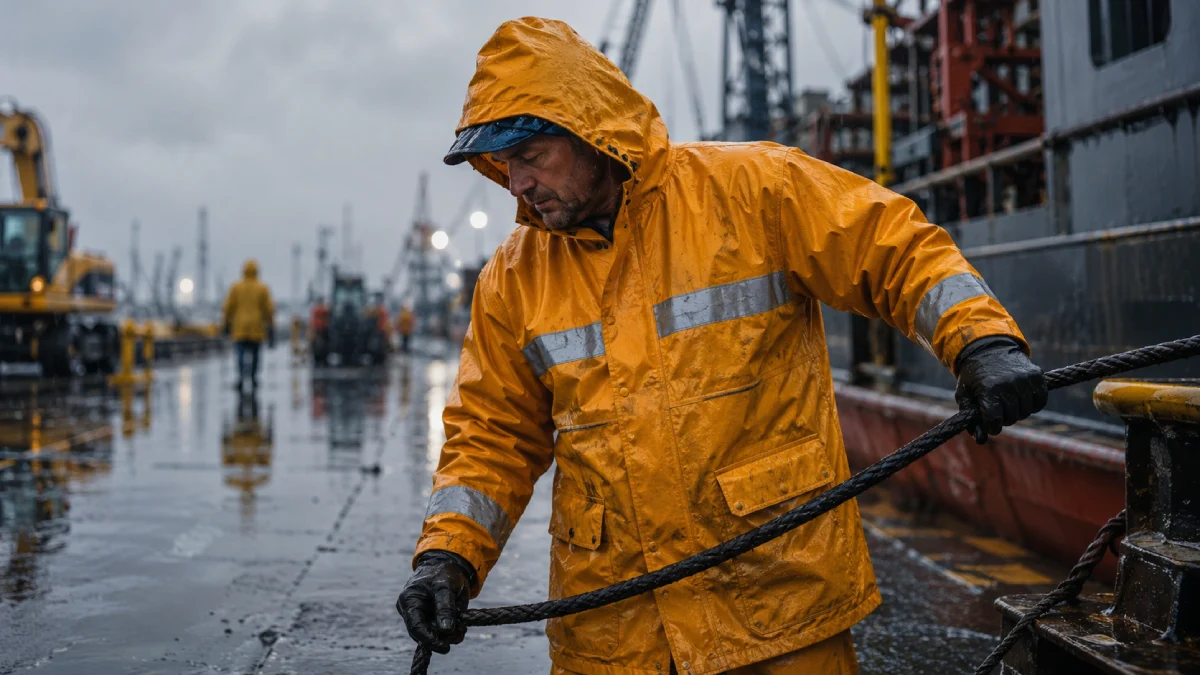
A raincoat is a more structured waterproof garment designed to protect the wearer from rain. It normally includes sleeves, a front zipper or buttons, a hood or collar, sealed or stitched seams, and a closer body fit than a poncho. A raincoat may be made from PVC, PU-coated polyester, nylon, Oxford fabric, TPU-coated fabric, or other waterproof materials.
Why Raincoats Offer Better Body Control
Compared with a poncho, a raincoat provides better movement control and stronger protection in windy conditions. Because it has sleeves and a fitted body structure, it is less likely to flap around in the wind. This makes raincoats more suitable for commuting, delivery work, cycling, construction sites, industrial workwear, fishing, outdoor uniforms, and long-term daily use.
Common Types of Raincoats
A raincoat manufacturer may produce different types of raincoats depending on the market: lightweight urban raincoats, heavy-duty PVC raincoats, breathable outdoor jackets, children’s raincoats, reflective work raincoats, and custom branded rainwear. The design is more complex than a poncho because it often requires more cutting, sewing, heat sealing, zipper installation, pocket design, ventilation structure, and size grading.
Why Raincoats Suit Long-Term Use
For buyers, raincoats are usually better when the product needs to look more professional, last longer, fit the body better, and perform well under stronger weather conditions. The trade-off is that raincoats usually cost more, take more storage space, and require more detailed sizing than ponchos.
Poncho vs Raincoat: The Core Difference
Loose Coverage vs Fitted Protection
The simplest difference is this: a poncho is a loose rain cover, while a raincoat is a fitted rain garment.
A poncho protects by covering a larger area with a simple draped shape. A raincoat protects by fitting closer to the body and sealing more openings. This design difference affects almost everything: comfort, portability, wind resistance, waterproof performance, manufacturing cost, customization method, and target market.
How This Difference Affects Real Use
A poncho is usually easier to wear over a backpack, thick clothing, or sportswear. It works well when users need quick protection and do not want to spend time adjusting sleeves, zippers, or cuffs. A raincoat is better when users need stable coverage while walking, working, cycling, or staying outdoors for longer periods.
How This Difference Affects Bulk Buyers
From a buyer’s point of view, ponchos are often chosen for high-volume and flexible-use scenarios. Raincoats are often chosen for durability, branding, uniform use, or professional rain protection. Neither one is always better. The right choice depends on the use case.
Poncho vs Raincoat Comparison Table
Key Product Differences at a Glance
| Comparison Factor | Poncho | Raincoat |
|---|---|---|
| Basic Design | Loose, open, draped coverage | Fitted garment with sleeves |
| Main Purpose | Fast rain coverage and portability | Stronger body protection and daily wear |
| Best Use Cases | Travel, hiking, festivals, events, emergency kits, backpack coverage | Commuting, workwear, cycling, outdoor jobs, school uniforms, long-term use |
| Rain Protection | Good for light to medium rain; better coverage over bags | Better for heavy rain and wind when properly sealed |
| Wind Resistance | May flap in strong wind if not designed with snaps or side closures | Usually better because of sleeves and closer fit |
| Breathability | Naturally ventilated due to loose structure | Depends on fabric, vents, lining, and coating |
| Portability | Very compact and lightweight | Usually bulkier and heavier |
| Backpack Coverage | Often covers backpacks easily | Usually needs a separate backpack cover |
| Durability | Depends on material thickness and construction | Usually stronger for repeated use |
| Size Flexibility | One-size or few sizes can fit many users | Requires more accurate sizing |
| Custom Printing | Very suitable for logo printing and promotional use | Suitable for uniforms, retail branding, and premium customization |
| Production Complexity | Lower, especially for basic ponchos | Higher due to sleeves, zippers, pockets, seams, and sizing |
| Typical Buyer | Event organizers, retailers, travel brands, outdoor brands, emergency kit suppliers | Workwear buyers, retailers, uniform suppliers, outdoor apparel brands |
| Best B2B Fit | bulk rain ponchos, promotional rainwear, travel rainwear | custom raincoats, workwear raincoats, branded waterproof jackets |
What the Comparison Means for Buyers
This table shows why the question is not simply “Which is better?” A poncho and a raincoat are designed for different expectations. If buyers ignore this difference, they may choose a product that looks suitable on paper but performs poorly in the real use environment.
When Is a Poncho the Better Choice?
For Outdoor Events and Large Crowds
A poncho is the better choice when the user needs quick, lightweight, flexible rain protection. It is especially useful when rain is sudden, storage space is limited, or the product needs to fit many body types without complicated sizing.
For outdoor events, ponchos are practical because they can be packed individually and distributed quickly. A stadium, music festival, amusement park, school trip, or tourism site may need thousands of rainwear pieces for visitors. In this situation, a fitted raincoat would be too expensive, too bulky, and too size-sensitive. A disposable rain poncho or lightweight reusable poncho is easier to manage.
For Hiking, Camping, and Backpack Coverage
For hiking and camping, ponchos are popular because they can cover both the body and a backpack. This is a major advantage over many raincoats. A hiker wearing a raincoat may still need a separate backpack rain cover, while a longer poncho can protect both. This is why searches like rain poncho for hiking, waterproof poncho for backpacking, and lightweight rain poncho often have strong user intent.
For Emergency Kits and Travel Packs
For emergency kits, ponchos also make sense. They are compact, easy to pack, and useful for unexpected weather. A poncho can be stored in cars, schools, travel bags, camping kits, warehouses, or event supply boxes. It does not require careful size matching, which makes it suitable for shared or occasional use.
For Promotional Products and Brand Campaigns
For promotional products, ponchos are also attractive. A brand can print a logo, slogan, event name, or campaign design on a poncho. Since the body panel is larger and flatter than many raincoats, the print area can be more visible. This makes custom printed ponchos suitable for sports events, outdoor marketing, tourism promotions, charity campaigns, and retail gift packs.
When a Poncho May Not Be Enough
However, a poncho is not perfect. It may not be the best choice for high wind, long working hours, narrow job sites, cycling at speed, or professional uniforms. If the poncho is too thin, it may tear easily. If the material is poorly selected, it may feel sticky, noisy, stiff, or uncomfortable. If the hood and side closures are weak, rainwater may still enter during movement.
In short, choose a poncho when convenience, wide coverage, low packing volume, and flexible sizing matter more than fitted protection.
When Is a Raincoat the Better Choice?
For Daily Commuting
A raincoat is the better choice when the user needs stronger protection, better fit, and more stable performance. It is especially useful for repeated wear, daily commuting, outdoor work, and environments where wind or movement is a concern.
For commuters, a raincoat provides better control than a poncho. It stays closer to the body, works better with bags or uniforms, and looks more suitable for daily urban use. A lightweight raincoat can be worn over office clothing, school uniforms, or casual outfits without looking too temporary.
For Workwear and Industrial Use
For workwear, raincoats are usually the better option. Outdoor workers, delivery teams, construction staff, security teams, port workers, traffic staff, and cleaning teams often need durable rain protection. A poncho may interfere with movement, tools, machinery, or visibility. A PVC raincoat, PU-coated raincoat, or reflective raincoat can be designed with pockets, cuffs, zippers, storm flaps, reflective tape, and reinforced seams.
For Cycling and Delivery Use
For cycling and delivery use, raincoats are also more stable. A loose poncho can catch wind or block movement if not designed specifically for cycling. A raincoat with adjustable cuffs, hood, and hem gives the wearer better control. Some markets may still use cycling ponchos, but the design must be carefully developed with front coverage, handlebar clearance, and side safety in mind.
For Retail Brands and Uniform Programs
For retail brands, raincoats usually support a higher perceived value than disposable ponchos. They can be designed with color blocking, printed lining, adjustable details, waterproof zippers, ventilation openings, and branded packaging. If the buyer wants to build a long-term rainwear product line, a raincoat may offer more room for product differentiation.
The Main Limitation of Raincoats
The main limitation is cost and sizing. Raincoats require more accurate body measurements and more complex production. If a buyer orders poor sizing, the result can be serious: returns, customer complaints, unsold inventory, or inconsistent fit across markets. For bulk orders, this means size ratio planning becomes important.
Choose a raincoat when durability, wind protection, professional appearance, repeat use, and body fit matter more than compact storage and one-size flexibility.
Material Guide: Which Fabric Works Best?
Why Material Selection Matters
Material is one of the most important factors in both ponchos and raincoats. Two products may look similar in photos but perform very differently because of material thickness, coating, softness, tensile strength, seam construction, and waterproof treatment.
For B2B buyers, material selection should not be based only on unit price. The wrong material can lead to tearing, poor waterproof performance, uncomfortable wearing, strong odor, weak printing results, or customer complaints. The right material depends on the target user and sales channel.
Common Rainwear Materials Compared
| Материал | Common Use | Преимущества | Limitations | Best Fit |
|---|---|---|---|---|
| PE | Disposable ponchos, emergency ponchos, event ponchos | Low cost, lightweight, easy to pack | Less durable, usually for short-term use | Events, travel kits, emergency packs |
| EVA | Reusable ponchos, children’s ponchos, retail ponchos | Softer feel, lightweight, better comfort than basic PE | Not as heavy-duty as PVC or coated polyester | Retail, school use, casual outdoor rainwear |
| ПВХ | Heavy-duty ponchos, industrial raincoats, workwear | Strong waterproof performance, durable, good for tough environments | Heavier, may feel less breathable | Workwear, fishing, outdoor labor, industrial rainwear |
| Polyester with PU Coating | Raincoats, outdoor jackets, reusable rainwear | Good balance of durability, appearance, and waterproofing | Requires proper coating and seam design | Retail raincoats, uniforms, branded rainwear |
| Nylon with Coating | Lightweight outdoor rainwear | Lightweight, compact, good for travel | May require higher-grade coating for strong waterproofing | Outdoor, hiking, compact rain jackets |
| Oxford Fabric with Coating | Workwear raincoats, durable outdoor garments | Stronger surface, better abrasion resistance | Heavier than lightweight fabrics | Industrial use, staff uniforms, repeated wear |
How to Match Material with Product Type
For waterproof ponchos, PE and EVA are common when portability and cost control are important. For custom rain poncho wholesale, EVA and thicker PE can work well for promotional and retail markets. For raincoats for workwear, PVC, PU-coated polyester, and coated Oxford fabric are usually more suitable.
Why Seam Construction Matters
The buyer should also check whether the product uses stitched seams, heat-sealed seams, welded seams, or taped seams. A waterproof fabric can still leak if the seams are poorly made. This is a common mistake in low-cost rainwear sourcing. The fabric may pass a simple water test, but the finished garment may fail during real rain because water enters through needle holes, hood joints, zipper areas, or side openings.
Waterproof, Water-Resistant, and Breathable: What Do These Terms Mean?
Waterproof vs Water-Resistant
Many buyers use “waterproof” and “water-resistant” as if they mean the same thing, but they are not identical.
A waterproof material is designed to block water penetration under specific test conditions. A water-resistant material can resist light moisture or short exposure but may allow water to pass through under pressure or long exposure. In rainwear sourcing, the difference matters because a poncho used for a 20-minute event and a raincoat used for an 8-hour work shift do not require the same performance level.
Breathability and Wearing Comfort
Breathability is another important factor. A poncho often feels more ventilated because it is loose and open. Air can move from the sides and bottom. A raincoat, however, depends more on fabric technology and design details. If the fabric is non-breathable and the garment is tightly sealed, the wearer may feel hot and damp inside even if rain does not enter from outside.
Why Waterproof Protection Is Not the Whole Story
That is why heavy-duty PVC raincoats are excellent for waterproof protection but may not be ideal for high-activity hiking in warm weather. A lightweight coated polyester raincoat may be more comfortable for daily commuting, while a simple PE poncho may be enough for short-term rain protection at outdoor events.
Good rainwear design is not only about keeping rain out. It is also about managing comfort, movement, storage, durability, and the real environment where the product will be used.
Comfort and Mobility: Which One Is Easier to Wear?
Why Ponchos Are Easier to Put On
A poncho is easier to wear quickly. Users can pull it over the head in seconds, even when wearing a backpack, jacket, or thick clothing. This makes it practical for sudden rain. It also works well when users do not want to remove bags or adjust many closures.
Where Ponchos Can Feel Less Stable
The loose shape gives more body freedom in some situations, especially walking, standing, camping, or watching outdoor events. But the same loose shape can become a problem in strong wind or when the user needs precise movement. A poncho may flap, shift, or catch on objects if the design is too wide or if there are no side snaps.
Why Raincoats Offer Better Movement Control
A raincoat takes slightly longer to wear but provides better movement control once it is on the body. Sleeves allow the arms to move naturally. Zippers, buttons, cuffs, and adjustable hoods help the wearer manage fit. This is especially important for workers, cyclists, delivery staff, or anyone who needs both protection and active movement.
The Practical Comfort Rule
For buyers, this means comfort should be judged by use case, not by product name. A poncho may be more comfortable for casual rain protection. A raincoat may be more comfortable for repeated movement and longer wear.
Portability and Storage: Why Ponchos Win in Compact Packing
Why Ponchos Are Easier to Store
If the main requirement is compact storage, ponchos usually win. A lightweight poncho can be folded into a small pouch and stored in a backpack, handbag, car, emergency kit, retail display box, or travel package. This is one reason bulk rain ponchos are popular for events and tourism.
Why Raincoats Require More Space
Raincoats are generally larger and heavier. Even lightweight raincoats require more storage space because of sleeves, zippers, pockets, and structured design. For retail, this may affect carton size, shipping volume, shelf display, and packaging cost. For distributors, it can also affect warehouse space and logistics planning.
How Buyers Should Balance Portability and Durability
However, portability should not be the only decision factor. A product that is easy to pack but tears after one use may not be suitable for a reusable retail market. A product that is extremely durable but too bulky may not sell well in travel channels. The key is to match the product to the customer’s real expectation.
For example, a travel brand may prefer individually packed lightweight ponchos. A workwear distributor may prefer durable raincoats with reinforced seams. A school supplier may prefer children’s raincoats with bright colors, reflective details, and reliable snap closures. Different markets need different solutions.
Branding and Customization: Which Product Is Better for Logo Printing?
Ponchos for Large-Area Logo Printing
Both ponchos and raincoats can be customized, but they serve different branding purposes.
A poncho offers a large visible print area. The front and back panels can display logos, event names, slogans, team graphics, or campaign designs. This makes ponchos very suitable for promotional use. For outdoor events, a printed poncho can work as both rain protection and mobile brand exposure. That is why custom printed ponchos are often used for sports events, concerts, festivals, tourism campaigns, and corporate gifts.
Raincoats for Premium Brand Presentation
A raincoat supports a more premium brand image. The logo may be printed or embroidered on the chest, sleeve, back, pocket, or hood area. Raincoats are better when the buyer wants a long-term product, uniform look, or retail-grade presentation. They can also include custom colors, trims, zipper pullers, reflective tape, packaging, labels, and hangtags.
Customization Details Buyers Should Confirm Early
For OEM rainwear factory orders, customization should be planned early. Buyers need to confirm logo size, print position, color matching, packaging format, barcode labels, carton marks, size labels, care labels, and compliance requirements. A simple logo request may become complicated if the buyer waits until production has already started.
Why Printing Depends on Material
The safest approach is to decide the product type first, then choose the printing method and packaging style according to the material. Not every material prints the same way. Some films and coatings require specific printing techniques to avoid weak adhesion, color bleeding, cracking, or poor surface finish.
Common Buying Mistakes When Choosing Ponchos or Raincoats
Mistake 1: Treating All Ponchos as Disposable Products
Choosing between a poncho and a raincoat looks simple, but many buyers make the wrong decision because they compare only the surface features: price, color, packing size, or product photos. In real use, rainwear performance depends on material, thickness, seam construction, closure design, user movement, weather conditions, and how often the product will be worn.
The first common mistake is treating all ponchos as disposable products. A thin PE poncho for one-time event use is very different from a reusable EVA poncho or a thicker coated polyester poncho. If a buyer selects a low-cost disposable poncho for a retail product line, customer complaints may appear quickly because the product may tear, wrinkle, or feel too temporary. For short-term event use, this may be acceptable. For retail or outdoor use, it can damage brand trust.
Mistake 2: Assuming Raincoats Are Always Better
The second mistake is assuming a raincoat is always better than a poncho. A raincoat usually provides better wind control and long-term durability, but it is not always the most practical choice. If the buyer needs compact storage, fast distribution, flexible sizing, and backpack coverage, a poncho may be more suitable. For example, event organizers, travel kit suppliers, and outdoor emergency product distributors often prefer bulk rain ponchos because they are easier to store, ship, and distribute.
Mistake 3: Ignoring Wind Conditions
The third mistake is ignoring wind. A poncho can protect well during light or moderate rain, but strong wind can lift the fabric if the structure is too open. Side snaps, reinforced edges, longer front coverage, and better hood adjustment can reduce this problem. Without these details, users may feel exposed even if the material itself is waterproof.
Mistake 4: Checking Fabric but Ignoring Construction
The fourth mistake is focusing only on waterproof fabric, not garment construction. A fabric may block water, but the finished product may still leak through seams, hood joints, zipper areas, pockets, or sleeve openings. This is especially important for raincoats. If a waterproof raincoat uses poor stitching without proper seam sealing, the product may fail during heavy rain.
Mistake 5: Using One Design for Every Market
The fifth mistake is using the same product design for every market. A poncho for an outdoor festival, a children’s retail poncho, a heavy-duty industrial raincoat, and a hiking rain poncho should not use the same material or structure. Buyers need to match rainwear to the user group. A product that works well for an amusement park visitor may not work for a construction worker. A product that works for school children may not work for long-distance hikers.
Mistake 6: Confirming Packaging Too Late
The sixth mistake is not checking packaging requirements early. For wholesale and retail orders, packaging affects shelf display, shipping cost, user experience, and brand presentation. A basic polybag may be enough for emergency ponchos, while retail raincoats may need printed bags, hangtags, size labels, barcodes, cartons, or display packaging. If packaging is decided too late, production and delivery can be delayed.
What Happens If You Choose the Wrong Product?
Wrong Product Choice Creates More Than Small Inconvenience
The wrong rainwear choice does not only create small inconvenience. For buyers, it can cause returns, bad reviews, wasted inventory, delayed promotions, and weaker repeat orders.
Common Consequences for Different Markets
If a buyer chooses a thin disposable poncho for a market that expects reusable rainwear, users may complain that the product feels cheap or tears too easily. If a buyer chooses a heavy PVC raincoat for a hot travel market, users may complain that it feels too warm or uncomfortable. If a buyer chooses a fitted raincoat for an event with thousands of mixed-size users, size problems can create distribution headaches.
Why Logistics and Inventory Also Matter
For B2B buyers, wrong product selection can also affect logistics. A raincoat may look better but requires more carton space. A poncho may reduce shipping volume but may not deliver the professional image needed for workwear uniforms. If the product does not match the channel, the buyer may lose margin even if the unit price looks attractive.
The Better Question Buyers Should Ask
This is why product selection should begin with use case, not price. The better question is not “Which rainwear is cheaper?” The better question is “Which rainwear will meet the user’s expectation with the lowest risk?”
If You Need X, Choose Y
For Low-Cost Event Rain Protection
If you need low-cost rain protection for one-time outdoor events, choose a disposable PE poncho. It is lightweight, compact, and easy to distribute in large quantities.
For Softer Reusable Ponchos
If you need a softer and more comfortable poncho for retail or school use, choose an EVA poncho. EVA usually feels better than basic PE and can be suitable for casual reusable rainwear.
For Travel, Tourism, and Emergency Kits
If you need a rainwear item for tourists, theme parks, hiking kits, or emergency packs, choose a lightweight waterproof poncho with individual packaging. Compact packing is more important than a complex fitted structure in this case.
For Backpack Coverage
If you need rain protection for people carrying backpacks, choose a longer rain poncho with enough back coverage. A standard raincoat may protect the body but leave the backpack exposed unless the user has a separate cover.
For Outdoor Staff and Workwear
If you need professional workwear for outdoor staff, choose a PVC or PU-coated raincoat. A raincoat is usually more stable during movement and can include reflective tape, pockets, adjustable cuffs, and reinforced seams.
For Cycling, Delivery, and Commuting
If you need rainwear for cycling, delivery, or commuting, choose a raincoat or a purpose-designed cycling poncho. A normal loose poncho may flap in the wind, so structure and safety details matter.
For Promotional Branding
If you need promotional branding, choose custom printed ponchos. The larger body panel gives more visible space for logos, event names, and campaign designs.
For Premium Retail or Uniform Programs
If you need a higher-value branded product line, choose custom raincoats. Raincoats allow more detailed design, including color matching, trims, logo placement, labels, and retail packaging.
For Children’s Rainwear
If you need rainwear for children, choose products with bright colors, safe closures, comfortable materials, and proper hood design. Avoid materials that are too stiff, too heavy, or difficult for children to wear.
For Long-Term B2B Supply
If you need long-term supply for distributors or private-label brands, work with an OEM rainwear factory that can support material selection, sampling, size grading, packaging, printing, and quality inspection.
Practical Selection Guide for Different Buyers
Retail Buyers
Retail buyers should focus on comfort, appearance, packaging, and repeat-use quality. A retail product must feel good when touched, look clean on display, and meet the expectations created by its price point. For retail ponchos, EVA or coated polyester may be more suitable than very thin PE. For retail raincoats, fit, color, zipper quality, and label presentation matter more.
Event Organizers
Event organizers should focus on fast distribution, compact storage, and cost control. A poncho is usually the better choice for large crowds because it is easier to pack and hand out. The product does not need complex sizing, and the packaging can be simple. However, the material should still be strong enough to avoid tearing before or during use.
Outdoor Brands
Outdoor brands should focus on portability, waterproof performance, and user movement. A hiking poncho should be lightweight but not fragile. It should also provide enough coverage for backpacks and allow natural walking movement. A raincoat for outdoor brands should balance waterproofness and comfort, especially when users may wear it for longer periods.
Workwear Buyers
Workwear buyers should focus on durability, safety, visibility, and garment structure. A raincoat is usually more suitable than a poncho in this category. Reflective details, stronger seams, reinforced closures, and heavy-duty materials may be required. In this case, buyers should not treat rainwear as a basic accessory. It is part of the worker’s protective clothing system.
Promotional Product Buyers
Promotional product buyers should focus on printing quality, logo visibility, packaging, and order consistency. A poncho is often ideal because it gives a large print area and can be produced in large quantities. But printing should be tested on the selected material before bulk production, because different films and coatings behave differently.
School and Children’s Product Buyers
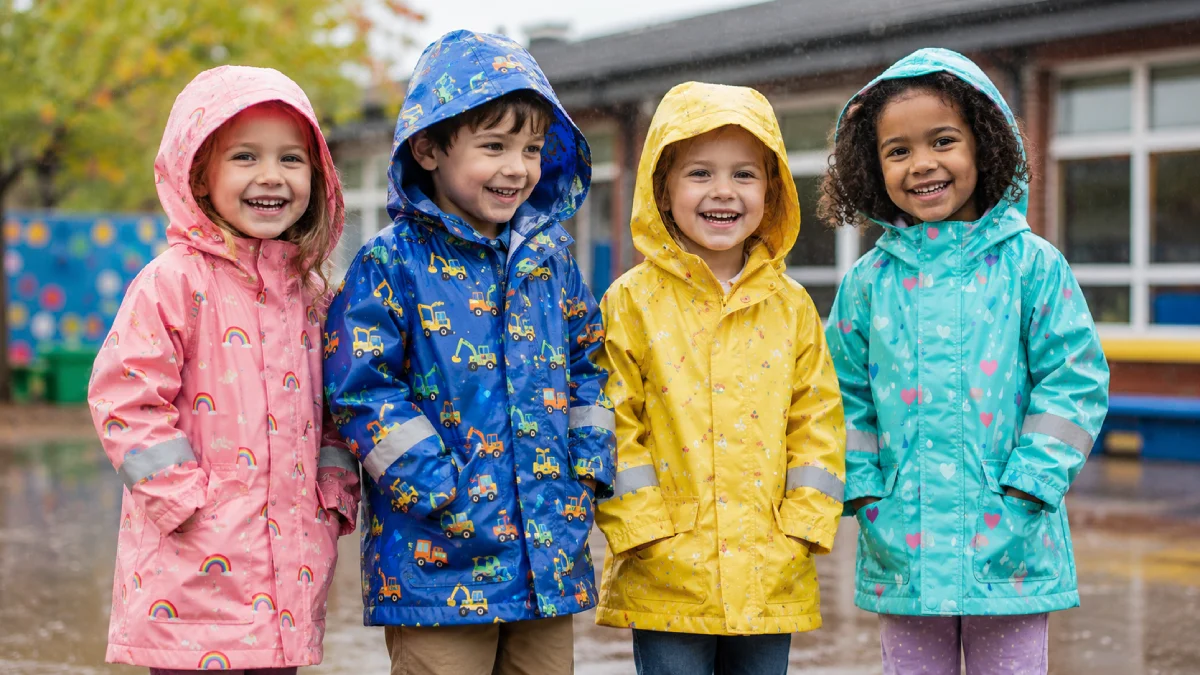
School and children’s product buyers should focus on safety, comfort, size coverage, and easy wearing. Children’s ponchos and raincoats should not only be colorful. They should be easy to put on, safe around the neck and hood area, and comfortable enough for repeated use. Reflective details may also improve visibility in rainy conditions.
Performance Factors Buyers Should Check Before Ordering
Why Product Specs Need to Go Beyond Material Name
Rainwear quality is not only about fabric name. A “PVC raincoat” or “EVA poncho” can vary widely depending on thickness, softness, production method, and finishing quality. Before placing a wholesale order, buyers should check several practical performance factors.
Key Rainwear Performance Checklist
| Performance Factor | Why It Matters | What Buyers Should Check |
|---|---|---|
| Material Thickness | Affects durability, hand feel, weight, and cost | Confirm thickness range, not only material name |
| Waterproof Level | Determines rain protection performance | Ask how the fabric and finished garment are tested |
| Seam Construction | Poor seams can leak even if fabric is waterproof | Check stitching, heat sealing, welding, or seam tape |
| Hood Design | A weak hood allows rain to enter around the face and neck | Check hood depth, drawstring, snaps, or visor design |
| Тип закрытия | Affects wind protection and wearing convenience | Compare zipper, snap buttons, Velcro, storm flap, or open sides |
| Size Coverage | Prevents fit complaints and inventory imbalance | Confirm size chart, body coverage, and market size ratio |
| Print Quality | Impacts branding and retail appearance | Test logo adhesion, color accuracy, and surface finish |
| Упаковка | Affects retail display, shipping, and customer experience | Confirm individual bag, pouch, hangtag, barcode, carton mark |
| Odor and Hand Feel | Important for retail and children’s products | Review samples before bulk approval |
| Color Consistency | Important for brand identity and repeat orders | Confirm color standard before production |
Why Sample Testing Is Important
For serious buyers, samples should be tested under realistic conditions. A quick water splash is not enough. The product should be worn, folded, opened, pulled, packed, and inspected like the final user would handle it. This helps reveal issues that do not appear in product photos.
Typical Rainwear Performance Reference Table
Common Product Types and Expected Use
The following table gives a practical reference for common rainwear products. Actual values may vary by material supplier, coating method, product design, and testing standard, but these ranges help buyers understand the difference between light-use and heavy-use rainwear.
| Product Type | Typical Material | Typical Use Duration | Water Protection Expectation | Comfort Level | Best Market Fit |
|---|---|---|---|---|---|
| Disposable Poncho | Thin PE | Short-term / one-time use | Light to moderate rain | Basic | Events, travel kits, emergency packs |
| Reusable Retail Poncho | EVA or thicker PE | Occasional repeated use | Light to moderate rain | Better than basic PE | Retail, tourism, school activities |
| Outdoor Poncho | Polyester, nylon, or coated fabric | Repeated outdoor use | Moderate rain, depending on seam design | Medium to good | Hiking, camping, outdoor brands |
| Heavy-Duty Poncho | PVC or coated polyester | Repeated use | Moderate to heavy rain | Medium | Worksites, fishing, outdoor labor |
| Lightweight Raincoat | PU-coated polyester or nylon | Daily or seasonal use | Moderate rain | Good if well designed | Commuting, retail, school use |
| Industrial Raincoat | PVC, Oxford, or coated polyester | Frequent use | Heavy rain and tough conditions | Depends on weight and ventilation | Workwear, construction, ports, delivery |
What This Table Means
This table also shows why a buyer should not ask for “the best material” without explaining the use case. The best material for a one-time event poncho is not the best material for industrial rainwear. The best product is the one that matches the user, weather, budget, sales channel, and expected lifespan.
Poncho or Raincoat for Wholesale: What Should Importers Consider?
Wholesale Buyers Need to Think Beyond Product Function
For importers and distributors, the decision is not only about product function. It also involves order planning, carton volume, shipping cost, size ratio, packaging, and repeat purchase potential.
Why Ponchos Are Easier for High-Volume Orders
Ponchos are easier for high-volume orders because they are compact and size-flexible. A one-size poncho can often serve a wider user group than a fitted raincoat. This reduces inventory complexity. For seasonal promotions or event-based orders, this is a major advantage.
Why Raincoats Require Better Size Planning
Raincoats require more planning because they come in multiple sizes. The buyer needs to decide how many pieces of each size to order. If the size ratio is wrong, some sizes may sell out quickly while others remain in stock. This is especially important for retail chains, workwear distributors, and uniform suppliers.
How Customization Differs Between Ponchos and Raincoats
Customization also differs. Custom rain poncho wholesale orders may focus on logo printing, color, packaging, and material thickness. Custom raincoat orders may involve more details: size grading, zipper quality, pocket design, reflective tape, cuff style, lining, labels, and inspection standards.
Which Product Is Easier for New Buyers?
For buyers who are new to rainwear sourcing, ponchos are often easier to start with. For buyers who already understand their market and want to build a stronger rainwear category, raincoats offer more room for branding and product differentiation.
How to Evaluate a Rainwear Supplier
Supplier Quality Is More Than a Low Price
A good rainwear supplier should not only quote a price. They should help buyers avoid product mismatch. When comparing a rain poncho supplier, raincoat manufacturer, or OEM rainwear factory, buyers should look at communication quality, sampling ability, material knowledge, production consistency, and quality control process.
A Reliable Supplier Should Understand Use Cases
A reliable supplier should be able to explain which material fits which use case. If a buyer asks for a poncho for outdoor events, the supplier should not blindly recommend the thickest and most expensive material. If a buyer needs industrial raincoats, the supplier should not recommend thin event ponchos just to win the order with a low price.
Sampling Should Come Before Bulk Production
Sampling is also important. Buyers should review material samples, size samples, print samples, and packaging samples before bulk production. This reduces misunderstanding and gives both sides a clear production reference.
Quality Inspection Should Cover Finished Products
Quality inspection should cover more than appearance. It should include material thickness, seam strength, closure function, printing quality, sizing, packaging quantity, carton marks, odor, color consistency, and random finished-product checks. Rainwear is used in uncomfortable weather, so small defects can become very visible to end users.
FAQ About Ponchos and Raincoats
1. What is a poncho used for?
A poncho is used for quick rain protection, outdoor activities, travel, hiking, camping, festivals, emergency kits, school events, and promotional rainwear. Its loose shape makes it easy to wear over clothing or a backpack, which is why many buyers choose rain ponchos for situations where fast coverage and flexible sizing matter more than a fitted garment.
2. Is a poncho better than a raincoat?
A poncho is better when the user needs lightweight packing, fast wearing, wide coverage, backpack protection, and easy distribution for many people. A raincoat is better when the user needs stronger wind resistance, fitted sleeves, repeated daily use, workwear protection, or a more professional appearance. The better option depends on the weather, activity, user group, and expected product lifespan.
3. Can a poncho keep you dry in heavy rain?
A poncho can keep users dry in light to moderate rain, and a thicker waterproof poncho with good hood design, side closures, and enough length can perform well in stronger rain. However, in heavy rain with wind, a fitted raincoat usually provides more stable protection because sleeves, cuffs, front closures, and sealed seams reduce the chance of water entering from the sides.
4. What material is best for a rain poncho?
The best material for a rain poncho depends on how it will be used. PE is suitable for disposable ponchos, events, and emergency packs. EVA is softer and better for reusable casual ponchos. PVC and coated polyester are better for stronger rain protection and repeated use. For retail or outdoor markets, buyers should consider thickness, flexibility, waterproof performance, printing quality, and packing style before choosing the material.
5. Are ponchos good for hiking?
Ponchos can be good for hiking because they are lightweight, easy to pack, and able to cover both the body and a backpack. A hiking poncho should have enough back length, reliable hood coverage, stronger material, and side closures to reduce flapping in wind. For long hikes in rough weather, buyers should compare ponchos with rain jackets based on ventilation, pack coverage, mobility, and expected rainfall.
6. What is the difference between a rain poncho and a rain jacket?
A rain poncho is loose, sleeveless, and designed to drape over the body for fast and wide coverage. A rain jacket is more fitted, usually with sleeves, zippers, cuffs, pockets, and technical fabric details. Ponchos are easier to wear quickly and can cover backpacks, while rain jackets provide better movement control, wind protection, and a cleaner everyday look.
7. Can rain ponchos be customized with a logo?
Yes, rain ponchos can be customized with logos, event names, brand graphics, colors, packaging, and private-label details. Because ponchos have large front and back panels, they are especially suitable for promotional printing and event branding. Before bulk production, buyers should test the printing method on the selected material to confirm color accuracy, adhesion, and surface finish.
8. What should buyers check before ordering bulk rain ponchos or raincoats?
Buyers should check material type, thickness, waterproof performance, seam construction, size coverage, hood design, closure type, printing method, packaging, carton quantity, color standard, sample approval, and quality inspection requirements. These details help reduce sourcing risks, avoid product mismatch, and ensure the final rainwear fits the target market and real weather conditions.
Final Recommendation: Poncho or Raincoat?
Choose a Poncho When Convenience Matters Most
A poncho is the better choice when the priority is fast rain protection, compact packing, simple sizing, backpack coverage, and high-volume distribution. It is ideal for events, travel, hiking, emergency kits, promotional use, and casual outdoor rain protection.
Choose a Raincoat When Durability Matters Most
A raincoat is the better choice when the priority is durability, wind resistance, professional appearance, body fit, and repeated use. It is more suitable for commuting, workwear, uniforms, cycling, delivery, industrial use, and retail product lines that require stronger perceived value.
Use Both Products for Different Market Needs
For buyers, the smartest approach is not to treat ponchos and raincoats as competing products. They serve different market needs. Many rainwear programs can include both: ponchos for lightweight and high-volume use, and raincoats for more durable and professional use.
Final Buyer Recommendation
If the order is for short-term use, broad sizing, events, or travel convenience, a poncho is usually the safer choice. If the order is for daily wear, workwear, staff uniforms, or long-term retail value, a raincoat usually delivers better performance.
A good supplier should help match the product to the market instead of simply offering the cheapest option. Before placing a bulk order, buyers should share the target user, expected weather conditions, sales channel, packaging needs, logo requirements, and quality expectations. With the right product choice, rainwear is not just a seasonal item. It becomes a practical, repeatable category that protects users, supports branding, and reduces sourcing risk.
References
- “How to Choose the Best Rain Jacket” — REI Co-op Editors — REI Expert Advice
- “How Does Waterproof Rain Gear Work?” — REI Co-op Editors — REI Expert Advice
- “Rainwear Basics” — REI Co-op Editors — REI Expert Advice
- “Poncho vs Rain Jacket: What Keeps You Dry On The Camino?” — The NWE Walked — The NWE Walked
- “Poncho vs. Rain Jacket” — Amputee Outdoors — Amputee Outdoors
- “Rain Ponchos” — REI Co-op Product Category — REI Co-op
- “Men’s Rain Jackets, Coats & Shells” — REI Co-op Product Category — REI Co-op
- “Embrace the Rain in Style with Our Pick of the Best Waterproof Jackets” — Woman & Home Fashion Team — Woman & Home
Poncho vs Raincoat: Final Buying Insight
Understanding what is a poncho is the first step toward choosing the right rainwear product. A poncho is not simply a cheaper version of a raincoat. It is a different rain protection format designed for fast coverage, flexible sizing, compact storage, and easy distribution. A raincoat, by contrast, is built for closer body fit, stronger wind control, repeated wear, and more structured protection. The right choice depends on how the product will be used, who will wear it, and what kind of performance the buyer expects.
How should buyers choose between a poncho and a raincoat?
Buyers should start with the use scenario instead of the product name. If the rainwear is needed for outdoor events, tourism, hiking kits, emergency packs, promotional campaigns, or broad-size distribution, a rain poncho is usually the more practical option. If the product is needed for commuting, workwear, staff uniforms, cycling, delivery teams, or repeated daily use, a waterproof raincoat normally provides better stability and durability. In simple terms, choose a poncho when coverage and convenience matter most; choose a raincoat when fit and long-term protection matter more.
Why does material matter so much in rainwear sourcing?
Material determines comfort, waterproof performance, durability, packing volume, printing quality, and final user satisfaction. PE is suitable for disposable ponchos and short-term event use. EVA offers a softer feel for reusable casual ponchos and children’s rainwear. PVC and coated polyester are better for stronger rain protection, workwear, and repeated use. For bulk orders, buyers should not select rainwear only by price. A low-cost product that tears easily, leaks at the seams, or feels uncomfortable can create more complaints than savings.
What are the best options for different rainwear markets?
For promotional use, custom printed ponchos are often the best choice because they provide large visible logo areas and simple size management. For retail stores, reusable EVA ponchos or lightweight coated raincoats can offer better perceived value. For outdoor brands, lightweight ponchos or rain jackets should balance packability, coverage, ventilation, and durability. For workwear buyers, PVC or PU-coated raincoats with reinforced seams, reflective details, and secure closures are usually more suitable. For importers and distributors, the best option is the one that matches the sales channel, weather conditions, user group, and packaging requirements.
What should buyers consider before placing a bulk order?
Before ordering bulk rain ponchos or custom raincoats, buyers should confirm material type, thickness, waterproof level, seam construction, hood design, closure method, size coverage, logo printing method, packaging style, carton quantity, and sample approval process. These details reduce sourcing risk and help prevent common problems such as weak seams, poor fit, color inconsistency, logo peeling, uncomfortable materials, and delayed delivery.
Why does this choice affect long-term business value?
Rainwear is often used in uncomfortable weather, so product problems become visible very quickly. A poorly matched poncho or raincoat can lead to returns, complaints, wasted stock, and weaker repeat orders. A well-matched product, however, protects users, supports brand visibility, improves customer trust, and helps buyers build a more reliable rainwear category. Working with an experienced OEM rainwear factory such as YOUNGSTAR can help buyers compare materials, develop samples, plan packaging, and choose the right product structure before mass production.
The final recommendation is simple: choose a poncho for fast, lightweight, flexible rain protection; choose a raincoat for fitted, durable, long-term weather protection. When the product must support branding, wholesale distribution, or private-label development, the safest decision is to match the rainwear type with the target market before confirming material, design, and packaging.