Quick Summary
TPU lamination and PU coating are both used to make waterproof fabrics for rain jackets, rainwear, outdoor apparel, and workwear, but they solve waterproofing in different ways. TPU lamination bonds a TPU film to a base fabric, while PU coating applies a polyurethane layer directly onto the fabric surface. The main sourcing question is not simply which one is “better,” but which one reduces delamination risk for the target market. TPU laminated fabric is usually better for premium waterproof jackets, long-term retail products, and comfort-focused OEM rainwear. PU coated fabric remains practical for cost-sensitive rainwear, promotional jackets, and basic waterproof apparel when the coating quality and storage conditions are well controlled. Buyers should evaluate bonding strength, hydrolysis resistance, waterproof performance, breathability, compliance documents, packaging, and final application before confirming bulk production.
When waterproof jackets fail, buyers usually do not hear technical complaints from end users. They hear simple but painful feedback: the inner layer is peeling, the jacket feels sticky, the coating is cracking, the fabric is bubbling, or the rainwear no longer feels waterproof after storage or repeated use. Behind these complaints, the real problem is often fabric delamination or coating failure.
For OEM and wholesale rainwear buyers, this issue is more than a material defect. Delamination can create returns, retailer disputes, brand damage, inventory loss, and expensive replacement costs. A product that looked acceptable during sampling may fail after shipment if the wrong material structure, poor coating quality, weak bonding process, unsuitable packaging, or harsh storage conditions are ignored.
This guide explains the difference between TPU lamination and PU coating from a buyer’s perspective. It covers why waterproof fabrics delaminate, how TPU laminate fabric works, where PU-coated fabric still makes sense, how to reduce coating failure, and how buyers can choose the right waterproof jacket faric for OEM rainwear projects.
Why Delamination Happens in Waterproof Fabrics
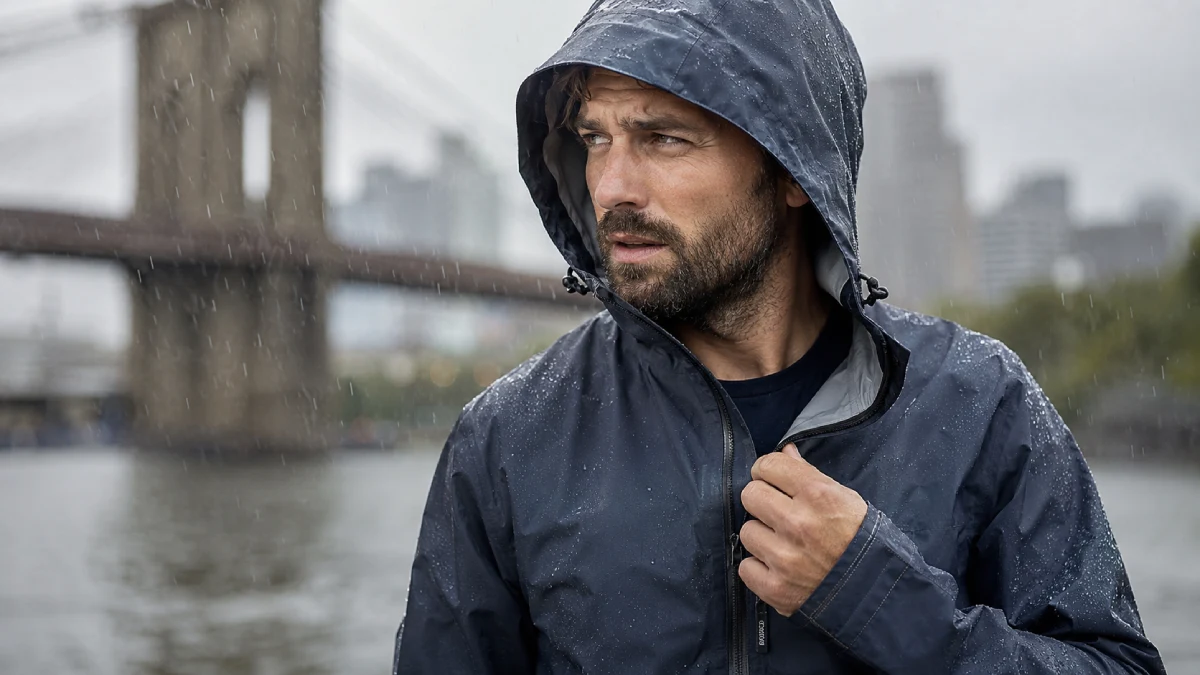
Delamination happens when layers inside a waterproof fabric begin to separate. In rainwear, this may appear as peeling, bubbling, cracking, whitening, flaking, stickiness, or a loose inner film. Sometimes the outer fabric still looks acceptable, but the inner coating or membrane begins to fail. In other cases, the garment loses waterproof performance because the functional layer is no longer properly attached to the base fabric.
The problem is common in waterproof jackets, raincoats, workwear rain jackets, outdoor shells, coated ponchos, and other laminated or coated textile products. It is especially serious for buyers who sell to humid climates, outdoor workers, travel markets, or retail channels where products may sit in warehouses before reaching final users.
What Delamination Means in Rainwear and Waterproof Jackets
In rainwear manufacturing, delamination usually refers to the separation of a coating, film, membrane, or bonding layer from the textile base. A waterproof fabric is not only a piece of woven polyester or nylon. It often includes several layers that work together: the face fabric, waterproof coating or membrane, adhesive or bonding layer, and sometimes an inner lining or protective backing.
If these layers are not compatible or if the bonding process is weak, the structure may fail during storage, washing, folding, heat exposure, or repeated wear. In waterproof jackets, this failure can show up around high-movement areas such as shoulders, elbows, sleeves, hood seams, pocket areas, and folded sections.
Buyers should treat delamination as a product-life risk, not only as a factory defect. A fabric may pass a quick visual inspection but still fail after exposure to humidity, heat, friction, or time. This is why sourcing decisions should include material structure, testing, packaging, and storage conditions.
Hydrolysis: A Common Cause Behind PU Coating Failure
Hydrolysis is one of the common causes of PU coating failure. In simple terms, moisture and heat can gradually break down certain polyurethane structures. When this happens, the coating may become sticky, brittle, cracked, powdery, or detached from the fabric. Buyers sometimes describe this problem as “PU coating peeling,” “inner layer coming off,” or “rain jacket lining breaking down.”
Hydrolysis risk is higher when products are stored in hot and humid environments for long periods. It may also increase when coated garments are packed too tightly, exposed to moisture during transportation, or kept in warehouses without proper ventilation. This is why tropical markets, long sea shipments, and poor storage conditions can make coating durability more important.
This does not mean all PU-coated fabrics are weak. High-quality PU coatings, better formulations, controlled finishing, and suitable storage can perform well for many rainwear applications. The real mistake is choosing low-grade coating for a market that needs longer service life and then expecting it to behave like a premium laminated fabric.
Poor Bonding and Incorrect Lamination Conditions
Delamination can also happen in laminated fabrics if the bonding process is poorly controlled. TPU laminated fabric depends on stable bonding between the TPU film and the base fabric. If temperature, pressure, adhesive selection, surface treatment, lamination speed, or curing time is not properly managed, the laminated structure may separate during use.
Common manufacturing causes include insufficient bonding temperature, uneven pressure, incompatible adhesive, dirty or poorly prepared fabric surface, excessive production speed, weak curing, and incorrect film thickness. These issues may not be obvious in a fresh sample. They often appear after folding, washing, stretching, or humidity exposure.
For buyers, the message is clear: TPU laminated fabric is not automatically perfect. Good TPU lamination depends on the film, base fabric, adhesive system, lamination process, and inspection standard. A professional waterproof jacket supplier should be able to explain these factors clearly before bulk production.
Storage, Washing, Heat, and Humidity Risks
Waterproof fabrics are sensitive to real-world conditions. A jacket may leave the factory in good condition but suffer during shipping or storage if moisture, heat, pressure, or poor packaging is not controlled. Long-term compression can create fold stress. High humidity can accelerate coating breakdown. Excessive heat can affect bonding layers. Strong detergent or incorrect washing can damage coatings and membranes.
Buyers should consider the full product journey: fabric production, garment manufacturing, packing, sea freight, customs storage, distributor warehouse, retail shelf, and final consumer use. Delamination prevention is not only about choosing TPU or PU. It is about choosing the right material and managing the entire supply chain properly.
What Is TPU Lamination?
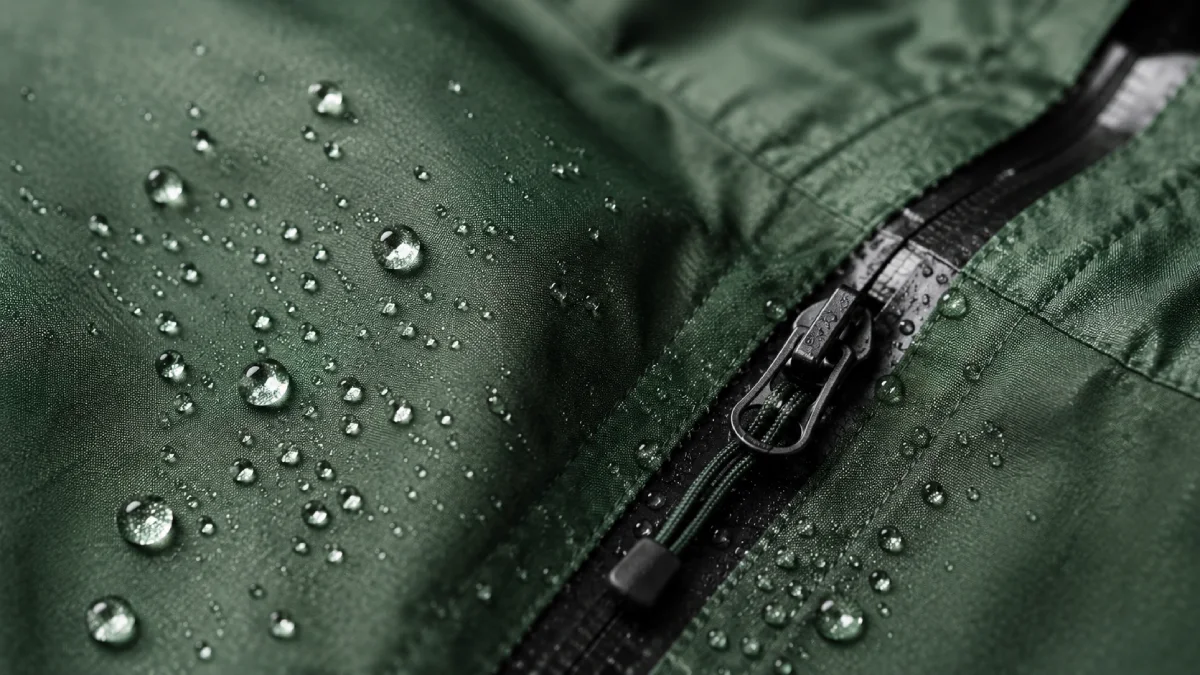
TPU lamination is a fabric construction method that bonds a thermoplastic polyurethane film to a textile base. The base fabric may be polyester, nylon, or another textile substrate. The TPU film creates a functional waterproof layer and may also support breathability depending on film type and construction. The result is known as TPU laminated fabric.
In rainwear and waterproof jackets, TPU lamination is often used when the buyer needs stronger product positioning, better hand feel, more stable long-term performance, or a waterproof-breathable structure. It is commonly considered for premium rain jackets, outdoor apparel, commuter jackets, workwear rain jackets, and private-label OEM rainwear.
TPU Film Structure and How Lamination Works
A typical TPU laminated fabric may include an outer textile layer, a bonding layer, and a TPU membrane or film. In some constructions, an inner fabric or tricot backing may be added to protect the membrane and improve comfort. The exact structure depends on the product’s target use.
The lamination process uses heat, pressure, adhesive, or a bonding system to attach the TPU film to the fabric. The goal is to create a stable layered fabric that can resist water penetration while maintaining flexibility and comfort. If the bonding is strong and the film is suitable, TPU laminated fabric can offer a more durable solution than many low-grade coated fabrics.
Why TPU Laminated Fabric Is Used in Waterproof Jackets
TPU laminated fabric is used in waterproof jackets because it can support a more technical product structure. It can help create waterproof performance without relying only on a surface coating. It can also provide a more controlled film layer, which is valuable for outdoor jackets, travel rainwear, premium retail collections, and long-term OEM programs.
For buyers developing OEM waterproof jackets, TPU lamination is often considered when the end user expects better comfort, better performance, and longer product life. It is especially useful when the jacket is sold as a reliable waterproof outerwear product rather than a temporary rain cover.
Main Advantages of TPU Lamination
The first advantage of TPU lamination is structural stability. Because the TPU film is a defined membrane layer, it can provide a more consistent waterproof barrier when laminated correctly. This can reduce some risks associated with uneven coating thickness or low-grade coating degradation.
The second advantage is comfort potential. TPU laminated fabric can be engineered to feel soft, flexible, and suitable for apparel. Depending on the structure, it may also support waterproof-breathable performance, which is important for outdoor and active-use rain jackets.
The third advantage is product positioning. For private-label brands, outdoor buyers, and premium retail programs, TPU lamination can make the product feel more advanced than basic coated rainwear. This can support higher perceived value, better product storytelling, and stronger differentiation.
Buyer Watch Points for TPU Lamination
TPU lamination also has limitations. It is usually more expensive than basic PU coating. It requires more controlled production. It may need stronger supplier experience. If the lamination process is poor, delamination can still happen. If the TPU film is too stiff, the jacket may feel uncomfortable. If the buyer expects breathability, the film structure must be selected carefully because not every TPU film delivers the same level of breathability.
Buyers should not choose TPU only because it sounds more advanced. They should ask whether TPU lamination is truly needed for the target market. A premium outdoor jacket may justify TPU laminated fabric. A short-term promotional rain jacket may not.
What Is PU Coating?
PU coating is a process where a polyurethane layer is applied directly to fabric to improve water resistance or waterproof performance. It is widely used in rainwear, bags, tents, outdoor covers, and lightweight waterproof garments. In rain jackets, PU-coated fabric is often selected for cost efficiency, flexible hand feel, and broad supply availability.
PU coating remains popular because it can be practical and economical. Many successful rainwear products use PU-coated fabric. The key is to choose the right coating quality for the application and to avoid using low-grade coating in markets that require stronger durability.
How PU Coating Is Applied to Fabric
PU coating is usually applied to the fabric surface through a coating process. The coating may be adjusted for thickness, softness, water resistance, and hand feel. After coating, the fabric goes through drying and finishing steps. The result is a coated textile that can help block water penetration.
Compared with lamination, coating is often simpler and more cost-effective. It can produce lightweight rainwear fabrics and can be suitable for large-volume production. However, coating performance depends heavily on formulation, coating thickness, process control, fabric quality, and storage conditions.
Why PU Coating Is Still Widely Used
PU coating is still widely used because it matches many commercial rainwear needs. It can support basic rain jackets, promotional rainwear, lightweight ponchos, school rainwear, and cost-sensitive wholesale products. It can also provide a softer hand feel than some heavier waterproof materials.
For buyers who need competitive pricing and large-volume supply, PU coated fabric can be a reasonable choice. The important point is to avoid treating all PU coatings as equal. A higher-grade PU coating can perform much better than a low-grade option, especially when hydrolysis resistance and coating stability are considered.
Main Advantages of PU Coating
The first advantage of PU coating is cost control. For large orders, promotional products, or entry-level rainwear, price matters. PU coated fabric can help buyers develop waterproof garments at a more accessible cost level.
The second advantage is flexibility in production. PU coating is a mature process, and fabric supply is usually easier to arrange. Buyers can often choose different fabric weights, colors, and finishes according to order requirements.
The third advantage is suitability for broad rainwear markets. Not every jacket needs premium laminated fabric. Many rainwear buyers need a practical, attractive, and affordable waterproof solution. For these projects, PU coating can still be the right choice.
Buyer Watch Points for PU Coating
The biggest watch point for PU coating is long-term stability. Low-grade PU coating may peel, crack, become sticky, or delaminate when exposed to humidity, heat, poor storage, or repeated use. Buyers should ask about coating quality, hydrolysis resistance, storage recommendations, and testing before ordering.
Another watch point is sustainability and chemical compliance. Waterproof apparel buyers increasingly need to understand what chemicals are used in coatings and water-repellent treatments. If a product is marketed as safer, PFAS-free, recycled, or eco-conscious, the claim should be supported by proper documents instead of loose marketing language.
TPU Lamination vs. PU Coating: Key Differences Buyers Should Know
The choice between TPU lamination and PU coating should be based on product positioning, performance expectations, target market, cost level, and risk tolerance. Neither option is correct for every order. The best choice is the one that fits the buyer’s final use case.
| Comparison Point | TPU Lamination | PU Coating |
|---|---|---|
| Structure | TPU film laminated to fabric through bonding. | PU layer coated directly onto the fabric surface. |
| Durability | Usually stronger for premium waterproof fabric when bonded well. | Depends heavily on coating grade and hydrolysis resistance. |
| Delamination Risk | Lower when film quality and bonding are well controlled. | Higher if low-grade coating, hydrolysis, or poor storage occurs. |
| Breathability | Can be designed for waterproof-breathable performance. | Depends on the coating formulation and thickness. |
| Hand Feel | Can feel soft or technical depending on the film and backing. | Often lightweight and flexible for basic rainwear. |
| Cost | Usually higher. | Usually more cost-effective. |
| Best Use | Premium rain jackets, outdoor wear, brand-level OEM rainwear. | Basic rainwear, promotional rain jackets, budget-friendly products. |
Durability and Service Life
Durability is where TPU lamination often has an advantage, especially when the fabric is designed for repeated wear and longer service life. A well-bonded TPU laminated fabric can better support premium waterproof jackets and outdoor rainwear programs. It is usually a stronger choice when the product must survive regular folding, movement, and repeated use.
PU coating can also perform well, but its durability depends more heavily on the quality of the coating formulation and finishing process. Buyers sourcing low-cost PU-coated rainwear should understand that short-term waterproof performance does not always guarantee long-term stability.
Waterproof and Breathable Performance
TPU laminated fabric can be designed for waterproof and breathable performance, making it suitable for outdoor apparel and active-use rain jackets. This does not mean every TPU fabric is automatically breathable. Breathability depends on the film type, fabric structure, and testing standard.
PU-coated fabric can provide waterproof performance, but heavier or less advanced coatings may reduce breathability. For workwear, this may be acceptable if protection is the main purpose. For outdoor retail, poor breathability may reduce wearer comfort and cause negative feedback.
Cost and Market Positioning
TPU lamination usually costs more than PU coating. This cost can be justified when the jacket is positioned as premium, technical, durable, or comfort-focused. Buyers selling to outdoor retailers or private-label channels may benefit from the improved performance story.
PU coating is better when the project is price-sensitive, promotional, short-cycle, or designed for basic rain protection. It allows buyers to create waterproof garments at a lower cost, especially when the final customer does not require premium fabric performance.
Delamination Resistance
TPU lamination can reduce delamination risk when bonding quality is well controlled. The film structure may be more stable than low-grade coating, especially in products that require longer life. However, poor lamination can still fail. Buyers should confirm peel strength and bonding stability during sample approval.
PU coating may have a higher delamination or peeling risk if the coating is of low quality, if hydrolysis resistance is weak, or if products are stored in hot and humid conditions. For markets with long storage time or high humidity, coating selection becomes especially important.
How to Reduce Delamination Risk Before Bulk Production
The best time to solve delamination is before production, not after shipment. Once a container of jackets has a coating failure, there are few good solutions. Buyers may face returns, rework, replacement costs, and damaged customer trust. A practical prevention plan should start from material selection and continue through sampling, testing, packaging, and storage guidance.
Choose the Right Fabric Structure for the Market
The first step is to match the fabric structure to the market. Premium outdoor jackets, long-term retail products, and brand-level OEM rainwear usually need better material stability. TPU laminated fabric is often more suitable for these markets. Basic rainwear, promotional rain jackets, and cost-sensitive orders may still use PU-coated fabric if the coating grade is appropriate.
| Buyer Need | Recommended Direction | Reason |
|---|---|---|
| Premium outdoor rain jackets | TPU laminated fabric | Better for durable and comfort-focused product positioning. |
| Economy rainwear | Quality PU coating | More cost-effective for basic waterproof protection. |
| Industrial workwear | Strong laminated or heavy-duty coated fabric | Protection, durability, and application risk matter more. |
| Promotional rain jackets | Cost-effective PU-coated fabric | Suitable for short-cycle use and large-volume campaigns. |
| Long-term retail product | TPU lamination or higher-grade PU coating | Reduces complaints linked to peeling, stickiness, or coating failure. |
Confirm Peel Strength and Bonding Quality
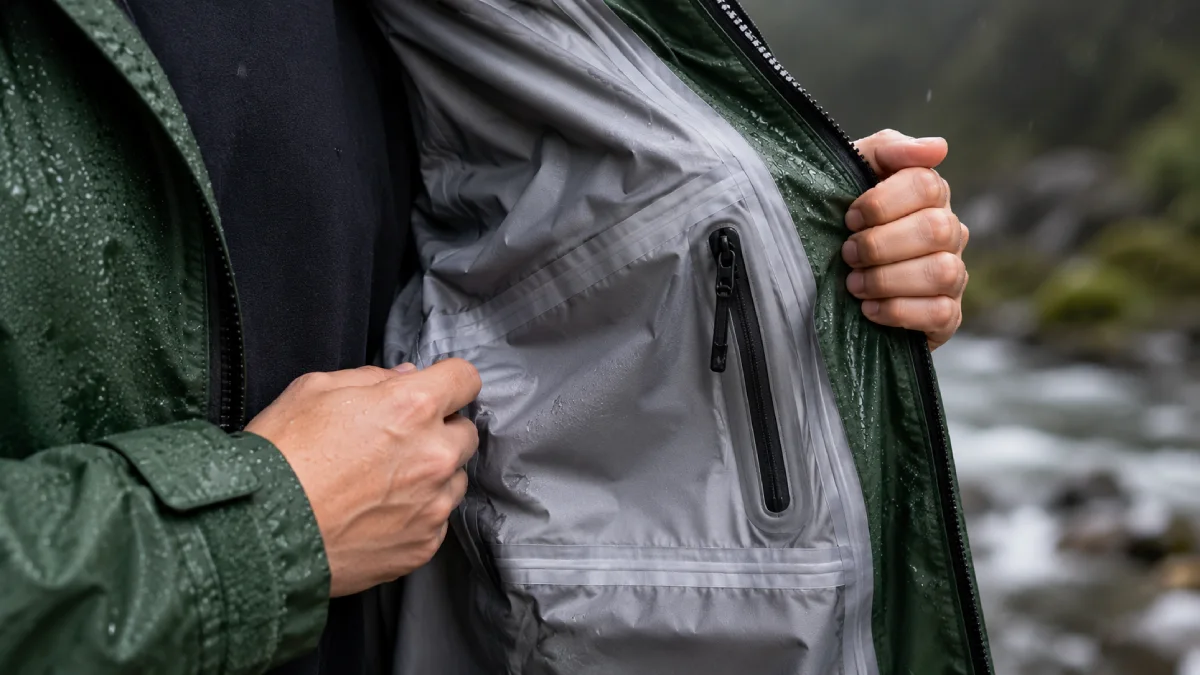
Peel strength is an important indicator for laminated or coated waterproof fabrics. It helps buyers understand how strongly the layers are bonded. For TPU laminated fabric, buyers should confirm whether the TPU film remains attached after folding, stretching, washing, and humidity exposure. For PU-coated fabric, buyers should check whether the coating remains stable without cracking, peeling, or becoming sticky.
Useful checks may include sample peel testing, edge separation inspection, wash testing, folding testing, humidity aging testing, and visual inspection after storage simulation. Not every project needs the same laboratory process, but buyers should at least discuss these risks before mass production.
Ask for Hydrolysis-Resistant Formulations
If the buyer chooses PU coating for rainwear, hydrolysis resistance should be discussed. This is especially important for markets with high humidity, long storage time, or repeated exposure to moisture. A better PU formulation may cost more than a low-grade coating, but it can reduce peeling and stickiness complaints later.
For buyers comparing quotations, this is a major hidden difference. Two fabrics may both be described as PU-coated polyester, but one may be much more stable than the other. A lower price may simply mean a lower-grade coating system.
Test Before Bulk Production, Not After Shipment
Testing after shipment is damage control. Testing before production is risk control. Buyers should approve fabric swatches, lab dips, pre-production samples, seam construction, logo application, and packaging before mass production begins. For waterproof jackets, seam sealing and zipper protection should also be checked because fabric quality alone cannot guarantee garment-level waterproof performance.
If a buyer plans to sell the product through a retail chain, outdoor store, or branded e-commerce channel, sample approval should be strict. The supplier should provide clear sample comments, measurement records, material references, and production confirmation before the order moves forward.
Control Storage and Packaging Conditions
Storage and packaging are often ignored, but they can affect coating life. Waterproof garments should be packed dry, stored away from excessive heat, and protected from long-term humidity. Buyers should avoid keeping coated jackets compressed for too long, especially in hot and damp warehouses.
For long-distance sea shipments, moisture control matters. If the destination market has high humidity, buyers should discuss packing method, carton strength, polybag quality, ventilation, and warehouse conditions. These details may sound small, but they help protect the fabric structure after production.
Compliance and Sustainability Trends Are Changing Waterproof Fabric Choices
Waterproof apparel buyers are no longer evaluating materials only by water resistance and price. Global markets are moving toward more durable textiles, safer chemical management, clearer environmental claims, and better documentation. These trends affect how buyers choose TPU lamination, PU coating, water-repellent treatments, recycled materials, and supplier partners.
Textile Durability Is Becoming a Regulatory Direction
The European textile policy direction is moving toward products that are more durable, repairable, recyclable, and free from harmful substances. For rainwear buyers, this means short-lived waterproof products may face increasing pressure in premium and regulated markets. A jacket that loses its coating quickly is not only a quality issue; it also conflicts with the broader direction of longer-lasting textile products.
This trend makes material durability more important. Buyers selling to Europe or sustainability-focused customers should pay closer attention to coating stability, lamination quality, fabric life, and documentation. A waterproof jacket should not only perform during the first rain. It should remain usable through the expected product life.
PFAS-Free Waterproofing Is Becoming More Important
PFAS restrictions are changing the waterproof apparel industry. For many years, certain water-repellent treatments in textiles used fluorinated chemistry. Now buyers are increasingly asking for PFAS-free options, safer water-repellent treatments, and clearer chemical documentation. This affects rain jackets, outdoor apparel, workwear, and other waterproof textile products.
Buyers should not assume that a waterproof fabric is automatically compliant with every market requirement. If the product will be sold in regions with PFAS restrictions or through retailers with strict chemical policies, buyers should ask about the water-repellent treatment, testing documents, and chemical compliance support before confirming the material.
Environmental Claims Need Evidence
Environmental claims must be specific and supportable. A buyer should avoid vague claims such as “eco-friendly waterproof jacket” unless the material, process, certification, or packaging evidence supports the statement. It is safer to use precise claims such as recycled polyester shell fabric, PFAS-free water-repellent finish, recyclable packaging, or verified material content when documentation is available.
This matters because sustainability claims are now part of product risk. A claim printed on hangtags, packaging, online listings, or retailer documents can create legal and reputational problems if it is unsupported. Buyers should treat environmental language as carefully as fabric specifications.
Which One Should Buyers Choose: TPU Lamination or PU Coating?
The right answer depends on the order. Buyers should not automatically choose TPU lamination because it sounds more premium, and they should not automatically reject PU coating because some low-grade coatings fail. The decision should be based on end use, expected product life, buyer price level, comfort requirement, storage risk, and compliance needs.
Choose TPU Lamination If...
Choose TPU lamination if the product is positioned as a higher-value waterproof jacket, outdoor rainwear, long-term retail product, or premium OEM garment. TPU laminated fabric is also a strong direction when the buyer wants better comfort, a more technical fabric story, improved durability, and reduced complaints related to coating peeling.
This option is especially suitable for buyers serving outdoor brands, commuter apparel, private-label rainwear, retail chains, and customers who expect better performance. It is also a practical choice when the buyer wants waterproof-breathable fabric options and is willing to invest in a more controlled material structure.
Choose PU Coating If...
Choose PU coating if the project is cost-sensitive, the product is used for basic rainwear, or the market does not require premium long-term performance. PU-coated fabric can be suitable for promotional rain jackets, light rainwear, short-cycle programs, and large-volume wholesale orders.
For these projects, the key is to choose a suitable coating grade. Buyers should not select the cheapest option without asking about hydrolysis resistance, hand feel, storage recommendations, and coating stability. A quality PU coating can still be a reliable commercial solution.
Choose a Higher-Grade PU Coating If...
A higher-grade PU coating is a smart middle option when buyers need cost control but still want better durability than basic coating. This may be suitable for mid-range retail rainwear, school rain jackets, private-label economy lines, and distributors who need stable product quality without moving fully into TPU laminated fabric.
Buyers should ask the supplier to provide more than one PU coating option. Comparing a low-grade coating and a higher-grade coating during sampling can help buyers understand the difference in hand feel, flexibility, odor, stability, and long-term risk.
Choose TPU Laminated Fabric for Brand-Level OEM Rainwear
For brand-level OEM rainwear, TPU laminated fabric usually offers a stronger foundation. It supports a better performance story and can help reduce delamination concerns when properly manufactured. It also gives buyers more room to develop products with better comfort, technical appearance, and long-term value.
For YOUNGSTAR customers developing waterproof jackets, rainwear, or workwear, the best starting point is to define the market first. Once the buyer confirms the application, expected quality level, target price, and compliance needs, the material recommendation becomes much more accurate.
Common Buyer Mistakes When Comparing TPU Lamination and PU Coating
Many material failures come from incomplete comparisons. Buyers may compare two prices without comparing the fabric structure, coating grade, lamination process, hydrolysis resistance, storage risk, and testing method. This creates a false sense of savings.
Mistake 1: Thinking All TPU Laminated Fabrics Are the Same
TPU laminated fabrics can differ in film quality, film thickness, base fabric, adhesive system, backing layer, lamination process, hand feel, breathability, and durability. A cheap TPU laminated fabric may not perform like a well-developed technical fabric. Buyers should request clear specifications and samples instead of relying only on the word “TPU.”
Mistake 2: Rejecting PU Coating Without Understanding the Market
PU coating is not automatically a bad choice. Many rainwear products use PU-coated fabric successfully. The real issue is whether the coating grade matches the buyer’s market. A low-cost promotional jacket and a premium outdoor jacket should not use the same material standard.
Mistake 3: Asking Only for Waterproof Rating
Waterproof rating matters, but it is not the whole product. Buyers should also ask about peel strength, coating stability, hydrolysis resistance, seam sealing, washing performance, and storage conditions. A fabric may resist water at first, but fail later if the coating or bonding layer breaks down.
Mistake 4: Ignoring Delamination Testing
Delamination testing helps identify risk before bulk production. Buyers should not wait for end users to discover the problem. Sample checks, folding tests, wash tests, humidity aging tests, and edge separation reviews can provide useful warning signs before the order is shipped.
Mistake 5: Making Unsupported Sustainability Claims
Waterproof apparel is increasingly connected to chemical and sustainability concerns. Buyers should avoid broad claims unless they have evidence. If the product is PFAS-free, recycled, lower-impact, or responsibly sourced, the claim should be supported by documents. Unsupported claims may create problems with retailers, regulators, and consumers.
Recommended Material Selection Guide for OEM Waterproof Jackets
OEM waterproof jacket buyers should use a decision table before selecting fabric. This helps avoid emotional decisions based on sample appearance alone. A fabric that looks good in a showroom may not fit the order if the target market has different performance expectations.
| If Your Project Needs... | Better Choice | Buyer Consideration |
|---|---|---|
| Premium retail waterproof jacket | TPU lamination | Supports higher comfort, better positioning, and longer service expectations. |
| Cost-effective rainwear | PU coating | Works well when the coating grade matches the product life requirement. |
| Better long-term durability | TPU laminated fabric | Confirm bonding strength and sample performance before bulk production. |
| Promotional rain jackets | PU coated fabric | Good for controlled cost, simple design, and short-cycle use. |
| Workwear with stronger protection | Heavy-duty TPU laminated or reinforced PU-coated fabric | Durability and safety details matter more than basic appearance. |
| PFAS-free waterproof positioning | Confirm treatment and test documents first | Material claims should be supported by supplier documentation. |
| Lower delamination complaints | TPU lamination with verified bonding quality | Testing and process control are still necessary. |
How YOUNGSTAR Helps Buyers Reduce Fabric Delamination Risk
For OEM rainwear buyers, the supplier’s role should not stop at cutting and sewing. A good supplier should help buyers avoid material mismatch, coating failure, weak lamination, poor sample approval, and unrealistic product claims. YOUNGSTAR supports buyers by helping match waterproof fabric options to market application, product positioning, and production requirements.
Material Recommendation Before Sampling
Before sampling, buyers can share the target market, intended use, expected price level, required waterproof performance, comfort preference, logo method, packaging needs, and compliance requirements. Based on this information, YOUNGSTAR can help compare TPU laminated fabric, PU coated fabric, and other waterproof material options.
This early recommendation step helps reduce trial-and-error. Instead of developing a sample with the wrong fabric and discovering the problem later, buyers can start with a more suitable structure from the beginning.
Sample Development and Fabric Review
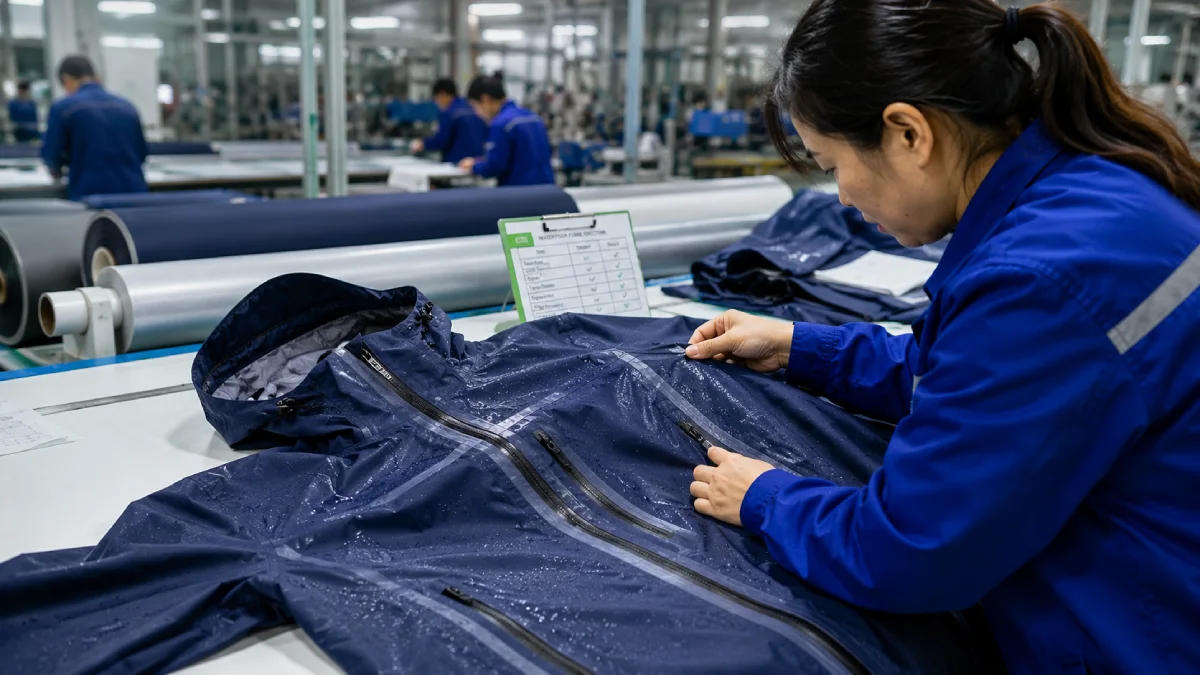
During sample development, buyers should review the fabric swatch, hand feel, thickness, flexibility, color, coating or lamination quality, seam construction, logo application, and packaging. YOUNGSTAR can help buyers assess whether the material matches the final product use.
For delamination-sensitive projects, buyers can request additional checks such as folding review, edge inspection, wash consideration, and humidity risk discussion. These practical steps help reduce product failure after shipment.
OEM Support for Rain Jackets, Rainwear, and Workwear
YOUNGSTAR supports OEM waterproof jackets, custom rainwear, rain jackets, rain suits, ponchos, and workwear rainwear for international buyers. Different markets require different material strategies. Outdoor brands may need TPU laminated fabric. Promotional buyers may choose PU-coated fabric. Workwear buyers may need reinforced waterproof structures and stronger construction.
By matching fabric, design, logo method, packaging, and production process to the buyer’s market, YOUNGSTAR helps reduce sourcing risk and improve bulk order stability.
Final Recommendation for Bulk Buyers
If your project requires long-term durability, stronger brand positioning, improved comfort, and lower delamination risk, TPU lamination is usually the better direction. If your project requires cost control, basic waterproof performance, and fast large-volume supply, PU coating can still be a practical choice when the coating quality is properly selected.
The safest sourcing decision is not to ask which material is universally better. The better question is: which fabric structure is suitable for your market, your price level, your product life expectancy, and your customer’s use environment?
Final Buyer Insight: Choosing Waterproof Fabric Without Creating Delamination Risk
How should buyers compare TPU lamination and PU coating?
Buyers should compare TPU lamination and PU coating by fabric structure, product life, target market, cost level, comfort requirement, bonding stability, and storage risk. TPU lamination is usually more suitable for premium waterproof jackets, outdoor rainwear, and brand-level OEM programs. PU coating is more suitable for cost-sensitive rainwear, promotional jackets, and basic waterproof apparel when coating quality is controlled.
Why does delamination become a serious sourcing problem?
Delamination is serious because it usually appears after production, shipment, storage, or repeated use. By the time the buyer receives complaints, the cost is already high. The problem can affect waterproof performance, product appearance, wearer comfort, retailer approval, and brand reputation. Preventing delamination before bulk production is much cheaper than solving it after customers complain.
What options should buyers review before confirming waterproof jacket fabric?
Buyers should review TPU laminated fabric, PU coated fabric, higher-grade PU coating, heavy-duty coated fabric, PFAS-free water-repellent options, recycled shell fabric options, and different backing structures. The final choice should match the application. Premium outdoor jackets need better durability and comfort. Promotional rainwear needs practical cost control. Workwear needs stronger protection and construction reliability.
What should buyers consider under current compliance and sustainability trends?
Buyers should consider material durability, chemical restrictions, PFAS-free requests, textile labeling, environmental claim accuracy, and supplier documentation. Waterproof fabric selection is no longer only a performance decision. It is also connected to market access, retailer requirements, consumer trust, and long-term product credibility.
Recommended sourcing logic for OEM waterproof jackets
If the product is premium, technical, or expected to last longer, choose TPU lamination with verified bonding quality. If the product is basic, promotional, or price-sensitive, choose a suitable PU coating and confirm hydrolysis resistance. If the product is workwear, prioritize durability, seam strength, and application protection. If the product will make sustainability claims, confirm documents before printing labels or packaging. YOUNGSTAR can help buyers evaluate fabric options, sample development, and OEM production details before bulk rainwear manufacturing begins.
FAQ About TPU Lamination and PU Coating
1. What is TPU lamination in waterproof fabric?
TPU lamination is a process that bonds a thermoplastic polyurethane film to a base fabric to improve waterproof performance, flexibility, and durability. In rainwear and waterproof jackets, TPU laminated fabric is often used for higher-value products that need better comfort, stronger performance, and reduced coating failure risk.
2. Is TPU lamination better than PU coating?
TPU lamination is better for premium waterproof jackets, outdoor rainwear, and long-term OEM products when bonding quality is well controlled. PU coating is better for cost-sensitive rainwear, promotional jackets, and basic waterproof garments. The better choice depends on the target market, product life requirement, budget, and performance expectations.
3. Why does PU coating peel or delaminate?
PU coating may peel or delaminate because of hydrolysis, low-grade coating formulation, high heat, humidity, repeated folding, washing, friction, poor storage, or long-term aging. The risk is higher when products are stored in hot and humid conditions or when the coating quality is not suitable for the intended market.
4. How can buyers prevent waterproof fabric delamination?
Buyers can reduce delamination risk by choosing the right fabric structure, confirming bonding quality, reviewing peel strength, asking about hydrolysis resistance, testing samples before bulk production, checking seam construction, and controlling storage and packaging conditions. Material selection should match the final application instead of focusing only on price.
5. Is TPU laminated fabric suitable for rain jackets?
Yes, TPU laminated fabric is suitable for rain jackets, especially when buyers need better durability, comfort, waterproof performance, and premium product positioning. It is commonly considered for outdoor rainwear, commuter jackets, workwear rain jackets, and private-label OEM waterproof jackets.
6. Is PU coating still good for rainwear?
Yes, PU coating is still good for many rainwear products when the coating quality matches the market requirement. It is widely used for basic rain jackets, promotional rainwear, lightweight waterproof garments, and cost-effective wholesale orders. Buyers should choose higher-grade PU coating when longer service life or better hydrolysis resistance is needed.
7. What should OEM buyers ask before choosing TPU or PU fabric?
OEM buyers should ask about fabric structure, coating or lamination method, waterproof performance, breathability, peel strength, hydrolysis resistance, hand feel, color options, MOQ, sample time, compliance documents, PFAS-free options, packaging, and storage recommendations before choosing TPU laminated fabric or PU coated fabric.
Selected References
1. “EU Strategy for Sustainable and Circular Textiles,” European Commission, European Commission Environment.
2. “OEKO-TEX General Ban on PFAS,” OEKO-TEX Association, Hohenstein.
3. “PFAS in Apparel Law,” New York State Department of Environmental Conservation.
4. “Green Guides: Environmental Marketing Claims,” Federal Trade Commission, FTC Business Guidance.
5. “Hydrolysis: What You Need to Know,” Association for Contract Textiles, ACT Learning Resources.
6. “Preferred Fiber and Materials Market Report,” Textile Exchange, Industry Market Report.
7. “Textile Performance and Testing Standards,” ASTM International, ASTM Standards Resources.
8. “Textiles and Apparel Standards Overview,” International Organization for Standardization.