Quick Summary
PEVA vs EVA is not only a material comparison for promotional rainwear; it is a sourcing decision that affects cost, comfort, compliance, branding, and buyer satisfaction. PEVA is usually better for PVC-free, chlorine-free, soft-touch promotional ponchos used in schools, tourism, retail packs, and brand-sensitive campaigns. EVA is often a stronger option for thicker, more elastic, reusable-feeling ponchos used in outdoor events, emergency kits, stadium giveaways, and bulk promotional programs. For importers, distributors, and event buyers, the best choice depends on film thickness, logo printing, packaging, destination market, compliance documents, and wholesale pricing rather than material name alone.
When a brand, event organizer, retailer, distributor, or corporate buyer plans a rainwear campaign, the material decision often starts with one simple question: PEVA vs EVA — which one gives better value for promotional rainwear?
The honest answer is not “PEVA is always better” or “EVA is always cheaper.” That would be lazy purchasing advice, and lazy purchasing advice is how buyers end up with ponchos that tear before the concert ends, packaging that fails during shipping, or compliance documents that cannot satisfy a serious importer. The smarter answer depends on your use case, target market, order quantity, branding requirement, expected wearing time, and whether your project needs a more environmentally responsible, chlorine-free positioning.
For many promotional rainwear programs, PEVA and EVA are both attractive because they are lightweight, flexible, waterproof, printable, and suitable for bulk production. They are widely used in promotional poncho campaigns, stadium events, tourism packs, outdoor festivals, school activities, emergency rainwear kits, and private-label retail programs. However, the cost-benefit gap becomes clear when buyers compare softness, durability, smell, transparency, cold-weather flexibility, printing performance, packing method, and compliance risk.
This guide explains the real procurement logic behind PEVA vs EVA for promotional rainwear, especially for importers looking for a rainwear manufacturer in China, a custom poncho supplier, an OEM factory, an ODM rainwear partner, or a wholesale project supplier. The goal is not only to compare materials but to help you choose the right product before sampling, pricing, and mass production.
What Are PEVA and EVA in Rainwear Manufacturing?
PEVA stands for polyethylene vinyl acetate. EVA stands for ethylene vinyl acetate. In practical rainwear sourcing, both materials are flexible thermoplastic film materials used to make lightweight waterproof garments. They are commonly used as alternatives to PVC in promotional rainwear because they can offer a softer feel, lower odor, lighter weight, and a more buyer-friendly sustainability story.
In the rainwear industry, PEVA and EVA are often discussed together because their names sound similar and their applications overlap. Both can be used for ponchos, raincoats, disposable emergency rainwear, festival rainwear, travel rainwear, and waterproof promotional giveaways. But the final performance depends heavily on film thickness, material formula, production quality, sealing technique, and packaging method. A 0.08 mm EVA poncho and a 0.15 mm EVA poncho are not the same product. A soft PEVA film with clean heat sealing is very different from a low-grade film that wrinkles, sticks, or tears during unfolding.
This is where many buyers make their first mistake: they compare only the material name instead of the complete product specification. For a professional custom rain poncho manufacturer, the material is only one part of the decision. The real quotation should consider thickness, size, color, printing method, packaging, carton strength, QC tolerance, order quantity, lead time, and destination market requirements.
Why PEVA and EVA Matter in the Promotional Rainwear Market
Promotional rainwear is not ordinary clothing. It is usually purchased under project pressure: an event date is fixed, a brand campaign has strict visual requirements, and delivery delays are not acceptable. Buyers often need thousands or hundreds of thousands of units, sometimes packed individually with printed logos, instruction cards, barcode labels, retail bags, or event-specific packaging.
In this situation, material choice affects more than the unit price. It affects buyer complaints, campaign image, customs documentation, brand safety, and final user experience. A cheap poncho that tears in the rain does not just fail as rainwear; it embarrasses the brand it bears. That small
material saving can become a very expensive reputation problem. Rain does not care about your purchase order: tiny beast, big attitude.
For promotional use, buyers usually care about five practical results: waterproof protection, easy carrying, acceptable comfort, fast bulk production, and predictable cost. PEVA and EVA both support these goals, but they serve different levels of project expectation.
PEVA is commonly selected for brand-sensitive campaigns
PEVA is attractive when a buyer wants a chlorine-free rainwear material that feels softer and more premium than basic PE. It is often used when the product will be described as PVC-free, chlorine-free, or a more responsible alternative in promotional communication. This matters for European buyers, retail distributors, schools, family events, tourism brands, and companies that want to avoid the negative perception sometimes associated with PVC.
EVA is commonly selected for thicker reusable ponchos
EVA is widely used for ponchos that need better body, flexibility, and repeated-use potential. It can feel more elastic and substantial when produced in appropriate thickness. For buyers looking for a custom promotional poncho supplier, EVA is often a practical middle point between low-cost disposable PE ponchos and higher-end PU or polyester rainwear.
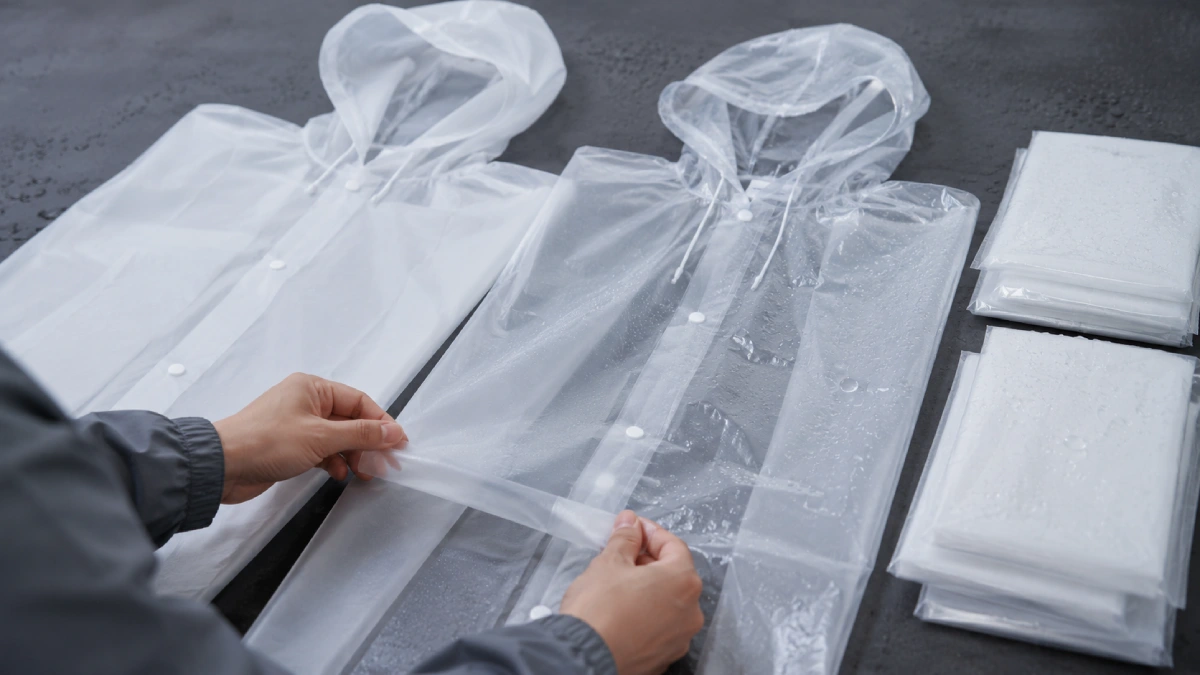
PEVA vs EVA: Material Comparison Table for Buyers
| Comparison Point | PEVA | EVA | Buyer Recommendation |
|---|---|---|---|
| Material Positioning | Soft, flexible, commonly promoted as PVC-free and chlorine-free | Flexible, elastic, often used for thicker ponchos and reusable rainwear | Choose PEVA for brand-sensitive campaigns; choose EVA for a stronger hand feel |
| Comfort | Usually soft and smooth against clothing | Can feel slightly more elastic and substantial | PEVA suits light promotional wear; EVA suits longer event use |
| Waterproof Performance | Good when film thickness and sealing are well controlled | Good when produced with proper thickness and heat sealing | Waterproof performance depends more on thickness and sealing than on the name alone |
| Odor | Generally lower odor than many PVC alternatives | Usually acceptable, but formula and storage conditions matter | Request pre-production samples if the product will be used indoors or in retail packs |
| Printing Suitability | Suitable for logo printing with proper ink and surface treatment | Suitable for brand printing and event graphics | Confirm ink adhesion and rubbing test before bulk production |
| Cost Level | Usually moderate, depending on thickness and formula | Moderate, often competitive for thicker ponchos | Compare total landed cost, not only the factory unit price |
| Compliance Perception | Strong for buyers seeking PVC-free and chlorine-free messaging | Good when backed by proper testing and documentation | For EU and US orders, request test reports and material declarations |
| Best Use | Promotional ponchos, school events, travel rainwear, brand giveaways | Reusable promotional ponchos, outdoor events, emergency rainwear kits | Match the material to wearing time, market, and campaign value |
Cost-Benefit Analysis: Which Material Gives Better Value?
The cost-benefit analysis of PEVA vs EVA should never stop at “which material is cheaper per unit.” For B2B buyers, the better question is: which material reduces total project risk while meeting the target budget?
In promotional rainwear sourcing, the visible unit price is only one layer. The hidden cost includes sample revisions, failed printing, torn ponchos, repacking, delayed shipment, customer complaints, compliance retesting, poor reviews, and damaged brand image. A rain poncho may be a low-cost product, but a failed campaign is not low-cost at all.
When PEVA gives better value
PEVA usually gives better value when the project needs a cleaner material story. If the buyer is selling into Europe, North America, Japan, Australia, or a brand-sensitive market, PEVA promotional rainwear can help the product sound more modern than traditional PVC rainwear. The term chlorine-free is especially useful when buyers want to avoid PVC-related questions from retailers, schools, event sponsors, or sustainability teams.
PEVA is also useful when the poncho will be distributed to families, children, tourists, or general consumers. The softer hand feel can improve user acceptance. If the campaign is linked to a company image, festival sponsorship, sports event, or outdoor marketing activity, a PEVA poncho can create a better balance between budget and perceived quality.
When EVA gives better value
EVA gives better value when the buyer wants a more durable, slightly heavier, and reusable-feeling poncho without moving into fabric rainwear. It is often chosen for outdoor events, hiking packs, theme parks, stadium merchandise, emergency kits, and promotional campaigns where users may wear the poncho for several hours or keep it for future use.
If the product needs stronger tear resistance than very thin disposable options, EVA is worth considering. A thicker EVA poncho may cost more than an ultra-light disposable PE poncho, but it can reduce complaints and improve the perceived value of the giveaway. For distributors and importers, that difference matters because repeat orders often depend on whether the first shipment creates confidence or headaches.
When neither PEVA nor EVA is the best answer
PEVA and EVA are excellent for many promotional poncho projects, but they are not the answer for every rainwear category. If the buyer needs long-term workwear, high tear resistance, breathable performance, stitched construction, reflective tape, or professional outdoor use, a coated polyester or nylon rain jacket may be a better option. If the buyer needs the lowest possible single-use giveaway, PE poncho material may still be used, although the user experience is usually more basic.
This is why a serious rainwear factory in China should ask about usage scenario before quoting. If a supplier quotes immediately without asking about thickness, size, market, logo, packing, and delivery date, the quote may be fast — but not necessarily safe.
Wholesale Pricing: What Actually Affects PEVA and EVA Poncho Cost?
For wholesale pricing, many buyers focus only on material type. In reality, the final price of a promotional poncho is shaped by several cost drivers.
Film thickness
Thickness is one of the biggest cost factors. A lightweight poncho may use a thinner film for one-time event distribution. A reusable promotional poncho may require thicker film for better strength and comfort. Buyers should not ask only for “PEVA poncho price” or “EVA poncho price.” They should ask for the material thickness, tolerance, and sample confirmation.
Poncho size and pattern
Adult size, children’s size, oversized stadium poncho, sleeve design, hood structure, snap buttons, and side sealing all affect material consumption. A larger poncho may look only slightly bigger on paper, but it can significantly increase film usage in bulk production.
Printing method
Logo printing is essential for promotional rainwear. Simple one-color logo printing is usually easier to control. Large-area printing, multi-color printing, or repeated logo patterns require more testing because ink adhesion, film stretching, drying time, and packing friction can affect final appearance.
Packaging
Packaging can quietly change total cost. Individual polybag packing, printed insert cards, retail zipper bags, cardboard display boxes, barcode labels, and carton marks all affect quotation. For EU buyers, packaging strategy is becoming more important because packaging regulations are moving toward recyclability, waste reduction, and clearer material responsibility.
Order quantity
Large bulk order rain poncho projects usually achieve better unit economics because material purchasing, printing setup, packing labor, and carton handling can be spread across more pieces. However, very large orders also require stronger production planning. A good OEM rainwear manufacturer should confirm production capacity, inspection schedule, and shipment timing before accepting an aggressive delivery deadline.
Regulatory Trends: Why Material Choice Is Becoming More Important
In the European Union, the Packaging and Packaging Waste Regulation has strengthened the direction toward recyclable packaging, reduced packaging waste, and lower dependence on virgin materials. Although this regulation focuses on packaging rather than the poncho material itself, it affects promotional rainwear projects because ponchos are often individually packed and shipped in large volumes. For importers, poor packaging design can create unnecessary waste, higher compliance workload, and weaker buyer confidence.
For chemical safety, European REACH restrictions on certain phthalates have made buyers more cautious about plasticized materials in consumer products. This is one reason many buyers look for PVC-free or chlorine-free promotional poncho options. PEVA and EVA are often positioned as more acceptable alternatives when properly produced and supported with documentation.
In the United States, wearing apparel may be subject to flammability requirements, and children’s products can involve additional lead, phthalate, tracking label, and certificate obligations depending on product type and intended use. For promotional rainwear buyers, this means children’s ponchos, school campaign ponchos, and retail rainwear for minors should be handled more carefully than generic adult event ponchos.
The global plastics conversation also affects sourcing decisions. International data shows that plastic production and plastic waste have grown sharply over the last two decades, while recycling rates remain limited. This does not mean every promotional poncho project must become expensive or over-engineered. It does mean buyers should avoid vague claims and choose suppliers who can provide practical material guidance, responsible packaging options, and realistic documentation.
For B2B buyers, the future direction is clear: low price still matters, but undocumented low price is becoming dangerous. The better procurement strategy is to select a custom rainwear supplier that understands both material performance and export compliance.
PEVA vs EVA for Different Promotional Rainwear Scenarios
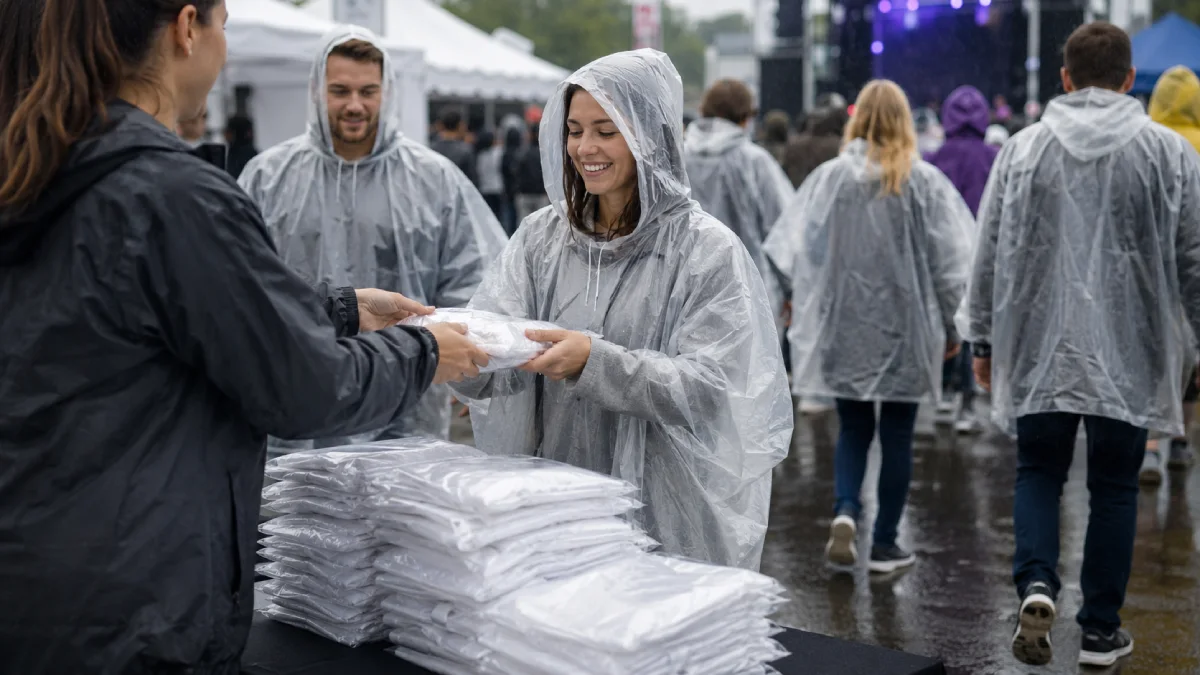
Outdoor festivals and music events
For outdoor festivals, the product must be lightweight, easy to distribute, and comfortable enough for several hours of use. PEVA works well when the event sponsor wants better softness and cleaner material messaging. EVA works well when the poncho needs more body and durability, especially if attendees may reuse it during a multi-day event.
Sports stadiums and fan giveaways
For stadium giveaways, buyers usually need fast distribution, compact packaging, and reliable waterproof coverage. PEVA is suitable for large-scale promotional campaigns with brand printing. EVA is a good option when the poncho is sold as merchandise or included in a higher-value fan kit.
Tourism and travel rainwear packs
Tourism buyers often care about portability and user comfort. A soft PEVA poncho can work well for travel packs, hotel amenities, city tours, and outdoor sightseeing programs. If the product will be sold in retail travel stores, EVA may offer a more substantial feel.
School and family events
For school events, family activities, and children’s rainwear programs, buyers should pay special attention to compliance documents, printing safety, packaging labels, and size design. PEVA is often preferred when the project needs a more consumer-friendly, PVC-free perception. EVA can also be suitable when properly tested and specified.
Emergency kits and disaster-preparedness packs
Emergency rainwear must be compact, affordable, and functional after storage. EVA is often attractive for emergency kits because thicker versions can provide a stronger feel. PEVA can also be used when the buyer wants lighter packing and better material positioning. For long storage periods, packaging quality and folding method are just as important as material choice.
Common Buyer Mistakes When Comparing PEVA and EVA
Mistake 1: Comparing only unit price
The lowest price may come from thinner film, smaller sizing, weaker sealing, cheaper packing, or limited QC. If the buyer does not compare specifications line by line, the cheaper quote may not be the same product. In rainwear sourcing, apples-to-apples comparison is not a slogan; it is survival gear.
Mistake 2: Ignoring thickness tolerance
A supplier may quote a material thickness, but production tolerance can affect the actual feel and durability. Buyers should confirm whether the quoted thickness is nominal, average, or minimum. For large promotional orders, this detail can decide whether the poncho feels acceptable or flimsy.
Mistake 3: Assuming all PEVA is automatically premium
PEVA can be a strong choice, but quality still depends on formula, film extrusion, sealing, and packing. A poorly made PEVA poncho can still tear, smell, or print badly. Material name alone does not guarantee quality.
Mistake 4: Assuming EVA is always more durable
EVA can offer good flexibility and strength, but durability depends on thickness and construction. Thin EVA may not outperform well-made PEVA. Buyers should test actual samples instead of relying on material stereotypes.
Mistake 5: Forgetting the destination market
A poncho for a local one-day outdoor event and a poncho for retail distribution in Europe are not the same sourcing project. Destination market affects labeling, packaging, chemical testing, documentation, and customer expectations.
Mistake 6: Printing before testing adhesion
Large logo printing can fail if ink, film surface, drying time, or packing pressure are not properly controlled. For custom promotional rainwear, buyers should always approve printed samples before mass production.
Decision Logic: PEVA or EVA?
| Buyer Situation | Better Choice | Reason |
|---|---|---|
| You need PVC-free, chlorine-free positioning for brand campaigns | PEVA | Better fit for sustainability-oriented promotional language |
| You need a thicker poncho with stronger reusable feel | EVA | Often provides better body and flexibility when specified correctly |
| You are buying for schools or family events | PEVA or tested EVA | Material safety documentation and printing control matter more than price alone |
| You need a very large one-day giveaway | Lightweight PEVA or EVA | Choose based on target budget, thickness, and packing method |
| You need retail-ready packaging | PEVA or EVA with better packing | Packaging quality affects shelf appeal and buyer confidence |
| You are sourcing from a China factory for bulk export | Either, with clear specification | The factory should confirm thickness, size, printing, test reports, and lead time |
How to Request a Professional Quotation from a PEVA or EVA Rainwear Supplier
To get accurate wholesale pricing, buyers should provide a complete request instead of asking only, “What is your EVA poncho price?” A serious RFQ should include material preference, thickness range, adult or children’s size, color, logo size, printing color, packaging type, order quantity, destination country, required certificates, target delivery date, and whether the product is for free distribution or retail sale.
For example, a better RFQ would be: “We need 50,000 adult-size PEVA promotional ponchos for an outdoor music event in Germany. Material should be PVC-free and chlorine-free. Please quote 0.10 mm and 0.12 mm options, one-color logo printing on the chest, individual polybag packing, carton marks, and estimated lead time. Please also confirm available test reports.”
This type of RFQ helps the PEVA rain poncho factory quote accurately and reduces revision time. It also shows that the buyer understands sourcing details, which often leads to better supplier cooperation.
Recommended Specification Ranges for Promotional Ponchos
| Project Type | Suggested Material | Typical Buyer Priority | Specification Advice |
|---|---|---|---|
| One-day event giveaway | Lightweight PEVA or EVA | Cost control and fast delivery | Keep design simple; confirm sealing quality and packing speed |
| Brand campaign poncho | PEVA | Brand image and cleaner material story | Use clear logo placement and request material declaration |
| Reusable event poncho | Thicker EVA | Durability and user satisfaction | Increase thickness and test tear resistance before bulk order |
| School or family activity | PEVA or tested EVA | Safety perception and comfort | Confirm size, printing safety, and compliance documents |
| Retail travel rainwear | PEVA or EVA | Packaging and shelf appeal | Improve folding, bag design, barcode label, and product information |
| Emergency preparedness kits | EVA or PEVA | Storage, portability, and function | Test unfolding after storage and confirm packaging durability |
Why Work with an OEM/ODM Rainwear Factory Instead of a Trading-Only Supplier?
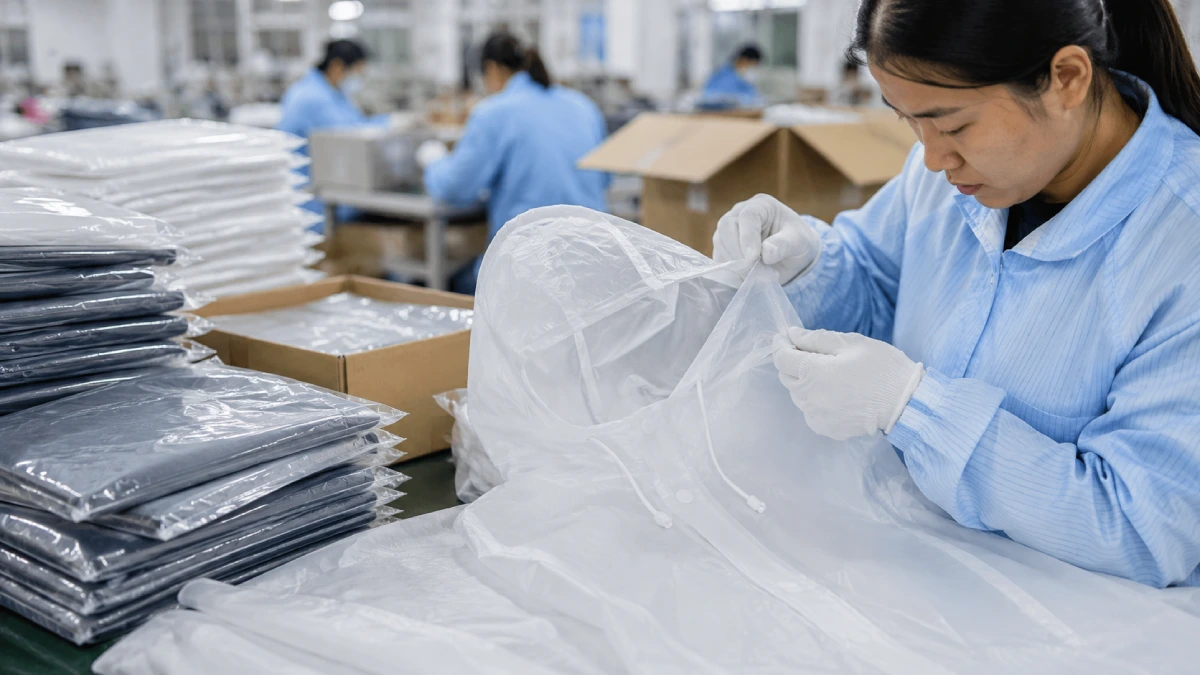
For promotional rainwear projects, a trading company may be able to offer quick quotations, but a factory-based partner usually provides stronger control over material selection, sampling, production scheduling, logo printing, inspection, and packing. When buyers need custom promotional ponchos, OEM colors, ODM packaging, private-label cards, or fast event delivery, production control matters.
A professional China rainwear manufacturer should help buyers compare PEVA and EVA samples, explain thickness differences, confirm printing limitations, provide packing options, and support bulk order planning. The supplier should also be honest when a buyer’s requested material is not suitable for the intended use. A good factory does not simply say yes to every idea. Sometimes the most valuable supplier is the one who prevents a bad specification before it becomes 100,000 bad ponchos.
For B2B buyers, the best supplier is not always the cheapest supplier. The best supplier is the one that protects the project from avoidable mistakes while still keeping cost under control.
YOUNGSTAR Recommendation: How to Choose Between PEVA and EVA
For most brand-sensitive promotional rainwear campaigns, YOUNGSTAR recommends starting with PEVA samples when the buyer wants a soft, lightweight, PVC-free, and chlorine-free poncho with good market acceptance. PEVA is especially suitable for school campaigns, tourism events, retail travel packs, and corporate giveaways where the material story matters.
For outdoor projects that need stronger body, better repeated-use potential, and a more substantial hand feel, EVA is a strong choice. Thicker EVA ponchos can improve user satisfaction and reduce the risk of complaints during longer events. EVA is particularly useful for stadiums, multi-day festivals, emergency kits, outdoor activities, and private-label promotional products.
If the project is highly price-sensitive, the buyer should compare both PEVA and EVA in two or three thickness options rather than asking for one generic price. A small difference in thickness can change the buyer experience dramatically. For bulk orders, sample testing is not optional; it is the cheapest insurance policy in the entire sourcing process.
Buyers who are preparing a new promotional rainwear project can request sample options, logo printing advice, and packing recommendations before confirming mass production. The earlier the material decision is made correctly, the fewer surprises appear later in production.
FAQ: PEVA vs EVA for Promotional Rainwear
1. What is the main difference between PEVA and EVA rainwear?
The main difference is how buyers usually position and use the materials. PEVA is commonly selected for softer, PVC-free, chlorine-free promotional rainwear, while EVA is often chosen for thicker ponchos with a more elastic and reusable feel. The final performance still depends on thickness, formula, sealing quality, and production control.
2. Is PEVA better than EVA for promotional ponchos?
PEVA is better when the project needs softer hand feel, cleaner material positioning, and strong acceptance for brand-sensitive campaigns. EVA can be better when the buyer wants a thicker, more substantial poncho for longer outdoor use. The best choice depends on market, budget, order quantity, and expected wearing time.
3. Are PEVA and EVA suitable for wholesale rain poncho orders?
Yes. Both PEVA and EVA are suitable for wholesale rain poncho orders, including event giveaways, tourism packs, stadium ponchos, emergency rainwear, and private-label retail programs. Buyers should confirm material thickness, size, printing method, packing style, test requirements, and lead time before placing a bulk order.
4. Is PEVA rainwear chlorine-free?
PEVA is widely used as a PVC-free and chlorine-free material option for rainwear and promotional ponchos. This makes it attractive for buyers who want to avoid PVC-related concerns and improve the environmental positioning of their campaign. However, buyers should still request material declarations and relevant test reports from the supplier.
5. Which material is cheaper for custom promotional ponchos, PEVA or EVA?
The cheaper option depends on thickness, size, printing, packing, order quantity, and current raw material conditions. In many cases, both PEVA and EVA can be cost-effective for promotional ponchos. Buyers should compare the full specification instead of judging price by material name only.
6. Can PEVA and EVA ponchos be printed with a custom logo?
Yes. PEVA and EVA ponchos can usually be printed with custom logos, event graphics, brand names, or simple promotional designs. For best results, buyers should confirm print size, ink type, surface adhesion, drying time, and rubbing resistance through a pre-production sample before mass production.
7. What should buyers check before ordering PEVA or EVA ponchos from China?
Buyers should check material thickness, product size, sealing quality, logo printing, packaging, carton strength, compliance documents, production lead time, sample approval process, and inspection standards. A reliable China rainwear manufacturer should help compare PEVA and EVA options based on the real application scenario.
Conclusion: PEVA vs EVA Is a Sourcing Decision, Not Just a Material Debate
The best answer to PEVA vs EVA depends on what the promotional rainwear must achieve. PEVA is often the stronger choice for soft, lightweight, PVC-free, chlorine-free promotional ponchos with better brand and sustainability positioning. EVA is often the stronger choice for thicker, more durable, and reusable-feeling ponchos used in outdoor events, emergency kits, and higher-value promotional campaigns.
For buyers, the key is to avoid comparing material names in isolation. Compare thickness, comfort, sealing quality, logo printing, packing, compliance documents, delivery schedule, and total project risk. A slightly better material specification can prevent campaign complaints, reduce inspection problems, and improve the final user experience.
YOUNGSTAR supports custom PEVA and EVA promotional rainwear for bulk orders, OEM projects, ODM packaging programs, private-label campaigns, and event rainwear sourcing. If your team is preparing a new promotional poncho project, the smartest first step is to define the usage scenario, target market, budget range, and branding requirement before confirming samples and wholesale pricing.
Reference
1. European Commission, “Packaging Waste: EU Rules on Packaging and Packaging Waste,” Directorate-General for Environment.
2. European Union, “Commission Regulation (EU) 2018/2005 on REACH Restrictions for DEHP, DBP, BBP and DIBP,” EUR-Lex.
3. U.S. Consumer Product Safety Commission, “Clothing Business Guidance,” CPSC Business & Manufacturing Resources.
4. U.S. Consumer Product Safety Commission, “Phthalates Business Guidance,” CPSC Business & Manufacturing Resources.
5. Organisation for Economic Co-operation and Development, “Global Plastics Outlook: Economic Drivers, Environmental Impacts and Policy Options,” OECD Publishing.
6. Textile Exchange, “Materials Market Report 2025,” Textile Exchange Knowledge Center.
7. Tony Whelan, “Polymer Technology Dictionary,” Springer.
8. T.T. Meng et al., “Volatile Organic Compounds of Polyethylene Vinyl Acetate Plastic,” Environmental Science Research Publication.
PEVA vs EVA: Final Buyer Insight for Promotional Rainwear Sourcing
For B2B buyers comparing PEVA vs EVA, the real question is not which material sounds better, but which material reduces sourcing risk while matching the campaign’s budget, user experience, and market expectations. PEVA and EVA can both be effective for promotional poncho projects, but they solve different purchasing problems.
How buyers should understand the material choice
PEVA is often selected when buyers need a softer, PVC-free, chlorine-free rainwear material with better environmental positioning for public-facing campaigns. EVA is usually selected when the project needs a thicker, more elastic, reusable-feeling poncho for outdoor use, emergency kits, tourism packs, or event merchandise. In both cases, thickness, sealing quality, printing performance, and packaging control decide the final product quality.
Why this matters for global promotional rainwear projects
Promotional rainwear is usually ordered under strict deadlines, fixed campaign dates, and tight quantity requirements. A low unit price may look attractive at the quotation stage, but weak film thickness, poor logo adhesion, unstable sealing, or incomplete compliance documents can create larger costs after shipment. This is why professional buyers should evaluate total project value, not just wholesale pricing.
What material direction is shaping the market
The promotional rainwear market is moving toward safer material choices, clearer documentation, lighter packaging, and more responsible product claims. PVC-free and chlorine-free material positioning is becoming more important for buyers selling into Europe, North America, Japan, Australia, and brand-sensitive markets. PEVA and EVA both support this direction when produced with proper material control and export-ready documentation.
Option logic for buyers
If the campaign prioritizes soft feel, PVC-free messaging, school events, family use, tourism distribution, or retail-friendly positioning, PEVA is usually the safer starting point. If the campaign prioritizes stronger body, better repeated-use potential, outdoor durability, emergency kit storage, or stadium/event merchandise, EVA is often the better option. If the project is extremely price-sensitive, buyers should compare PEVA and EVA in multiple thickness levels before confirming bulk production.
Key considerations before confirming a bulk order
Before placing a bulk order, buyers should confirm material thickness, poncho size, logo printing method, ink adhesion, heat sealing quality, packaging type, carton strength, test reports, lead time, and destination-market requirements. A reliable custom rainwear manufacturer should help compare PEVA and EVA samples based on the real use scenario instead of quoting blindly by material name.
In short, PEVA is the stronger choice when brand perception and chlorine-free positioning matter more, while EVA is the stronger choice when buyers need a more substantial and reusable promotional poncho. For importers, distributors, event organizers, and private-label buyers, the smartest sourcing strategy is to request samples, compare specifications, verify documentation, and choose the material that protects both the campaign and the brand.