Why China Remains a Major Rainwear Manufacturing Hub in 2026
China has built a mature supply chain for waterproof garments over many years. For international buyers, this matters because rainwear production is not just about sewing a jacket. A reliable rainwear order may involve coated fabrics, waterproof zippers, snap buttons, drawcords, reflective tape, seam sealing, heat welding, logo printing, private-label packaging, carton marking, inspection, and export documentation.
This supply-chain depth is one reason many buyers still search for a China rainwear manufacturer when developing rain jackets, rain suits, ponchos, PVC raincoats, PU rainwear, waterproof workwear, and kids rainwear. The country offers wide material access, flexible OEM development, experienced garment workers, and strong export coordination.
For buyers who are still comparing material options, a detailed understanding of rainwear fabric sourcing is essential before selecting a supplier. The wrong fabric choice can make a rainwear product look fine in photos but fail during real rain, repeated use, washing, folding, or workplace exposure.
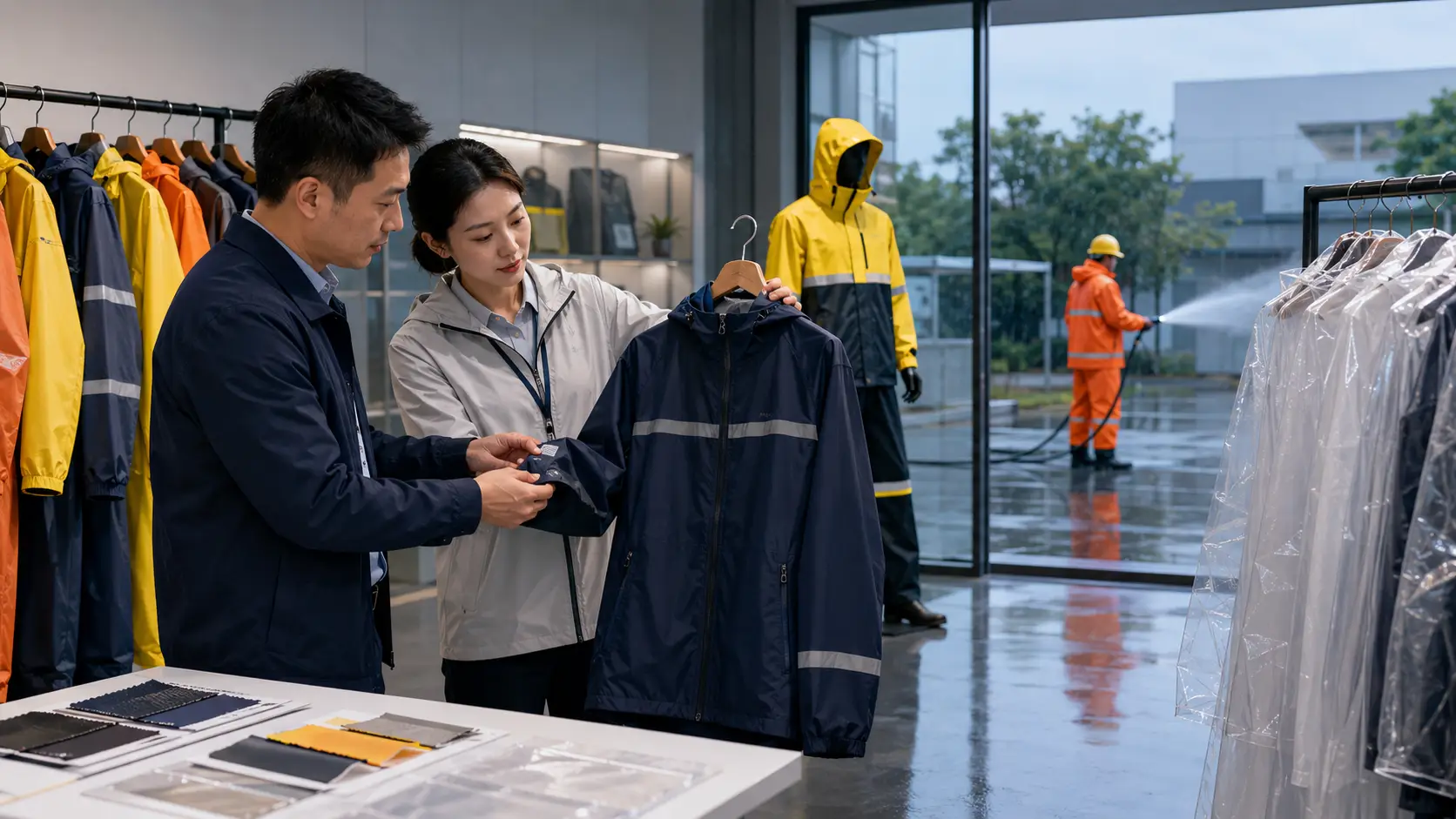
Mature Supply Chain for Waterproof Garments
A strong rainwear supplier must understand fabric, coating, garment structure, and application. Rainwear materials may include PVC, PVC/POLY, PU, EVA, polyester, nylon, TPU-coated fabrics, and laminated materials. Each material has different advantages.
PVC rainwear is often selected for stronger waterproof barrier performance and easy cleaning. PU rainwear is often chosen for softer hand feel, lighter weight, and improved comfort. EVA is commonly used for lightweight rain ponchos and promotional rainwear. Polyester and nylon shell fabrics are widely used for outdoor jackets, padded waterproof workwear, and rain jackets.
This is why choosing a rainwear factory in China should not be reduced to price comparison. A professional supplier should explain which fabric fits your product category, target price range, waterproof requirement, and user environment. If a supplier cannot explain the difference between PU, PVC, EVA, nylon, and polyester rainwear, the buyer may face material mismatch later. That mistake is small on paper and expensive in cartons.
Strong OEM and ODM Production Capability
Many international buyers choose Chinese rainwear factories because they need OEM and ODM support. A typical order may require custom colors, logo printing, private labels, hangtags, retail packaging, size grading, reflective elements, waterproof zippers, adjustable hoods, storm flaps, elastic cuffs, snap closures, or custom fabric selection.
A reliable OEM rainwear manufacturer should help buyers move from concept to sample, then from sample to bulk production. The process should include fabric confirmation, pattern development, sample approval, size checking, logo proofing, packaging confirmation, production inspection, and shipment coordination.
For wholesale buyers, this is especially important. A single rainwear style may be sold across different climates, markets, and channels. A workwear distributor may need stronger waterproof work jackets. A school supplier may need children’s rainwear with safe accessories and bright colors. A promotional buyer may need lightweight ponchos with fast production. A private-label brand may need consistent color, fabric hand feel, logo position, and packaging across repeat orders.
How We Evaluated the Top 10 Rainwear Manufacturers in China
This guide evaluates rainwear suppliers from a practical buyer perspective. It is not only a list of names. It is a sourcing framework for importers, distributors, private-label brands, workwear suppliers, and outdoor product companies.
The ranking is based on the following buyer-focused factors:
| Evaluation Factor | Why It Matters for Buyers |
|---|---|
| Factory capability | Determines whether the supplier can support stable bulk production and repeat orders |
| OEM/ODM support | Helps buyers customize style, color, logo, packaging, material, and sizing |
| Material options | PVC, PU, EVA, polyester, nylon, and coated fabrics affect product performance |
| Waterproof performance | Real protection depends on fabric, coating, waterproof rating, and garment construction |
| Seam construction | Poor seams can cause leakage even when the fabric itself is waterproof |
| Export experience | Reduces communication problems, documentation errors, and shipment delays |
| Control de calidad | Helps avoid color inconsistency, weak stitching, coating issues, and customer complaints |
| Product range | Allows buyers to source rain jackets, rain suits, ponchos, workwear, and kids rainwear efficiently |
| Market fit | Different buyers need different suppliers for workwear, outdoor, retail, promotional, or private-label channels |
Why Price Alone Is Not a Safe Ranking Standard
The lowest quotation is not always the best sourcing decision. In rainwear manufacturing, a cheaper product can hide cost reductions in fabric weight, coating thickness, seam sealing, zipper quality, snap strength, reflective tape, packaging, or inspection.
A rain jacket may look acceptable in a product photo but leak during use. A PVC raincoat may feel strong but become stiff in cold weather. A PU rain jacket may be comfortable but not durable enough for industrial workwear. A poncho may be cheap but tear too easily for outdoor retail customers.
Before choosing from the top rainwear manufacturers in China, buyers should ask a simple question: what risk does this price include? If the quotation is low because the supplier has efficient production, that is good. If it is low because the material, seam process, and inspection standard are weak, the buyer may pay for it later through returns, complaints, replacements, or lost customer trust.
Top 10 Rainwear Manufacturers in China for 2026
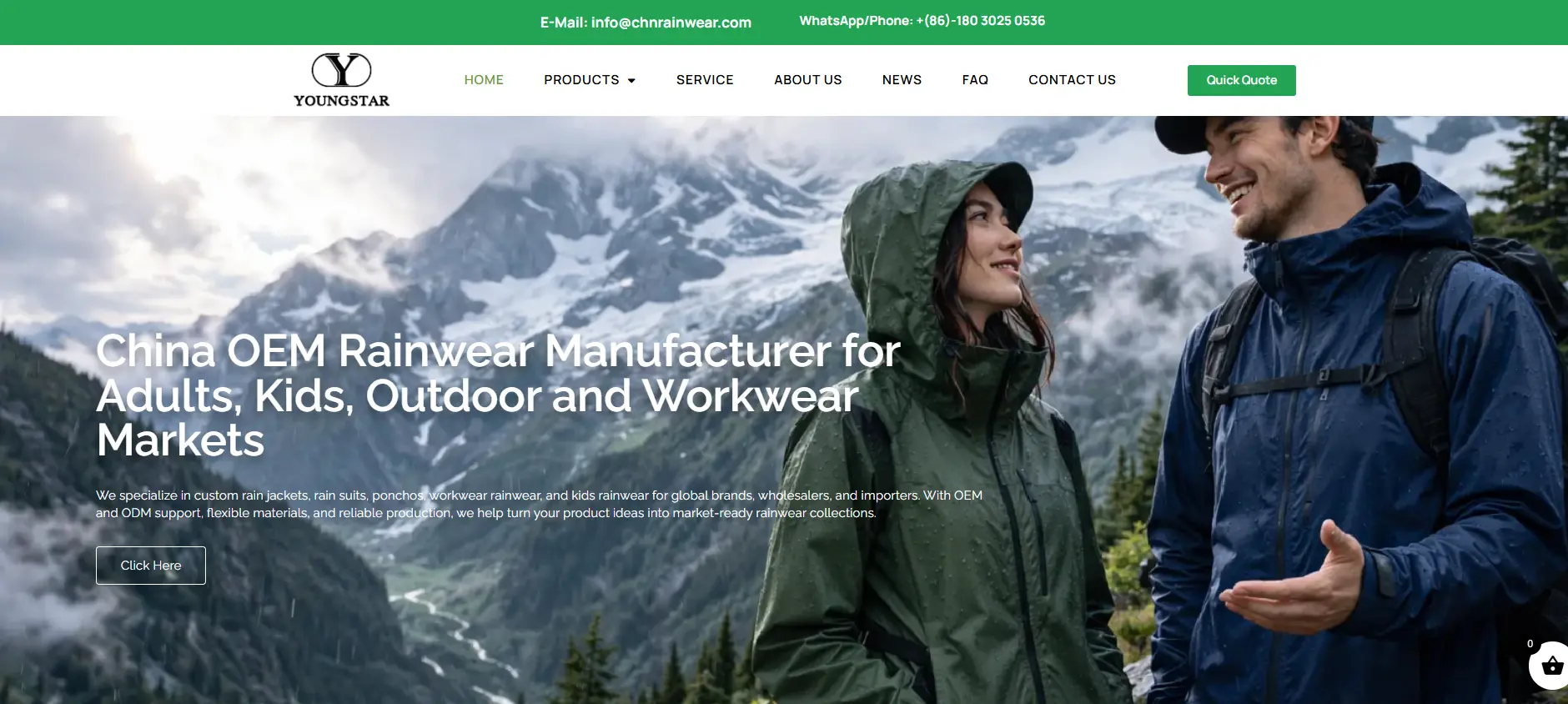
1. ChnRainwear - Strong OEM Rainwear Manufacturer for Workwear, Outdoor and Custom Waterproof Garments
ChnRainwear is a practical supplier option for buyers looking for custom rain jackets, rain suits, ponchos, waterproof workwear, kids rainwear, and OEM rainwear programs. The company is positioned around OEM and ODM production, with product coverage across adult rainwear, children’s rainwear, outdoor rainwear, promotional rainwear, and workwear rainwear.
For buyers comparing rainwear manufacturers in China, ChnRainwear is especially relevant because it connects material selection with finished garment development. This matters for B2B buyers who need more than a standard catalog product. A buyer may need PVC/POLY rainwear for stronger waterproof performance, PU-coated polyester for lighter waterproof jackets, EVA ponchos for promotional use, or padded waterproof jackets for cold and wet outdoor work.
ChnRainwear is a strong fit for wholesalers, importers, workwear distributors, outdoor product buyers, and private-label brands that need customization. Typical customization requirements may include color matching, logo printing, reflective tape, hood design, packaging, size adjustment, zipper and button selection, and product labeling.
Best for: OEM rainwear, custom rain jackets, waterproof workwear, rain suits, ponchos, kids rainwear, private-label rainwear, and wholesale waterproof garment programs.
Buyer consideration: Buyers should confirm target material, waterproof rating, sample requirements, logo method, packaging, MOQ, lead time, and final inspection standards before bulk production.
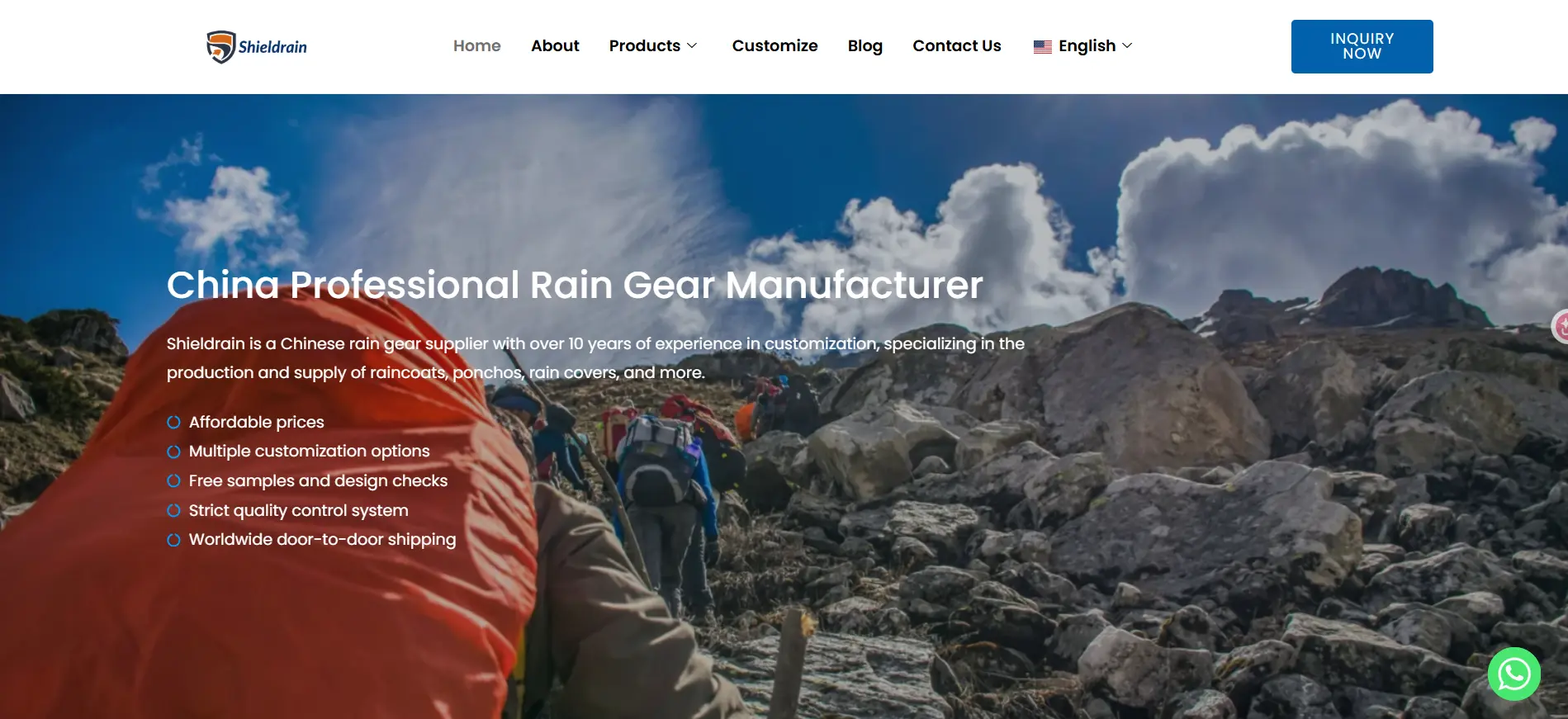
2. Shieldrain - Rainwear Supplier for Ponchos, Waders and Waterproof Outdoor Gear
Shieldrain is a Ningbo-based rainwear manufacturer and supplier with experience in raincoats, ponchos, waders, and waterproof covers. It is suitable for buyers who need waterproof outdoor products beyond basic rain jackets.
This type of supplier can be useful for outdoor retailers, fishing product buyers, camping distributors, and buyers who want a broader waterproof product mix. For B2B buyers, the main value is product diversity. A supplier that handles rainwear, ponchos, waders, and covers may help buyers consolidate different waterproof product categories.
Best for: raincoats, ponchos, waders, waterproof outdoor gear, and waterproof covers.
Buyer consideration: Buyers should check material specifications, waterproof testing, size range, production capacity, sample development, and whether the supplier’s strongest categories match the buyer’s sales channel.
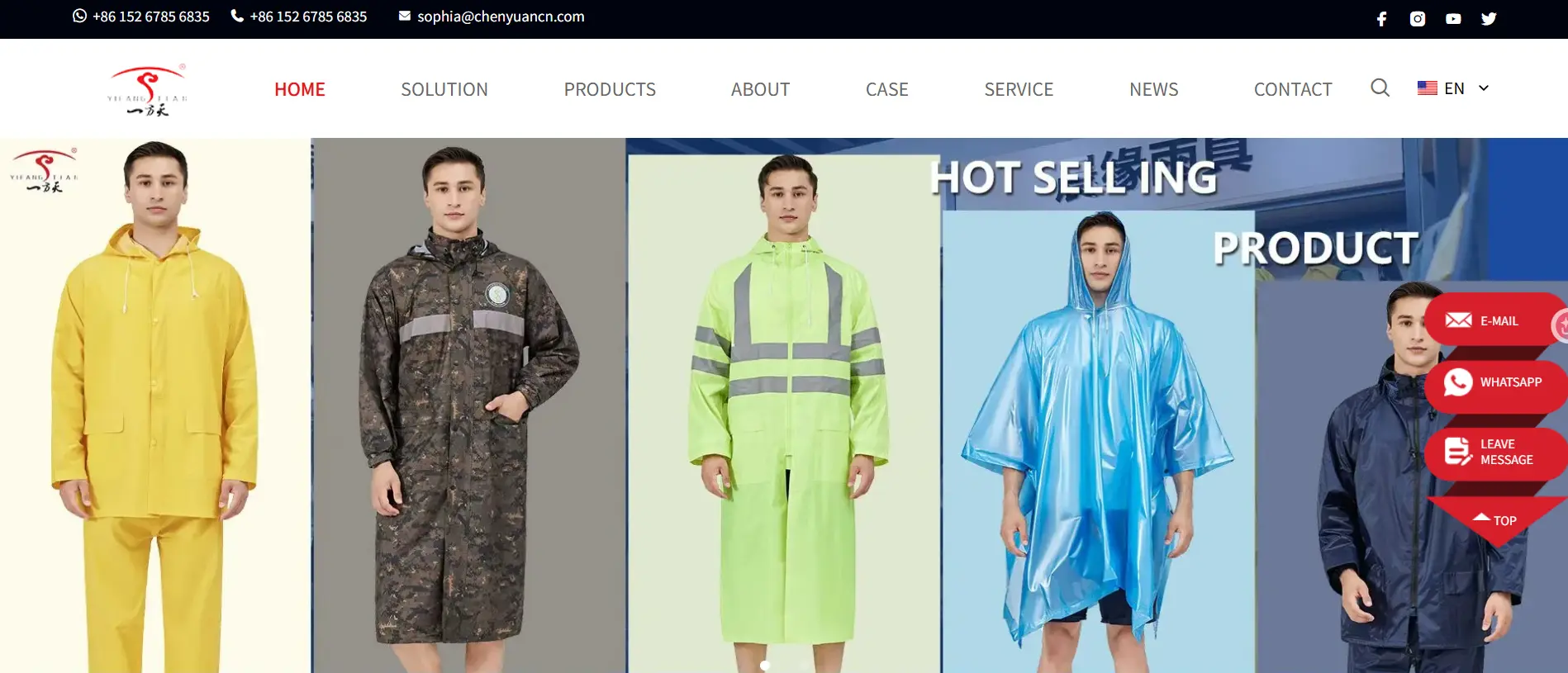
3. Chenyuan Raincoat - Experienced PVC Raincoat and Poncho Manufacturer
Chenyuan Raincoat is known as a long-established raincoat manufacturer with experience in PVC raincoats, rain suits, and ponchos. For buyers who prioritize traditional rainwear categories, especially PVC raincoats and waterproof suits, this type of supplier may be a useful option.
Experienced raincoat factories often have strong familiarity with classic rainwear production. This can include PVC raincoats, adult rain suits, ponchos, and waterproof garments used in daily, promotional, or work environments.
Best for: PVC raincoats, rain suits, ponchos, and traditional waterproof rainwear.
Buyer consideration: Buyers should confirm whether the supplier is best suited for heavy-duty PVC rainwear, promotional products, or retail rainwear. Material flexibility, coating thickness, odor control, seam method, and export compliance should be checked before large orders.
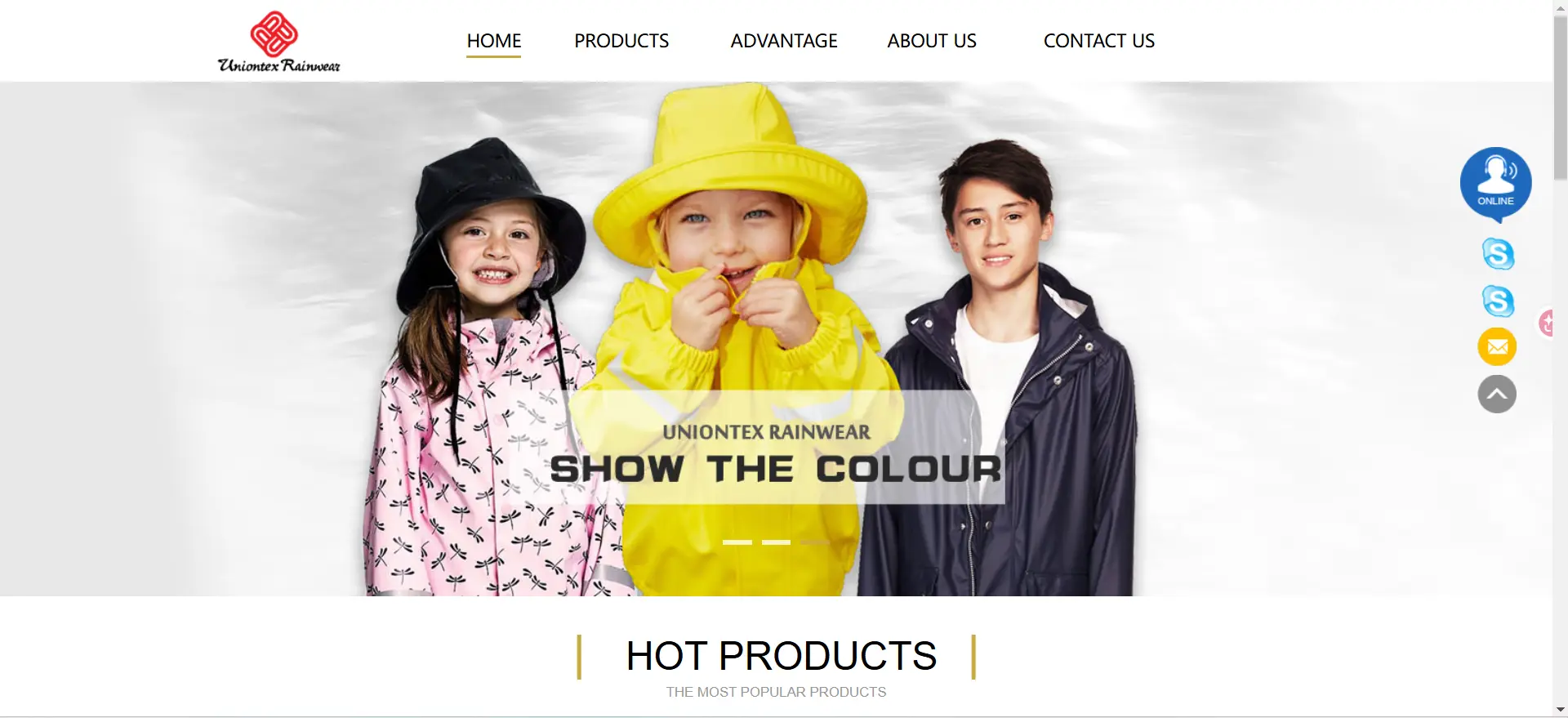
4. Fuzhou Uniontex Garments - PU Raincoat and OEM/ODM Rainwear Supplier
Fuzhou Uniontex Garments appears in B2B supplier directories as a manufacturer with OEM and ODM raincoat capability, including PU raincoat products. It may be suitable for buyers sourcing PU rainwear or coated waterproof garments from Fujian-based garment supply chains.
PU rainwear is often selected when buyers want softer touch, lighter hand feel, and more wearable comfort compared with heavier PVC rainwear. This can make PU-coated rain jackets suitable for work jackets, outdoor rainwear, and practical daily rainwear.
Best for: PU raincoats, OEM rainwear, ODM rainwear, and lightweight waterproof garments.
Buyer consideration: Buyers should compare PU coating quality, waterproof rating, seam construction, fabric weight, and durability requirements. For buyers comparing PU and PVC options, this technical guide on PU vs. PVC rainwear can help clarify the material decision before sampling.
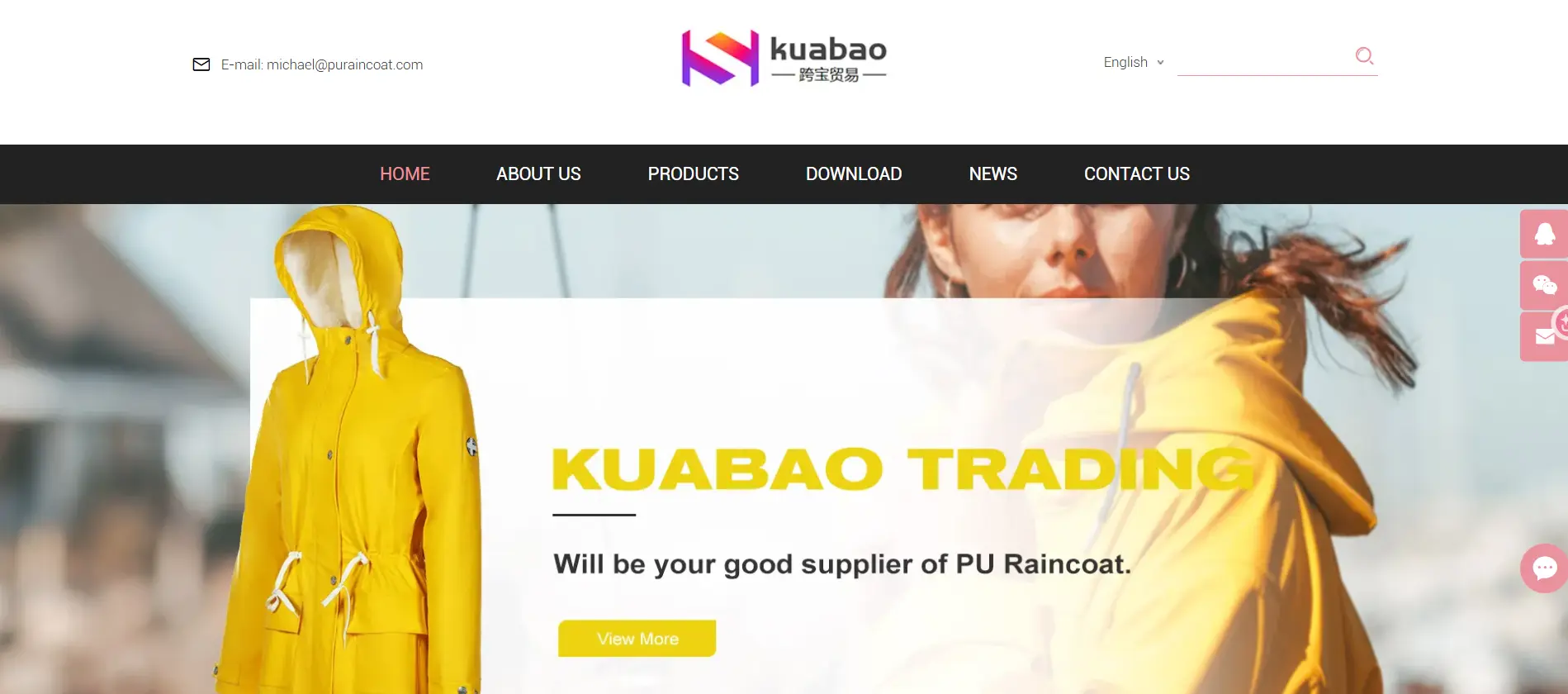
5. Puraincoat - PVC Raincoat Supplier for Workwear and Industrial Applications
Puraincoat presents itself as a manufacturer and supplier of PVC raincoats in China, with workwear products used in oil, construction, traffic, police safety, and waterproof jacket applications. This makes it relevant for buyers looking at heavy-duty waterproof clothing rather than fashion-oriented rainwear.
PVC rainwear can be a strong option when buyers need waterproof barrier performance, easy cleaning, and durability in wet work environments. However, buyers should always confirm flexibility, coating thickness, seam method, and whether the final garment is suitable for the intended environment.
Best for: PVC raincoats, heavy-duty rain suits, waterproof jackets, traffic rainwear, and industrial waterproof clothing.
Buyer consideration: PVC can be strong and practical, but it may feel heavier or less breathable than PU options. Buyers should check end-user comfort, climate conditions, and application requirements before selecting PVC workwear.
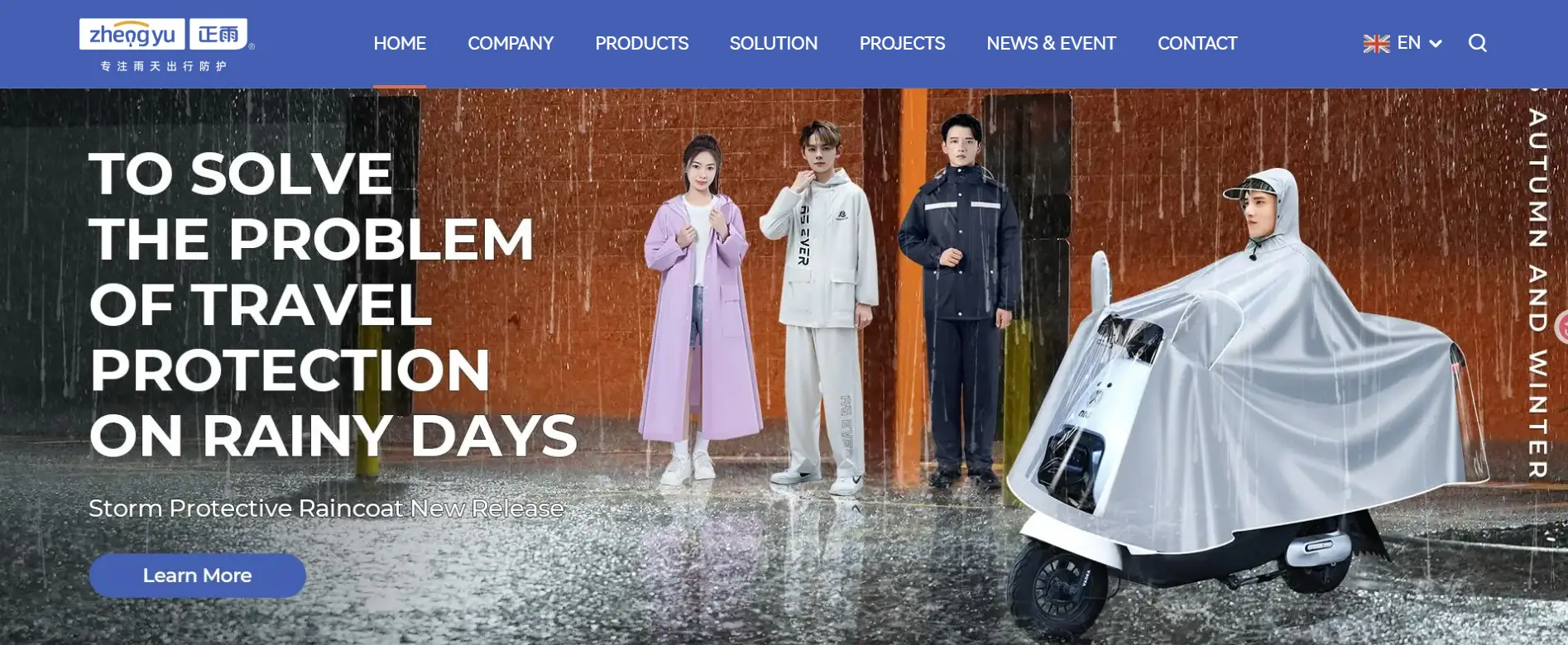
6. Zhengyu Rain Gear - OEM Raincoat Manufacturer for Rainwear Programs
Zhengyu Rain Gear is another China-based rainwear supplier commonly positioned around OEM raincoat manufacturing. Suppliers in this category are often suitable for buyers looking for raincoats, rain suits, ponchos, and standard rainwear products with customization options.
For buyers, the key value of an OEM raincoat manufacturer is whether it can support consistent repeat production. Rainwear orders often involve seasonal demand, promotional campaigns, retail packaging, and reorder cycles. A supplier must be able to keep material, color, size, and packaging consistent across batches.
Best for: OEM raincoats, rain suits, ponchos, and customized rainwear programs.
Buyer consideration: Buyers should verify factory capability, sample approval process, bulk production consistency, packaging support, and product category specialization.
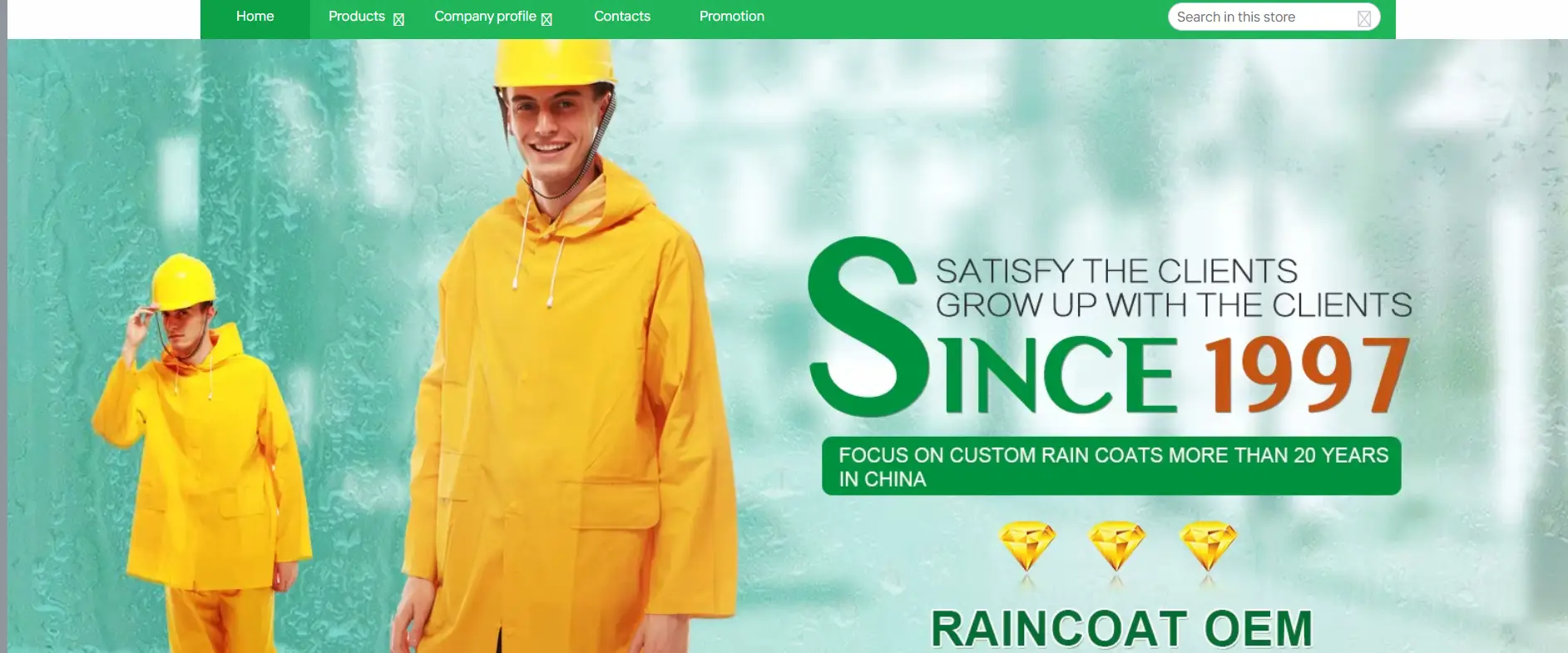
7. Hangzhou Yanli Rainwear Co., Ltd. - Multi-Material Raincoat and Poncho Manufacturer
Hangzhou Yanli Rainwear Co., Ltd. is a China-based raincoat and poncho manufacturer with product coverage across raincoats, rain suits, ponchos, rain jackets and pants, and rain shoes. For buyers who want to compare different rainwear material options from one supplier, Yanli can be considered as a practical multi-material sourcing option because its product range includes PVC, PU, EVA, nylon, polyester, and related waterproof rainwear materials.
A multi-material rainwear supplier can be useful when buyers need different product levels for different sales channels. EVA may suit lightweight ponchos, children’s rainwear, promotional rainwear, or compact emergency products. PVC may suit stronger waterproof raincoats and easy-clean workwear. PU may suit softer rain jackets and comfort-focused waterproof garments. Nylon and polyester shell fabrics may be used for outdoor-style rain jackets, padded waterproof garments, or retail-oriented rainwear.
Best for: EVA ponchos, PVC raincoats, PU rainwear, nylon/polyester rain jackets, rain suits, children’s rainwear, and wholesale rainwear programs.
Buyer consideration: Buyers should not assume that one supplier is equally strong in every material or every product category. Before placing a bulk order, they should verify sample quality, waterproof rating, hand feel, odor control, seam construction, color fastness, packaging quality, MOQ, lead time, and whether the supplier’s strongest product category matches the target market.
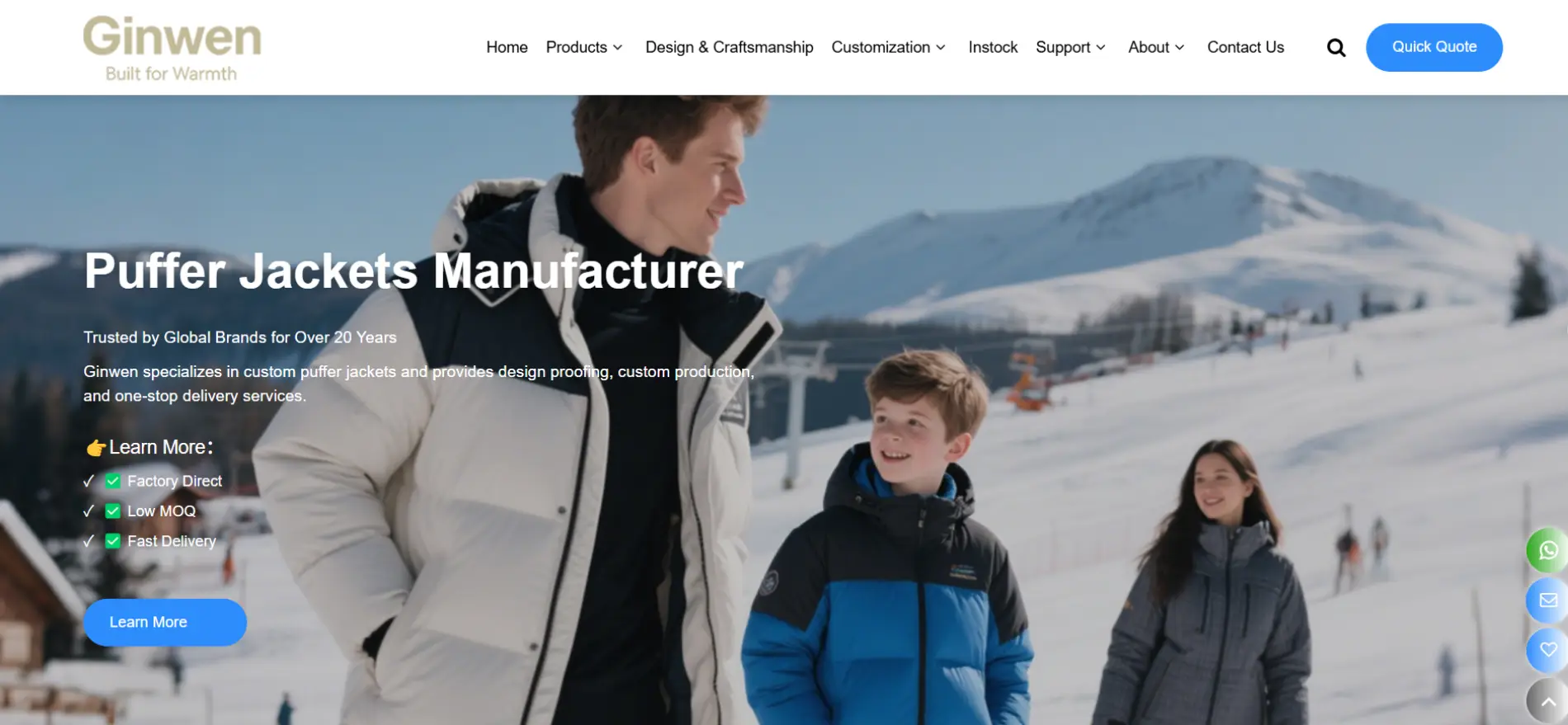
8. Ginwen - Waterproof Jacket Manufacturer for OEM and Private Label Buyers
Ginwen is positioned more broadly around waterproof jackets and outerwear manufacturing. This type of supplier may be suitable for buyers who need waterproof jackets, padded jackets, outdoor jackets, or rainwear products with stronger apparel-style design.
Unlike traditional PVC raincoat factories, waterproof jacket manufacturers may focus more on garment structure, lining, insulation, zippers, pattern development, and retail-ready styling. This can be useful for outdoor brands, private-label apparel buyers, and companies developing rain jackets with a more consumer-facing appearance.
Best for: waterproof jackets, outdoor jackets, padded rainwear, OEM outerwear, and private-label apparel programs.
Buyer consideration: Buyers should confirm whether the supplier is stronger in general waterproof jackets or traditional rainwear. Outdoor jacket production and PVC raincoat production may require different fabric knowledge, machinery, and quality checks.
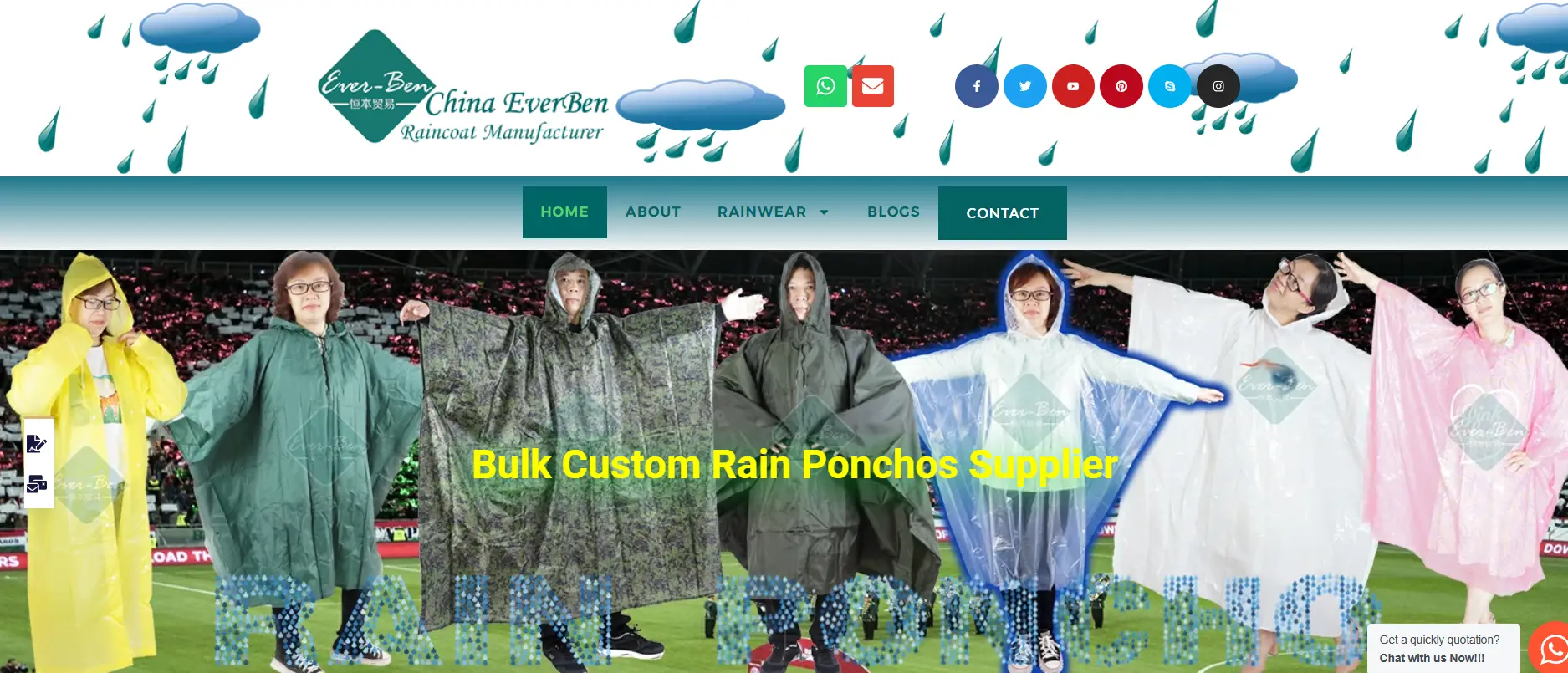
9. Poncho Supplier - Custom Rain Poncho and Raincoat Supplier
Poncho Supplier focuses on custom rain ponchos, disposable raincoats, PVC ponchos, PE raincoats, PEVA rainwear, polyester ponchos, nylon raincoats, and logo-printed promotional rainwear. It is suitable for buyers who need event rainwear, emergency ponchos, outdoor promotional products, and custom packaging support.
Best for: custom rain ponchos, disposable raincoats, PVC ponchos, PE rainwear, promotional rainwear.
Buyer consideration: Check material thickness, printing method, packaging, MOQ, sample approval, and delivery time.
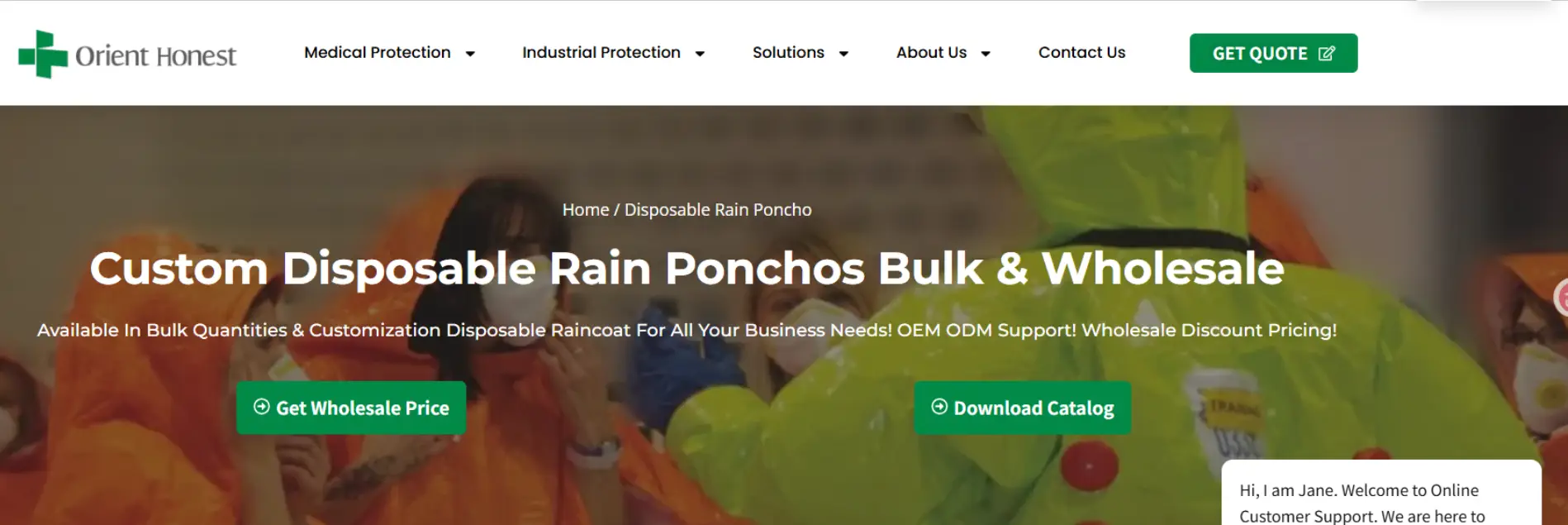
10. Orient Honest - Bulk Disposable Rain Poncho Manufacturer
Orient Honest supplies bulk disposable rain ponchos, clear plastic raincoats, PE disposable rain jackets, and wholesale rainwear with OEM/ODM support. It is more suitable for buyers sourcing lightweight event rainwear, emergency ponchos, travel rainwear, and promotional waterproof products.
Best for: disposable rain ponchos, PE raincoats, clear ponchos, event rainwear, emergency rainwear.
Buyer consideration: Confirm PE thickness, size, packing method, carton quantity, customization options, and expected use duration.
Comparison Table: Top Rainwear Manufacturers in China
| Rank | Manufacturer | Best For | Main Strength | Buyer Should Check |
|---|---|---|---|---|
| 1 | ChnRainwear | OEM rainwear, workwear, outdoor rainwear, kids rainwear | Broad customization and product coverage | Material specification, waterproof rating, sample approval |
| 2 | Shieldrain | Ponchos, waders, raincoats, waterproof outdoor gear | Wider waterproof product mix | Product category fit, waterproof testing, size range |
| 3 | Chenyuan Raincoat | PVC raincoats, rain suits, ponchos | Long-term raincoat production experience | PVC flexibility, coating thickness, seam quality |
| 4 | Fuzhou Uniontex Garments | PU raincoats, OEM rainwear, lightweight waterproof garments | PU rainwear and OEM/ODM support | PU coating quality, waterproof rating, seam construction |
| 5 | Puraincoat | PVC workwear, industrial rainwear, heavy-duty raincoats | Heavy-duty waterproof clothing focus | Comfort, compliance, coating performance, application fit |
| 6 | Zhengyu Rain Gear | OEM raincoats, rain suits, ponchos, customized rainwear | OEM raincoat production | Batch consistency, packaging support, export experience |
| 7 | Hangzhou Yanli Rainwear Co., Ltd. | EVA ponchos, PVC raincoats, PU rainwear, rain suits, children’s rainwear | Multi-material rainwear product range | Sample quality, waterproof rating, odor control, product specialization |
| 8 | Ginwen | Waterproof jackets, outdoor jackets, padded rainwear, OEM outerwear | Apparel-style waterproof garment development | Rainwear vs outerwear specialization, fabric and pattern capability |
| 9 | Poncho Supplier | Custom rain ponchos, disposable raincoats, promotional rainwear | Custom poncho production and logo-printed rainwear | Material thickness, printing method, MOQ, packaging, delivery time |
| 10 | Orient Honest | Disposable rain ponchos, PE raincoats, clear ponchos, event rainwear | Bulk disposable poncho and lightweight rainwear supply | PE thickness, sizing, packing method, carton quantity, use duration |
What Buyers Should Check Before Choosing a Rainwear Manufacturer in China
Factory or Trading Company?
A factory is usually stronger when the buyer needs long-term OEM development, custom fabric selection, sample revisions, production control, and repeat-order consistency. A trading company may be useful when buyers need mixed products, small volumes, or sourcing convenience.
Neither option is automatically better. The key is fit. If you need a custom rain jacket with specific fabric, logo, packaging, and waterproof construction, a rainwear factory in China may be more suitable. If you need different waterproof accessories from many categories, a trading company may help coordinate.
The safest approach is to ask direct questions: Who controls production? Can samples be revised? Can the supplier provide production photos? Can they explain seam construction? Can they confirm material specifications? Can they support final inspection?
Material Options
Material selection decides much of the final product performance. PVC, PU, EVA, polyester, nylon, and coated fabrics all serve different purposes.
PVC is often used for stronger waterproof barrier products. PU is often chosen for softer and lighter rainwear. EVA is common in lightweight ponchos. Polyester and nylon shells are often used for jackets, padded workwear, and outdoor rainwear.
Buyers should choose material based on target market and use condition. A school raincoat, a fishing rain suit, a construction work jacket, a festival poncho, and an outdoor rain jacket should not use the same evaluation standard.
Waterproof Rating
Waterproof claims should be tested, not guessed. Some suppliers may describe a product as waterproof without explaining the test method or expected performance level. This is risky for B2B buyers.
When waterproof performance matters, buyers should understand hydrostatic head for rainwear. Hydrostatic head helps measure how much water pressure a fabric can resist before leakage. It is not the only factor, but it gives buyers a more objective way to compare waterproof materials.
However, waterproof rating alone is not enough. A rainwear product also depends on seam sealing, zippers, closures, hood structure, cuffs, storm flaps, and garment design.
Seam Construction
A common mistake in rainwear sourcing is focusing only on fabric. Fabric may be waterproof, but the finished garment can still leak through seams.
For PVC and certain coated waterproof fabrics, welding can help reduce leakage risk when properly applied. For other fabrics, seam tape, stitching quality, or construction design may be more important.
Fabric waterproofing should be evaluated together with seam construction, because high-frequency welding for rainwear can play an important role in improving rainwear performance when the fabric and seam process are compatible.
OEM Customization
A professional custom rainwear manufacturer should support more than basic color changes. Buyers may need custom logos, private labels, packaging, size charts, reflective tape, zipper selection, hood shape, ventilation design, pocket structure, storm flaps, elastic cuffs, snap buttons, and fabric changes.
For private-label buyers, customization should be confirmed during sampling. Logo size, position, printing method, label material, carton marking, and packing ratio should be approved before bulk production. Small mistakes in these details can create big problems when thousands of garments arrive at the warehouse.
Compliance and Export Documents
Compliance requirements vary by market. Buyers selling to Europe, North America, or major retail channels may need to consider REACH, PFAS-related requirements, phthalates, azo dyes, CPSIA for children’s products, CA Prop 65, or other restricted substance rules.
A supplier does not need every certificate for every order. But a professional supplier should understand documentation requests and be able to discuss testing needs before production.
Buyers should avoid vague claims such as “all certificates are available” unless the documents are real, current, and relevant to the product. Compliance is not decoration. It is a border-crossing survival tool.
Sampling and Bulk Production Consistency
A good sample does not automatically guarantee a good bulk order. Buyers should approve the correct sample, keep a reference sample, and confirm what will be matched during production: fabric, coating, color, logo, size, accessories, packaging, and workmanship.
For large orders, buyers should request a pre-production sample before mass production. Final inspection should check measurements, waterproof details, seam quality, stains, packaging, labeling, and carton marks.
This is especially important for repeat orders. If batch one and batch two look different, the buyer may face complaints from retailers, distributors, or end users.
Common Mistakes Buyers Make When Sourcing Rainwear from China
Mistake 1: Choosing the Lowest Quotation Without Checking Fabric Weight
A low price may come from thinner fabric, weaker coating, cheaper accessories, or reduced inspection. Buyers should ask for fabric weight, material composition, coating type, and sample testing before comparing prices.
Mistake 2: Ignoring Waterproof Testing
“Waterproof” is not a complete specification. Buyers should ask how the material is tested and whether the finished garment construction supports the claimed waterproof performance.
Mistake 3: Forgetting Seam Sealing or Welding
Many rainwear failures happen at the seam. If seams are not sealed, welded, or properly constructed, water may enter even when the fabric is waterproof.
Mistake 4: Not Confirming Logo and Packaging Details Before Sampling
Logo size, print color, label position, carton marks, and packaging style should be confirmed before production. These details affect retail presentation and brand consistency.
Mistake 5: Using One Supplier for Every Rainwear Product Type
A factory that makes excellent promotional ponchos may not be the best choice for insulated waterproof work jackets. A supplier that makes PU jackets may not be strongest in PVC rain suits. Match the supplier to the product type.
Mistake 6: Skipping Final Inspection
Rainwear defects are often visible before shipment if inspection is done properly. Buyers should check stitching, welding, seam tape, zippers, snaps, stains, measurements, printing, labels, and packaging.
Buyer Decision Guide: Which Rainwear Manufacturer Should You Choose?
| Buyer Need | Choose This Supplier Type | Reason |
|---|---|---|
| Custom rain jackets | OEM rainwear manufacturer | Better support for style, logo, color, and sizing |
| Industrial workwear rain suits | Industrial rainwear manufacturer | Stronger focus on durability and waterproof construction |
| Promotional ponchos | Promotional poncho supplier | Better fit for fast production and compact packaging |
| Outdoor rain jackets | PU or functional jacket supplier | Better comfort, design, and retail styling |
| Kids rainwear | Kids rainwear factory | Better sizing, print design, and safety considerations |
| PVC raincoats | PVC raincoat manufacturer | Stronger waterproof barrier and easy-clean performance |
| Private-label launch | Custom rainwear manufacturer | Supports branding, sample development, and packaging |
| Wholesale distribution | Established rainwear factory | Better batch consistency and repeat-order reliability |
Why ChnRainwear Is a Strong Option for B2B Rainwear Buyers
ChnRainwear is a strong option for buyers who need OEM rainwear support rather than only a standard product catalog. The company’s product direction covers custom rain jackets, rain suits, ponchos, workwear rainwear, kids rainwear, and waterproof garment programs.
Its material range also helps buyers compare PVC, PVC/POLY, PU, EVA, nylon, polyester, and other rainwear options according to application. For buyers developing industrial rainwear or heavier waterproof garments, this article on PVC coated polyester for industrial gear can also support material selection when durability, waterproof performance, and coating structure matter.
Broad Rainwear Product Coverage
ChnRainwear can be considered by buyers sourcing multiple rainwear categories, including rain jackets, rain suits, ponchos, kids rainwear, outdoor rainwear, and workwear rainwear. This is useful for distributors and brands that do not want to manage too many separate suppliers.
Multiple Material Options
Different rainwear markets require different fabrics. A workwear buyer may prefer stronger coated materials. A children’s rainwear buyer may care more about comfort, safety, and bright colors. A promotional buyer may prioritize light weight and compact packaging. A private-label brand may require a balance of appearance, hand feel, waterproofing, and cost control.
OEM and ODM Support
ChnRainwear is suitable for buyers who need OEM and ODM services, including custom colors, logo printing, sizing, fabric selection, packaging, and rainwear development. This makes it relevant for wholesale buyers, distributors, outdoor brands, workwear suppliers, and private-label companies.
Suitable for Workwear, Outdoor, Retail and Promotional Markets
One advantage of a broad rainwear supplier is market flexibility. Buyers may source industrial rainwear for wet working environments, outdoor rain jackets for retail, kids rainwear for family markets, or ponchos for events and emergency kits.
The key is to define the product goal clearly before sampling. A supplier can only recommend the right fabric and construction if the buyer explains the target user, climate, waterproof expectation, price level, and packaging channel.
What Buyers Should Still Confirm Before Ordering
Even when a supplier looks suitable, buyers should confirm material specification, waterproof rating, sample approval, MOQ, production lead time, packaging, inspection standard, and export documentation.
This is not distrust. It is professional sourcing. Clear specifications protect both buyer and supplier.
Final Recommendation: How to Shortlist Rainwear Manufacturers in China
The best rainwear manufacturers in China are not always the biggest names or the cheapest suppliers. The right choice depends on product type, target market, material requirement, waterproof expectation, customization needs, compliance requirements, and production timeline.
For industrial rainwear, buyers should prioritize fabric durability, seam construction, and waterproof performance. For outdoor jackets, comfort, design, and functional details matter more. For kids rainwear, safety, sizing, and restricted substances deserve attention. For promotional ponchos, cost, packaging, and fast delivery may be more important.
ChnRainwear can be shortlisted as a strong option for B2B buyers who need OEM rainwear, custom waterproof garments, workwear rainwear, kids rainwear, ponchos, and wholesale rainwear support from China. The smartest buying approach is to define the product use first, compare suppliers second, test samples third, and place bulk orders only after the specification is clear.
Good sourcing is not about finding a supplier that says “yes” to everything. It is about finding a manufacturer that understands what should be checked before saying yes.
PREGUNTAS FRECUENTES
1. Who are the best rainwear manufacturers in China?
The best rainwear manufacturers in China depend on the buyer’s product type and market. Some suppliers are stronger in PVC raincoats and rain suits, while others focus on PU rain jackets, kids rainwear, promotional ponchos, waterproof workwear, or private-label outdoor garments. Buyers should compare factory capability, material options, waterproof testing, seam construction, OEM customization, quality control, export experience, and product category fit before choosing a supplier.
2. How do I choose a rainwear manufacturer in China?
To choose a rainwear manufacturer in China, buyers should first define the product application, target market, material requirement, waterproof level, quantity, customization needs, and compliance expectations. Then they should compare suppliers based on factory capability, sample development, fabric options, seam quality, logo and packaging support, delivery time, inspection process, and communication. A supplier that understands the product application is usually safer than one that only offers the lowest price.
3. Is China a good place to source OEM rainwear?
Yes, China is a strong sourcing base for OEM rainwear because it has a mature supply chain for coated fabrics, garment production, accessories, packaging, printing, and export logistics. Buyers can source rain jackets, rain suits, ponchos, PVC raincoats, PU rainwear, waterproof workwear, and kids rainwear from Chinese suppliers. However, buyers should verify samples, material specifications, waterproof testing, quality control, and compliance documents before bulk production.
4. What materials are commonly used by Chinese rainwear factories?
Chinese rainwear factories commonly use PVC, PVC/POLY, PU-coated polyester, EVA, nylon, polyester, TPU-coated fabrics, and other waterproof materials. PVC is often used for stronger waterproof barrier products, PU is commonly selected for softer and lighter rainwear, EVA is often used for ponchos, and polyester or nylon shell fabrics are used for jackets and outdoor rainwear. The best material depends on product use, comfort level, waterproof requirement, and target market.
5. What is the difference between PVC and PU rainwear?
PVC rainwear usually provides a stronger waterproof surface and is often used for rain suits, PVC raincoats, industrial rainwear, and easy-clean waterproof garments. PU rainwear is usually softer, lighter, and more comfortable, making it suitable for rain jackets, work jackets, outdoor rainwear, and consumer-facing waterproof clothing. Neither material is always better. Buyers should choose PVC when durability and waterproof barrier performance matter more, and PU when comfort and lighter wear are more important.
6. What should I check before placing a bulk rainwear order?
Before placing a bulk rainwear order, buyers should check fabric composition, fabric weight, coating type, waterproof rating, seam construction, zipper quality, snap buttons, hood design, size chart, logo method, color standard, packaging, carton marks, MOQ, lead time, inspection standard, and compliance documents. Buyers should approve a pre-production sample before mass production and keep a reference sample for final inspection.
7. Can Chinese rainwear manufacturers support private label orders?
Many Chinese rainwear manufacturers can support private label orders, including custom logo printing, private labels, hangtags, packaging, carton marks, color customization, size adjustments, and style development. However, private-label buyers should confirm MOQ, sample cost, development time, logo method, packaging details, color tolerance, and inspection standards before production. Clear approval documents help avoid mistakes during bulk manufacturing.
8. What is the difference between a rainwear factory and a rainwear trading company?
A rainwear factory usually controls production directly and may offer stronger support for OEM development, material selection, sampling, quality control, and repeat orders. A trading company may offer wider product sourcing and lower MOQ flexibility by coordinating with multiple factories. For buyers needing long-term custom rainwear, a factory is often more suitable. For buyers sourcing mixed waterproof products in smaller quantities, a trading company may also be useful if quality control is reliable.
References
- Personal Protective Equipment Overview, Occupational Safety and Health Administration, OSHA
- 1910.132 General Requirements for Personal Protective Equipment, Occupational Safety and Health Administration, OSHA
- OEKO-TEX STANDARD 100, OEKO-TEX Service GmbH
- STANDARD 100 Certification for Textiles and Finished Goods, Hohenstein
- AB 1817 Product Safety: Textile Articles: Perfluoroalkyl and Polyfluoroalkyl Substances, California Legislative Information
- New York and California Bans on PFAS in Textiles and Apparel Begin January 1, 2025, Morgan Lewis
- ECHA Announces Revised Draft PFAS Restrictions under REACH, SGS SafeGuardS
- Waterproof Outerwear Manufacturing Classification, Occupational Safety and Health Administration, OSHA
- Choosing the Right Rainwear for the Right Application, Safeopedia
- Textile and Apparel Product Safety Requirements for Export Markets, SGS Softlines
Rainwear Manufacturer Selection Insight
Rainwear Manufacturer Selection Insight:Why does China remain important for rainwear sourcing? China has a mature waterproof garment supply chain covering coated fabrics, garment sewing, seam sealing, high-frequency welding, zippers, snaps, reflective trims, logo printing, private-label packaging, and export coordination. This makes China a practical sourcing base for buyers looking for rain jackets, rain suits, PVC raincoats, PU rainwear, ponchos, waterproof workwear, children’s rainwear, and OEM rainwear programs. However, supplier selection should be based on product fit, not just country advantage.
How should buyers compare rainwear manufacturers in China? A reliable evaluation should include factory capability, OEM/ODM support, material range, waterproof testing, seam construction, production capacity, sample development, quality control, communication efficiency, and export documentation. A supplier that is strong in promotional ponchos may not be the best choice for insulated work jackets. A supplier that makes PU rain jackets may not always be suitable for heavy-duty PVC rain suits. The buyer’s first job is to define the product category before shortlisting suppliers.
What options should buyers consider before placing an order? Buyers should compare PVC, PVC/POLY, PU-coated polyester, EVA, nylon, polyester, and other waterproof materials according to the final use environment. For industrial rainwear, fabric durability, seam strength, waterproof rating, and abrasion resistance are important. For outdoor rain jackets, comfort, fit, breathability, and retail appearance may matter more. For children’s rainwear, sizing, restricted substances, safe accessories, and color design should be checked carefully. For promotional ponchos, thickness, packaging, and fast delivery are usually key decision factors.
What risks should buyers avoid? The most common mistake is choosing the lowest quotation without checking fabric weight, coating type, waterproof rating, seam process, accessory quality, packaging details, and inspection standards. Another common risk is approving a nice-looking sample without confirming whether bulk production will match it. In rainwear sourcing, the real failure points are often hidden in seams, zippers, coating consistency, size tolerance, logo placement, color difference, and packaging errors. These issues can lead to leakage complaints, retail rejection, delayed shipment, and repeat-order instability.
Which type of supplier should buyers choose? Choose an OEM rainwear manufacturer if the project requires custom rain jackets, private-label packaging, logo development, or repeat production. Choose an industrial rainwear supplier if the product needs stronger waterproof construction, durable coated fabric, and workwear performance. Choose a promotional poncho supplier if the priority is compact packaging, fast delivery, and budget control. Choose a kids rainwear factory if sizing, safety, print design, and restricted substance control are major concerns. The right supplier type depends on the product’s market position, not only the product name.
What makes ChnRainwear a practical option for B2B buyers? ChnRainwear can be considered by buyers who need custom rain jackets, rain suits, ponchos, waterproof workwear, kids rainwear, and OEM/ODM rainwear support from China. Its value lies in connecting material selection, garment design, customization, and production execution. For buyers developing wholesale or private-label rainwear programs, the safest path is to confirm product use, choose the correct fabric, approve samples, verify waterproof construction, check packaging details, and define inspection standards before mass production.
Final recommendation: The best rainwear manufacturers in China should not be selected by price alone. Buyers should shortlist suppliers based on product category, material expertise, waterproof performance, seam construction, customization capability, compliance readiness, and bulk production consistency. A good rainwear manufacturer does more than produce garments; it helps buyers reduce sourcing risk, improve product reliability, and build a more stable waterproof apparel supply chain.