High-Frequency Welding for Rainwear: Why Seam Construction Matters
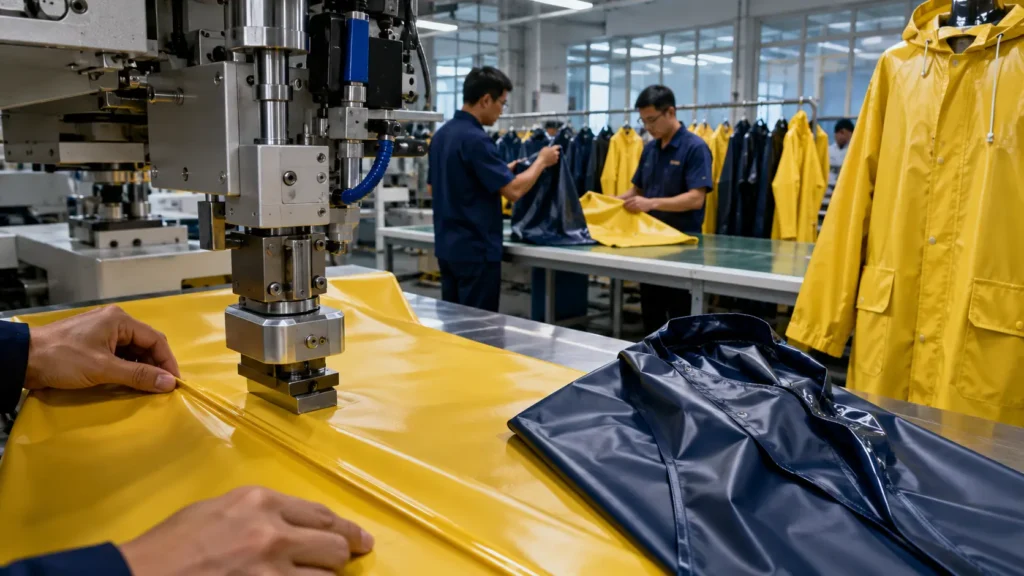
Quick Summary: High-frequency welding helps create stronger waterproof seams by bonding compatible materials through radio-frequency energy and pressure, making it especially useful for PVC rainwear, rain ponchos, industrial rain suits, waterproof workwear, and protective garments. For B2B buyers, waterproof fabric alone does not guarantee waterproof rainwear; real performance depends on rainwear seam construction, waterproof seam sealing, material compatibility, zipper protection, hood design, finished sample testing, and consistent waterproof garment production. Why Waterproof Fabric Can Still Become a Leaking Raincoat A buyer may choose a strong waterproof fabric, approve a promising sample, and expect the finished raincoat to perform well in real rain. The fabric may have a good waterproof rating. […]
Waterproof Rating Guide: How to Choose Hydrostatic Head for Rainwear
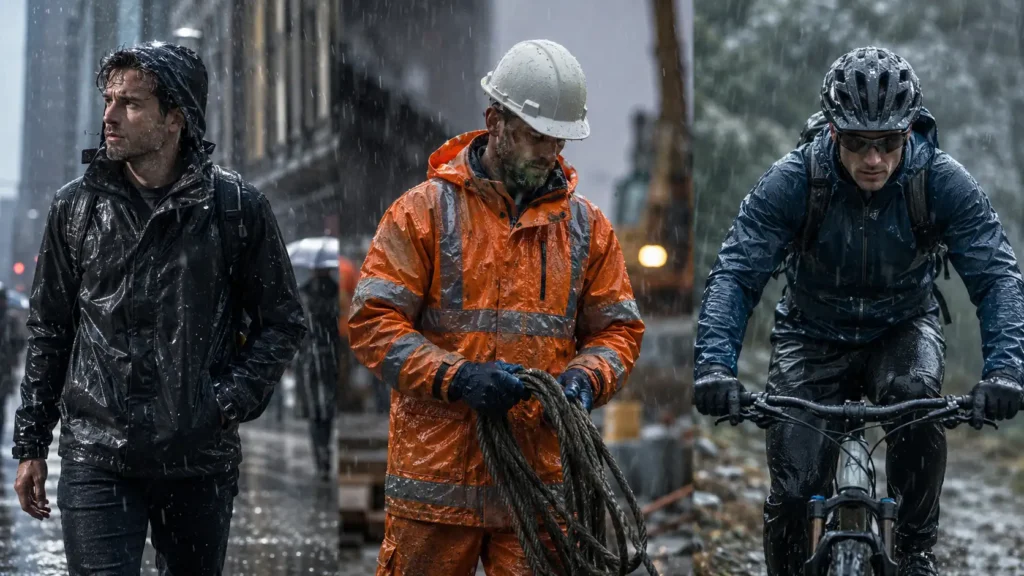
Quick Summary: Waterproof Rating measures how much water pressure a rainwear fabric can resist before leakage, usually expressed in millimeters through hydrostatic head testing. For B2B buyers, the right rainwear waterproof rating depends on product use, rain exposure, seam construction, fabric coating, breathability, compliance needs, and finished garment design. A higher number is not always better; the best rating is the one that matches the product’s real wearing scenario, target market, and bulk production requirements. Why Waterproof Rating Matters in Rainwear Procurement Many buyers see the word “waterproof” and assume the product will protect users in real rain. A common sourcing problem looks like this: a buyer confirms an 8,000mm […]
PU vs. PVC Rainwear: A Technical Comparison for B2B Buyers
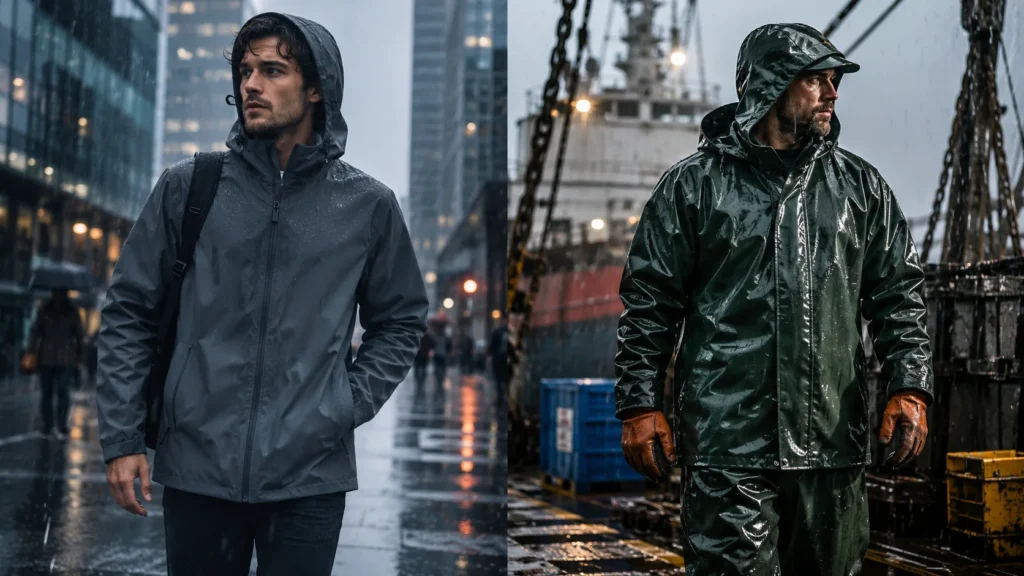
Quick Summary: PU vs PVC rainwear should be selected by product use, comfort expectation, waterproof performance, durability, compliance needs, and sourcing cost—not by material name alone. PU rainwear fabric is usually softer, lighter, and better for retail rain jackets, school rainwear, and private-label waterproof apparel, while PVC rainwear fabric is often more practical for ponchos, industrial rain suits, promotional raincoats, and heavy-duty workwear. For B2B buyers, the safest decision is to compare fabric structure, coating quality, seam method, MOQ, target market, and finished garment performance before bulk production. Why PU vs PVC Rainwear Is a Real Procurement Decision Many buyers begin a rainwear project with one simple question: “Should we […]