Industrial Gear Does Not Fail Quietly
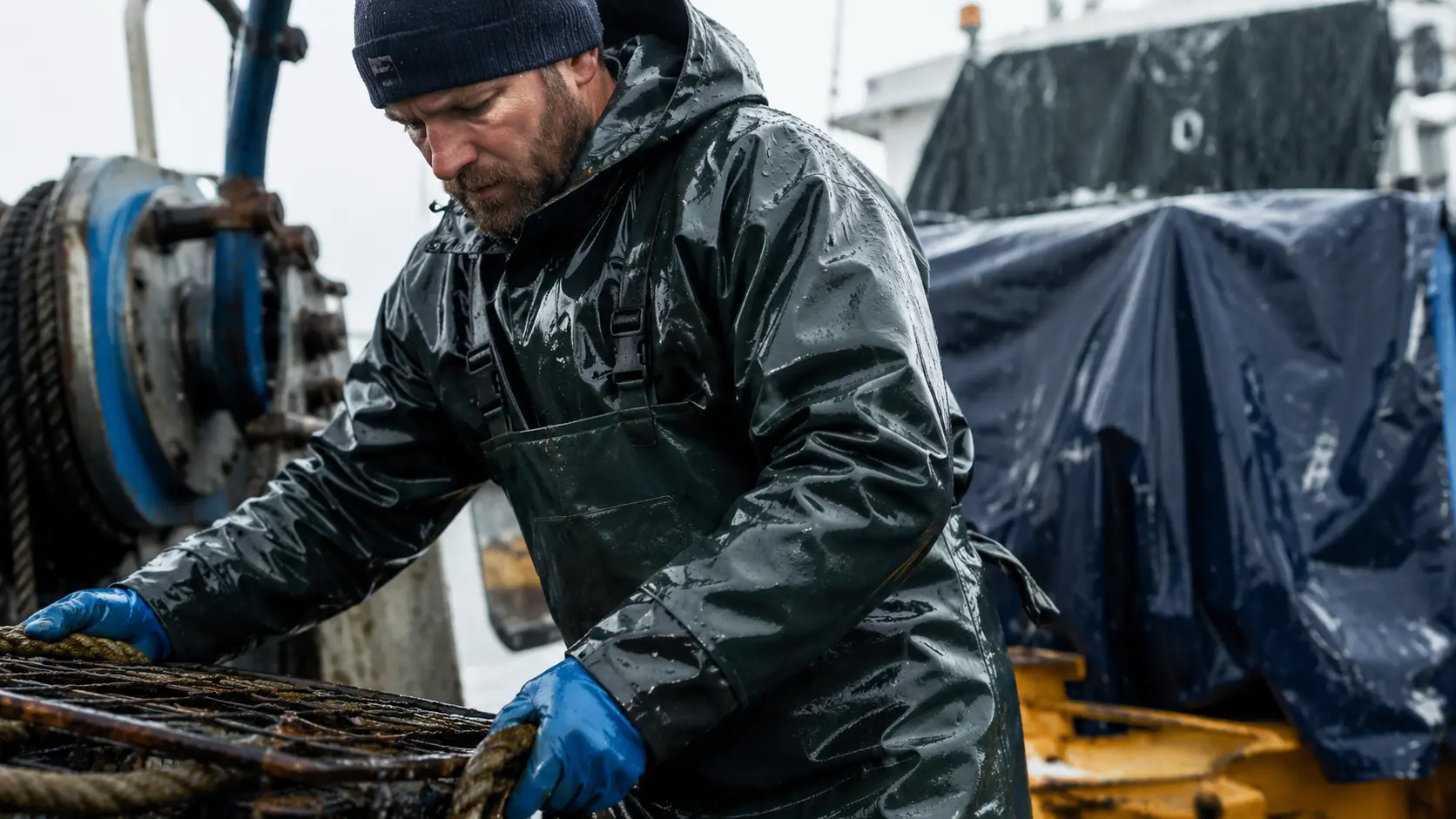
Industrial gear is different from ordinary outdoor clothing. A casual rain jacket may only need to keep someone dry during a short walk. Industrial gear must survive repeated friction, bending, oil stains, mud, water pressure, chemical splash, heavy tools, outdoor storage, temperature changes, and daily cleaning. That is a very different game.
This is where PVC coated polyester becomes important. It is not selected only because it looks waterproof. It is selected because the polyester base gives the fabric strength and dimensional stability, while the PVC coating adds a protective surface barrier that helps resist water, dirt, abrasion, and worksite contamination.
For buyers, the real issue is not whether a fabric passes a simple “waterproof” description. The real issue is whether the fabric can remain reliable after cutting, sewing, welding, folding, packing, transportation, storage, and repeated field use. Industrial fabric does not live in a showroom. It lives in warehouses, ports, factories, farms, construction sites, vehicle yards, food-processing areas, and rainy outdoor environments.
A low-grade waterproof fabric may look acceptable during sampling. The problem usually appears later: coating cracks, seams leak, the surface peels, the fabric becomes stiff, dirt becomes difficult to remove, or the finished gear loses its shape. Once that happens, the buyer is no longer dealing with a fabric issue. They are dealing with complaints, replacement costs, delayed orders, and damage to supplier trust.
That is why PVC-coated polyester fabric is widely used in industrial gear. It offers a more balanced material solution for buyers who need strength, waterproofing, cleanability, and production efficiency in one fabric system.
What Is PVC Coated Polyester?
Polyester Base Fabric Provides Strength and Structure
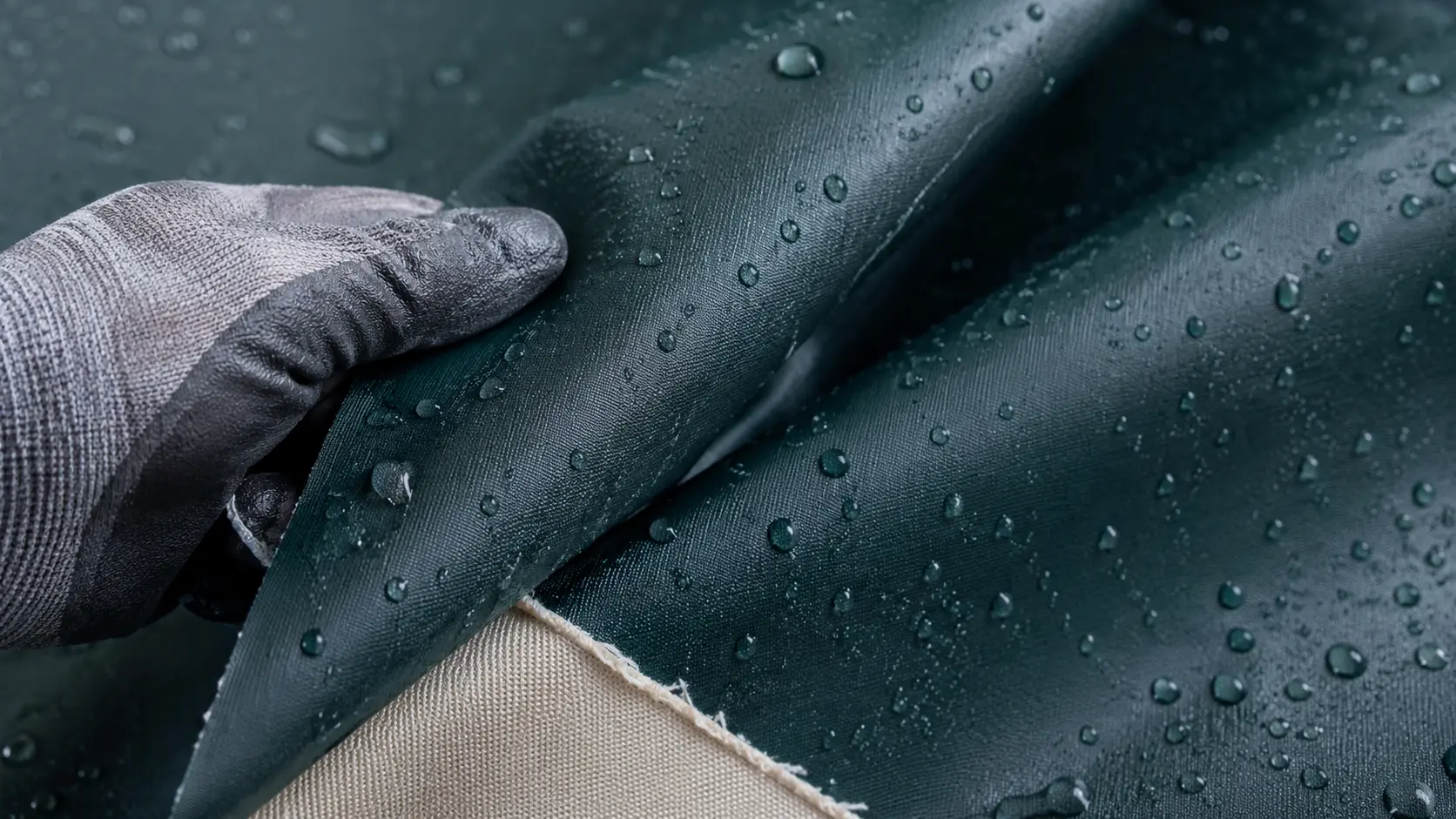
At the center of PVC coated polyester material is polyester fabric. Polyester is commonly used because it offers good tensile strength, tear resistance, dimensional stability, and resistance to stretching under normal use. In industrial applications, the base fabric matters because it carries the mechanical load.
If the base cloth is too weak, the final product may tear even when the coating looks thick. If the yarn structure is unstable, the finished gear may deform after repeated use. If the fabric density is too low, the coating may not form a stable and durable surface.
For industrial gear, polyester works well because it helps the fabric keep its shape. This matters for rainwear, protective covers, tool bags, storage covers, aprons, sleeves, and other products that must remain functional after repeated folding, pulling, and movement.
A buyer should not judge the material only by surface appearance. Two fabrics can both be called PVC coated polyester fabric, but they may perform very differently depending on yarn denier, fabric density, coating thickness, coating adhesion, surface finish, and post-treatment.
For buyers comparing coated textile options, a broader understanding of rainwear fabric sourcing can help clarify how material cost, coating type, fabric weight, and end-use conditions affect final product performance.
PVC Coating Adds a Protective Barrier
PVC coating is applied to the polyester base to create a water-resistant or waterproof protective layer. This coating helps prevent moisture penetration, reduces direct contact between the base fabric and harsh external conditions, and creates a surface that can be easier to wipe clean than untreated fabric.
For industrial gear, this coating layer is not just a “finish.” It is the working surface of the product. It faces rain, mud, oil, dust, workshop residue, cleaning water, and daily friction. A stronger coating can help extend service life and reduce product failure in demanding conditions.
This is why PVC-coated polyester waterproof fabric is often used in applications where ordinary woven fabric is not enough. It gives manufacturers a material that can be processed into finished products while still offering practical durability in real working environments.
Double-Coating Improves Functional Stability
Double-coating means the fabric receives a stronger coating structure than a basic single-coated material. In some cases, this may refer to coating on both sides. In other cases, it may refer to multiple coating layers applied to improve thickness, coverage, surface performance, and durability.
The practical benefit is simple: better protection and better consistency.
For industrial gear, PVC polyester double-coating fabric can help improve waterproofing, abrasion resistance, coating coverage, and surface cleanability. It also gives manufacturers more confidence during cutting, welding, sewing, and assembly. A fabric with unstable coating may create production problems, but a properly engineered double-coated fabric is easier to convert into reliable finished gear.
This matters for bulk buyers. A single sample may look fine, but mass production exposes every weakness. If coating thickness varies too much, if the surface scratches easily, or if the fabric does not weld consistently, production quality becomes unstable. In B2B orders, unstable production is expensive. Nobody enjoys explaining to a client why “batch two looks different from batch one.” That conversation has all the charm of stepping on a Lego.
Why Industrial Gear Needs More Than Basic Waterproofing
Waterproof Is Only the First Requirement
Many buyers start with one question: “Is it waterproof?” That is understandable, but it is incomplete.
For industrial gear, waterproofing is only one part of performance. Buyers should also consider abrasion resistance, tear strength, flexibility, coating adhesion, temperature behavior, cleaning performance, chemical exposure, seam sealing, and long-term surface stability.
A fabric may resist water during a short test but still fail when used as workwear or protective gear. For example, a fabric may be waterproof when flat but leak after repeated bending. It may resist rain but peel after friction. It may look smooth at first but become sticky, cracked, or brittle in harsh storage conditions.
That is why industrial waterproof polyester fabric must be selected based on real usage conditions, not just a label. If the gear will be used in rainy outdoor work, the fabric must handle water and movement. If it will be used around machinery, it must resist abrasion. If it will be used in food-processing or cleaning environments, it must be easy to clean. If it will be used for covers or tarps, it must resist pulling, folding, and surface wear.
When waterproof performance is a key buying factor, buyers should also understand hydrostatic head for rainwear, because a fabric’s real water resistance should be measured by testable performance rather than a simple “waterproof” label.
Industrial Gear Faces Repeated Stress
Industrial gear does not experience stress once. It experiences it repeatedly.
A rain suit may be folded and unfolded every day. A protective apron may be wiped down after each shift. An equipment cover may be pulled over sharp corners. A tool bag may rub against concrete floors, metal parts, and vehicle surfaces. A fabric cover used outdoors may face rain, dust, sunlight, and temperature changes.
This repeated stress is where heavy-duty PVC-coated polyester fabric becomes valuable. The polyester base supports strength, while the PVC surface helps protect against external wear. Double-coating can further improve durability when the application requires stronger resistance.
For manufacturers, this can reduce complaints and improve product consistency. For distributors, it can reduce after-sales risk. For end users, it can reduce replacement frequency and improve confidence in the gear.
The Cost of Choosing the Wrong Fabric Is Usually Hidden
The cheapest fabric is not always the lowest-cost fabric. In industrial gear, material failure can create hidden costs.
If a protective cover cracks too quickly, the buyer may need replacement stock. If rainwear leaks, the distributor may receive complaints. If coating peels during production, the factory loses time. If the fabric cannot pass buyer inspection, shipment may be delayed. If compliance documents are missing, the product may face market-entry problems.
This is why serious buyers often look for a reliable PVC-coated polyester fabric manufacturer rather than only asking for the lowest price per meter. Price matters, of course. Nobody is allergic to savings. But in industrial materials, the better question is: “What performance level does this price actually buy?”
A slightly better fabric can prevent larger downstream costs when the product is used in demanding environments.
Key Advantages of PVC/Polyester Double-Coating for Industrial Gear
Strong Waterproof Protection for Wet Work Environments
One of the most important reasons buyers choose PVC-coated polyester is waterproof performance. The PVC coating forms a protective surface that helps block rain, splash, and moisture from entering the base fabric.
This makes the material suitable for industrial rainwear, fishing gear, cleaning aprons, outdoor work covers, transportation covers, agricultural protection covers, and other wet-environment products.
However, waterproof performance should always be judged as a system. Fabric coating is important, but the final product also depends on seams, welding, stitching, seam tape, design structure, and stress points. A fabric can be waterproof, but a poorly constructed seam can still leak.
For this reason, manufacturers using PVC-coated polyester rainwear fabric should match fabric selection with proper seam processing. Heat welding or high-frequency welding may be suitable for some PVC-coated fabrics, depending on formulation and product design. This can help improve water resistance compared with simple stitching in certain applications.
Better Abrasion Resistance for Daily Industrial Use
Industrial gear often rubs against hard surfaces. Workers kneel, carry tools, brush against machinery, lean against vehicles, and move through narrow workspaces. Equipment covers may drag over the edges. Tool bags may sit on rough floors. Protective garments may face constant contact with belts, hoses, and work surfaces.
This is where abrasion-resistant coated polyester fabric has a practical advantage. The coating helps protect the woven polyester structure underneath and provides a more durable working surface. A stronger surface can reduce premature wear, especially in products that face daily friction.
This does not mean every PVC-coated fabric has the same abrasion resistance. Buyers should still check fabric weight, coating thickness, coating adhesion, and test data. But in general, double-coated PVC/polyester fabric is a strong option for applications where lightweight fabric would wear out too quickly.
Easier Cleaning Against Mud, Oil, and Worksite Dirt
Industrial gear gets dirty. That is not a defect; that is its job.
A useful fabric should be easy to clean. PVC-coated surfaces are often easier to wipe than untreated woven fabrics because the coating creates a smoother barrier. This can be especially useful in muddy outdoor work, fishery operations, cleaning services, food-processing environments, vehicle maintenance, and factory use.
For buyers, easy cleaning is not just about appearance. It can affect hygiene, user satisfaction, maintenance time, and product life. Gear that stays dirty or absorbs contaminants may become unpleasant to wear or difficult to reuse.
This makes chemical-resistant PVC-coated fabric and oil-resistant coated fabric options important for certain applications. Still, buyers should be careful: “chemical resistant” is not one universal standard. A fabric that resists mild cleaning agents may not resist strong acids, solvents, fuels, or industrial chemicals. For chemical-exposure applications, buyers should request test data and confirm the actual chemical environment before ordering.
Good Balance Between Flexibility and Strength
Industrial fabric must be strong, but it cannot feel like a metal sheet. If the gear is too stiff, workers may avoid using it. If covers are too rigid, they may be difficult to fold, pack, and install. If rainwear is uncomfortable, end users may complain even if the fabric is technically durable.
A well-designed PVC-coated polyester material can balance flexibility and strength. The polyester base supports the structure, while the coating provides protection. By adjusting fabric weight, coating thickness, plasticizer type, surface finish, and base yarn, manufacturers can create different fabric grades for different applications.
For example, industrial rainwear may need better flexibility and comfort. Equipment covers may need a heavier coating and tear resistance. Tool bags may need stronger abrasion resistance. Protective aprons may need a smooth cleaning performance. The same material family can be customized for different industrial gear categories.
Stable Processing for OEM Production
For factories, fabric performance during production is just as important as field performance. A good fabric should cut cleanly, weld or sew consistently, maintain stable width, resist excessive curling, and provide predictable batch quality.
This is why many OEM buyers prefer working with an experienced PVC-coated polyester fabric factory. Industrial gear production often requires repeated cutting, heat sealing, stitching, binding, logo printing, packing, and inspection. If the fabric behaves unpredictably, the factory may face more waste, slower output, and inconsistent finished products.
For wholesale buyers, production stability is a major advantage. A stable fabric can help ensure that bulk orders match approved samples more closely. It can also support repeat orders, private-label programs, and long-term supply agreements.
PVC Coated Polyester vs PU Coated Polyester vs Rubberized Fabric
Material Comparison for Industrial Buyers
Different coated fabrics serve different purposes. No material is automatically the best for every application. The right choice depends on the working environment, product design, budget range, comfort requirement, compliance requirement, and expected service life.
| Material Type | Main Strength | Best Used For | Possible Limitation | Buyer Recommendation |
|---|---|---|---|---|
| PVC-coated polyester | Waterproof, durable, easy to clean, and abrasion-resistant | Industrial rainwear, covers, aprons, tool bags, and outdoor gear | Can be heavier than PU-coated fabric | Choose it when durability and waterproof performance matter more than ultra-light softness |
| PU-coated polyester | Softer, lighter, more flexible | Lightweight jackets, casual outdoor wear, comfort-focused gear | May be less suitable for heavy abrasion or rough industrial use | Choose it when comfort and lightness are the main priorities |
| Rubberized fabric | Strong barrier performance in selected uses | Specialized protective gear and demanding barrier applications | Can be heavier and less flexible | Choose it when a specific barrier requirement is more important than weight |
| Uncoated polyester | Lightweight, breathable, cost-effective | Bags, linings, light covers, non-waterproof applications | Not suitable for strong waterproof protection | Choose it only when waterproofing is not a key requirement |
For buyers still comparing flexibility, hand feel, waterproof durability, and industrial use conditions, this technical guide on PU vs. PVC rainwear can provide a more focused material comparison before confirming the final fabric choice.
When PVC Coated Polyester Is the Better Choice
PVC-coated polyester is usually the better choice when the product must handle water, abrasion, dirt, and repeated use. It is especially practical for industrial gear where the buyer expects stronger surface protection and easier cleaning.
For example, if the product is a light promotional rain poncho, a lighter material may be enough. But if the product is industrial rainwear for construction workers, fishery workers, agricultural workers, or cleaning crews, a stronger PVC-coated polyester waterproof fabric may be more appropriate.
If the product is an equipment cover used indoors for dust protection only, a lighter coated fabric may work. But if the cover will be used outdoors, pulled over machinery, exposed to rain, and cleaned repeatedly, heavy-duty PVC-coated polyester fabric becomes a more logical choice.
If the product is a fashion jacket, PU may provide a softer hand feel. But if the product is industrial workwear, waterproof aprons, or protective covers, PVC/polyester double-coating often gives a stronger practical balance.
When Buyers Should Be Careful
PVC-coated polyester is useful, but it is not magic fabric from a superhero movie. It has limits.
Buyers should be careful when the application involves high heat, strong solvents, aggressive chemicals, flame exposure, food-contact requirements, or strict regional chemical restrictions. In those cases, the buyer should not rely on material name alone. They should request technical data, test reports, compliance documents, and application-specific recommendations.
For example, a fabric used for general rainwear may not be suitable for chemical splash protection. A fabric used for equipment covers may not be suitable for flame-retardant workwear unless the formulation is designed and tested for that requirement. A fabric promoted as “industrial grade” should still be verified with actual specifications.
This is where supplier communication becomes important. A professional custom PVC-coated polyester fabric supplier should ask about application, working environment, thickness requirement, temperature range, color, surface texture, seam process, compliance target, packaging requirement, and order quantity before recommending a fabric.
Common Applications of PVC Coated Polyester in Industrial Gear
Industrial Rainwear and Waterproof Workwear
Industrial rainwear is one of the most common applications for PVC-coated polyester rainwear fabric. Workers in construction, agriculture, logistics, road maintenance, fishing, cleaning, and outdoor utilities often need waterproof clothing that can withstand more than ordinary rain.
For this application, the fabric must balance waterproofing, flexibility, tear resistance, and comfort. If the fabric is too thin, it may tear or wear too quickly. If it is too stiff, workers may dislike wearing it. If the seams are poorly sealed, the garment may leak even when the fabric itself is waterproof.
A double-coated PVC/polyester fabric can help improve durability while maintaining a practical level of flexibility. It also supports different finishes, including matte, glossy, textured, and high-visibility colors, depending on the garment design.
Protective Aprons, Sleeves, and Coveralls
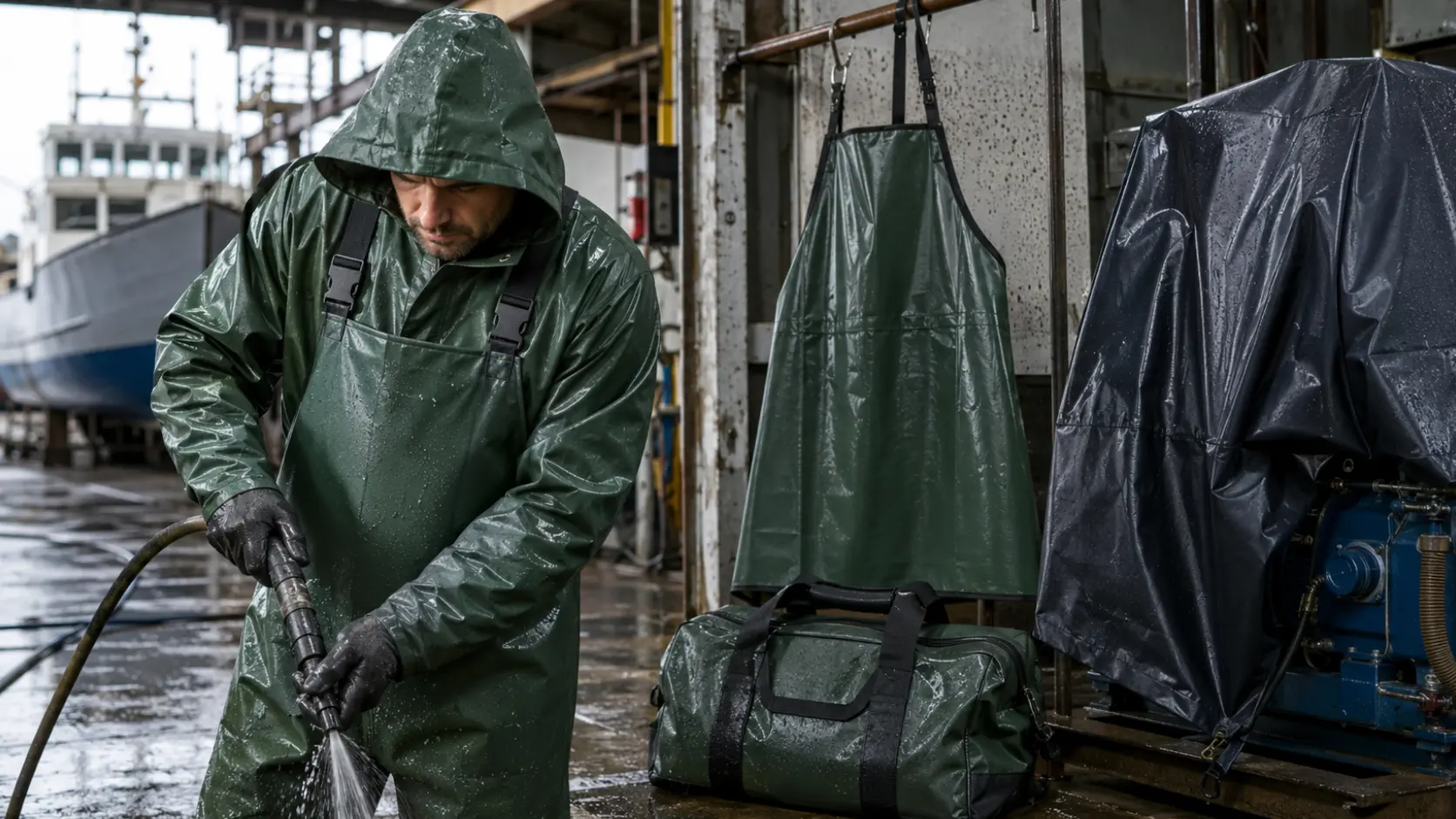
Protective aprons and sleeves are often used in cleaning, food-processing, fishery, washing, sanitation, agriculture, and light chemical environments. These products need a fabric that resists splash, dirt, and repeated wiping.
PVC coated polyester fabric is suitable for many of these products because the surface is easier to clean than untreated woven fabric. It can help prevent liquid from quickly soaking into the fabric and can provide a practical protective barrier for wet work.
However, buyers should distinguish between splash protection and certified chemical protection. If the end use involves hazardous chemicals, the buyer must confirm proper standards and testing. For general industrial splash and cleaning environments, PVC/polyester double-coating can be a practical and cost-effective solution.
Equipment Covers and Outdoor Protection
Equipment covers are exposed to friction, pulling, weather, dust, moisture, and storage pressure. A weak fabric may tear around corners or lose waterproof performance after repeated use.
This is why PVC coated polyester tarpaulin fabric is often used for machinery covers, vehicle covers, storage covers, outdoor protection covers, and industrial curtains. The polyester base provides structural strength, while the PVC coating protects against rain and surface contamination.
For outdoor applications, buyers may also need UV resistance, mildew resistance, cold resistance, and reinforced edges. Fabric weight and coating thickness should be selected according to cover size, installation method, and expected exposure.
Tool Bags, Gear Bags, and Industrial Storage Products
Tool bags and gear bags need strong fabric because they carry heavy, sharp, or irregular items. The fabric may rub against metal tools, concrete floors, vehicle compartments, and workshop surfaces.
A properly selected abrasion resistant coated polyester fabric can help improve product durability. PVC coating adds a protective layer that can resist dirt and moisture, while polyester provides strength. This makes the material suitable for work bags, emergency kits, industrial storage pouches, repair kits, and outdoor equipment bags.
For these products, buyers may also consider reinforcement points, stitching strength, zipper quality, handle strength, and bottom-panel design. Fabric is important, but product structure also decides service life.
Industrial Covers, Curtains, and Barriers
Industrial curtains and barriers may be used in warehouses, workshops, loading areas, washing stations, temporary partitions, and outdoor work zones. These products need fabric that can resist pulling, cleaning, moisture, and repeated opening or movement.
Industrial waterproof polyester fabric can be designed for this type of use. Depending on the project, buyers may request different thicknesses, colors, transparency levels, surface finishes, or flame-retardant options.
For industrial curtain production, dimensional stability and coating consistency are important. If fabric stretches, curls, or welds poorly, installation quality may suffer. A stable double-coated PVC/polyester fabric can help manufacturers produce cleaner and more consistent finished products.
What Industrial Buyers Should Understand Before Ordering
The Same Material Name Can Mean Very Different Quality Levels
One of the biggest misunderstandings in coated fabric sourcing is assuming that all fabrics with the same name are similar. They are not.
Two suppliers may both offer PVC coated polyester, but one fabric may use a stronger polyester base, better coating adhesion, thicker coating, smoother surface, better low-temperature flexibility, or more consistent batch control. Another fabric may look similar in photos but fail faster in real use.
This is why buyers should compare technical specifications rather than only photos and unit price. Important details include fabric weight, yarn denier, coating thickness, tensile strength, tear strength, waterproof rating, abrasion performance, surface finish, color fastness, temperature range, and compliance documents.
Samples Should Be Tested Like Real Products
A sample should not only be touched and photographed. It should be tested according to the intended application.
If the fabric is for rainwear, test flexibility, seam sealing, water resistance, and comfort. If it is for equipment covers, test pulling, folding, edge reinforcement, and outdoor exposure. If it is for aprons, test cleaning, splash resistance, and surface wear. If it is for bags, test abrasion, stitching strength, folding, and load-bearing structure.
A good sample approval process reduces risk before bulk production. This is especially important for wholesale PVC coated polyester fabric orders where one wrong decision can affect thousands of finished products.
A Reliable Supplier Should Discuss Application, Not Just Price
A professional supplier should not only ask, “How many meters do you need?” They should ask where the material will be used, how it will be processed, what performance is required, whether the buyer needs compliance documents, and what problems occurred with previous materials.
For example, a buyer making industrial rainwear may need a different recommendation from a buyer making outdoor machine covers. A buyer serving the European market may need different compliance support from a buyer serving a local industrial market. A buyer making high-frequency welded products may need a fabric with suitable welding performance.
This is why choosing a reliable PVC coated polyester fabric manufacturer matters. The supplier’s experience can help buyers avoid material mismatch, production waste, and unnecessary quality disputes.
The Compliance Trend: Why Coated Fabric Buyers Are Asking More Questions
Industrial fabric sourcing is no longer only about strength, waterproofing, and price. In 2026, more buyers are asking a different set of questions: What chemicals are used? Can the supplier provide compliance documents? Does the material meet the import requirements of the target market? Can the coating be supplied with safer alternatives if needed?
This matters because coated fabrics, waterproof textiles, outdoor gear, rainwear, and protective clothing are increasingly affected by chemical regulations. The most discussed topic is PFAS, a large group of fluorinated chemicals historically used in water-repellent, oil-repellent, and stain-resistant textile treatments. Buyers in Europe and North America are now more cautious about PFAS claims, chemical declarations, testing reports, and supply-chain transparency.
For PVC coated polyester, the key point is not to assume that every coated fabric has the same chemical profile. PVC coating itself is different from fluorinated water-repellent finishing, but buyers still need to understand additives, plasticizers, flame-retardant treatments, colorants, surface finishes, and any additional performance treatments applied during production.
A serious industrial buyer should not only ask, “Is this fabric waterproof?” The better question is, “Can this PVC coated polyester fabric meet the performance, safety, and documentation requirements of my market?”
PFAS Restrictions Are Changing Waterproof Textile Procurement
In the United States, California and New York began implementing restrictions on intentionally added PFAS in textiles and apparel from January 2025, with specific rules and transition timelines depending on product category. California’s rules include limits related to total organic fluorine, and New York also restricts apparel containing intentionally added PFAS, with different timelines for some severe wet-condition outdoor apparel.
In Europe, PFAS regulation is also moving forward. The European Chemicals Agency has continued work on a broader PFAS restriction proposal under REACH, and updated proposals have been discussed in recent regulatory developments. France has also introduced PFAS-related restrictions affecting textiles, footwear, cosmetics, ski waxes, and certain waterproofing agents, with implementation beginning in 2026 and broader textile restrictions planned later.
For industrial gear buyers, these regulations create a clear direction: future procurement will require better material documentation. Even when a product is not directly affected by a specific PFAS ban, major importers, brands, retailers, and industrial distributors may still request chemical declarations, third-party testing, or restricted substance compliance.
This is why a professional PVC coated polyester fabric manufacturer should be prepared to discuss chemical compliance, not only color and price. Buyers exporting to Europe, North America, Australia, or brand-controlled supply chains should ask for relevant documents before placing large orders.
PPE and Protective Gear Require Reliable Material Decisions
Industrial gear may also fall into broader workplace protection requirements depending on its use. In the United States, OSHA requires personal protective equipment to be provided, used, and maintained in reliable condition when workplace hazards make protection necessary. OSHA also states that PPE is addressed under standards for general industry, maritime, and construction, and many categories may need to meet or be equivalent to recognized standards such as ANSI.
This does not mean every PVC-coated rain jacket is automatically certified PPE. It means buyers must be careful about product positioning. A general waterproof garment, an industrial rain suit, and certified protective clothing are not the same thing. If the product is marketed for chemical protection, flame resistance, electrical safety, or certified workplace protection, the material and finished product must be tested against the proper standards.
For industrial protective fabric, this distinction matters. A fabric can be suitable for waterproof workwear but not suitable for hazardous chemical exposure. A coated apron may be useful for splash resistance in cleaning or fishery work, but it should not be promoted as chemical protective clothing unless the correct testing supports that claim.
The safest approach is simple: match the material to the real risk level. If the application is rain, mud, cleaning water, or general industrial splash, PVC coated polyester waterproof fabric may be a practical choice. If the application involves corrosive chemicals, open flame, high heat, or regulated PPE claims, buyers should request application-specific test reports and avoid vague supplier promises.
What Specifications Should Buyers Compare Before Ordering?
Fabric Weight
Fabric weight is usually measured in grams per square meter or ounces per square yard. It gives buyers a quick idea of how heavy and robust the material may feel, but it should not be used alone to judge quality.
A lightweight PVC coated polyester material may be suitable for flexible rainwear, lightweight covers, or promotional waterproof products. A heavier fabric may be better for industrial covers, protective aprons, gear bags, or outdoor equipment protection. However, a heavier fabric is not always better. If rainwear becomes too stiff or uncomfortable, end users may not want to wear it.
For industrial gear, the best fabric weight depends on the balance between durability and usability. Buyers should consider how the product will be worn, folded, cleaned, packed, and transported.
Base Fabric Denier and Construction
The polyester base fabric controls much of the strength. Denier, yarn quality, weave density, and fabric structure affect tear resistance, tensile strength, and dimensional stability.
For example, a lower-denier polyester base may be suitable for lighter rainwear. A stronger base fabric may be better for bags, covers, and industrial protection products. If the base fabric is weak, a thick PVC surface may still fail under pulling or tearing stress.
That is why buyers should ask not only for coating details but also for base fabric specifications. A reliable PVC coated polyester fabric factory should be able to explain the difference between lighter and heavier base cloth options.
Coating Thickness and Coating Adhesion
Coating thickness affects waterproofing, abrasion resistance, surface durability, and hand feel. A thicker coating may improve durability, but it may also increase stiffness and weight. A thinner coating may improve flexibility but may reduce long-term resistance in harsh environments.
Coating adhesion is just as important. If the PVC layer does not bond well with the polyester base, peeling or delamination may occur during folding, washing, friction, or production. This is one of the most common hidden quality problems in low-grade coated fabric.
For bulk orders, buyers should ask whether the supplier can provide coating adhesion testing or at least support sample testing before production. This is especially important for custom PVC coated polyester fabric used in high-volume industrial gear.
Surface Finish
Surface finish affects both appearance and function. Glossy PVC-coated fabric may be easier to wipe and visually bright. Matte finish may look more professional and reduce glare. Textured finish may improve grip or reduce surface scratches. Some applications may require embossed patterns, anti-slip surfaces, high-visibility colors, or printed branding.
Surface finish also affects product positioning. Industrial rainwear may need bright safety colors. Equipment covers may need darker colors that hide dirt. Aprons may need smooth surfaces for cleaning. Bags may need textured surfaces for abrasion resistance and appearance.
A good supplier should recommend finish options based on end use, not only aesthetics.
Waterproof Performance
The word “waterproof” is often used too casually. Buyers should ask how waterproof performance is measured and whether the test method matches the application.
For rainwear, the fabric must resist rain and movement. For covers, the fabric may face standing water, wind-driven rain, or repeated folding. For aprons, the fabric may face splash and cleaning water. Each application has different stress conditions.
The final waterproof result also depends on seams, zippers, closures, welding, stitching, design, and reinforcement. A fabric roll can perform well, but a finished garment or cover can still fail if seam construction is poor.
For this reason, buyers should treat PVC coated polyester waterproof fabric as one part of the waterproof system, not the entire system.
Tear Strength and Tensile Strength
Tear strength shows how well the fabric resists ripping once damage begins. Tensile strength shows how well it resists pulling forces. Both are important in industrial gear.
A tool bag may fail at stress points if tear strength is low. A cover may rip near reinforced edges if tensile strength is weak. Rainwear may tear around knees, elbows, or closures if the fabric is too light for the job.
Buyers should compare these values when ordering heavy duty PVC coated polyester fabric for demanding applications.
Temperature Flexibility
Temperature affects coated fabric performance. Some PVC-coated fabrics may become stiffer in cold environments. Others may soften under heat or become sticky if the formulation is not suitable.
For outdoor gear, cold-chain workwear, fishery clothing, winter rainwear, or equipment covers used in hot regions, temperature performance should be discussed before ordering.
A buyer serving Northern Europe, Canada, or cold industrial environments may need better low-temperature flexibility. A buyer serving the Middle East, Africa, or tropical markets may care more about heat resistance, UV resistance, and anti-mildew performance.
Common Buyer Mistakes When Choosing PVC Coated Polyester
Mistake 1: Buying Only by Price Per Meter
Price is important, but it is not the full story. A cheaper fabric may have weaker base cloth, thinner coating, unstable adhesion, inconsistent color, poor flexibility, or limited compliance support.
The consequence is usually not visible during quotation. It appears later during production or customer use. The factory may face more waste. The distributor may face more complaints. The end user may replace the product sooner.
For industrial gear, the better approach is to compare performance level, application suitability, and supplier reliability together. A slightly higher-quality PVC coated polyester fabric may reduce total cost if it prevents returns and production problems.
Mistake 2: Ignoring the End-Use Environment
Some buyers ask for “waterproof fabric” without explaining where the product will be used. That is risky.
Rainwear for construction workers is different from a light poncho. A fishery apron is different from a warehouse dust cover. A machine cover used outdoors is different from an indoor storage cover. A tool bag is different from a protective sleeve.
If the supplier does not understand the end-use environment, the recommendation may be wrong. The final product may be too thin, too stiff, too weak, too heavy, or unsuitable for cleaning.
Before ordering PVC coated polyester for industrial gear, buyers should describe the working environment clearly: water exposure, abrasion level, temperature range, chemical contact, cleaning method, product structure, expected service life, and target market.
Mistake 3: Forgetting About Seam Processing
Many waterproof product failures happen at the seams, not in the middle of the fabric.
If the product is stitched without sealing, water may enter through needle holes. If welding conditions are wrong, the seam may open. If seam tape does not match the coating, adhesion may fail. If the fabric is too stiff, seam areas may crack after repeated bending.
This is why manufacturers should select fabric based on the intended production method. For some PVC coated polyester waterproof fabric, heat welding or high-frequency welding may provide better waterproof results than stitching alone, depending on the product and coating formulation.
Buyers should ask: Will the product be sewn, welded, taped, bonded, or combined? The answer affects the correct fabric choice.
Fabric waterproofing should also be evaluated together with seam construction, because high-frequency welding for rainwear can play an important role in reducing leakage risk for PVC-coated or other weldable waterproof fabrics.
Mistake 4: Treating “Industrial Grade” as a Technical Specification
“Industrial grade” sounds strong, but it is not a complete specification. It can mean different things to different suppliers.
A proper specification should include fabric weight, base fabric, coating type, coating thickness, width, color, surface finish, waterproof rating, tear strength, tensile strength, temperature range, compliance requirement, packing method, and quality tolerance.
If a buyer only says “industrial grade,” the supplier may quote based on assumption. Assumptions are not a procurement strategy. They are tiny little traps wearing business shoes.
The better approach is to build a simple technical requirement sheet before requesting quotes from a PVC coated polyester fabric manufacturer.
Mistake 5: Not Checking Compliance Before Bulk Orders
Compliance should not be discussed after production. It should be discussed before sampling.
If the product will be exported to Europe, the United States, or brand-controlled supply chains, buyers should ask about REACH, SVHC, RoHS, PFAS-related requirements, phthalate restrictions, flame-retardant claims, and any market-specific chemical limits.
Not every product needs every document. But buyers should know what the target market requires before ordering.
A supplier that can discuss compliance early is usually safer than a supplier that only answers, “No problem.” In industrial sourcing, “no problem” is sometimes where the problem starts.
Mistake 6: Skipping Batch Consistency Checks
A sample may look excellent, but bulk fabric must match it. Batch consistency affects color, thickness, hand feel, surface finish, coating quality, and finished product appearance.
For wholesale PVC coated polyester fabric, buyers should ask about batch control, color tolerance, roll inspection, packaging, and sample retention. For private-label or long-term supply programs, approved samples should be stored and used as reference standards.
Consistency is especially important when the fabric is used for branded rainwear, industrial uniforms, safety products, or retail-ready gear.
How to Choose the Right PVC Coated Polyester Fabric
For Industrial Rainwear
For industrial rainwear, buyers should prioritize waterproofing, flexibility, seam compatibility, tear resistance, and comfort. The fabric should be strong enough for worksite use but flexible enough for movement.
A suitable PVC coated polyester rainwear fabric should not feel overly stiff. Workers need to bend, walk, carry tools, climb, and move in wet conditions. If the fabric is too rigid, the product may look durable but perform poorly in real use.
Recommended focus: medium weight, good flexibility, strong waterproof coating, stable color, suitable seam process, and optional high-visibility colors.
For Protective Aprons and Sleeves
For aprons and sleeves, the key requirements are splash resistance, easy cleaning, surface durability, and comfort during repeated use.
A smooth or semi-smooth PVC coated polyester fabric can be practical for cleaning, fishery, food-processing, sanitation, agriculture, and workshop tasks. If the application involves oils, mild chemicals, or detergents, buyers should confirm resistance based on actual exposure.
Recommended focus: smooth surface, good coating adhesion, wipe-clean performance, suitable thickness, and application-specific chemical review.
For Equipment Covers
Equipment covers need tear strength, waterproofing, UV resistance, mildew resistance, and edge reinforcement. The fabric must survive pulling, folding, outdoor storage, and repeated installation.
For this use, PVC coated polyester tarpaulin fabric or heavier coated polyester options may be more suitable than lightweight rainwear fabric.
Recommended focus: heavier base fabric, stronger coating, reinforced edge design, UV resistance if used outdoors, and proper roll width for efficient cutting.
For Tool Bags and Industrial Storage Gear
Tool bags require abrasion resistance, tensile strength, coating durability, and structural stability. The fabric must resist friction from tools, floors, vehicle interiors, and workshop surfaces.
A stronger abrasion resistant coated polyester fabric can help improve product life. However, the finished bag also depends on stitching, reinforcement, webbing, handles, zippers, and base structure.
Recommended focus: strong base cloth, textured or durable surface, good tear strength, reinforced sewing points, and color consistency.
For OEM and Wholesale Orders
For OEM buyers, the right fabric must match both product performance and production workflow. Buyers should confirm sample approval, fabric width, roll length, MOQ, color options, surface finish, logo processing, packaging, inspection standards, and lead time.
When ordering wholesale PVC coated polyester fabric, buyers should also discuss batch consistency and documentation. If the fabric will be used across multiple product lines, it may be useful to develop a standard fabric series with different weights and finishes.
Recommended focus: stable supply, custom options, clear specification sheet, compliance support, and repeat-order consistency.
How to Evaluate a PVC Coated Polyester Fabric Manufacturer
Technical Communication
A good manufacturer should ask practical questions before recommending fabric. They should want to know the product type, application environment, target market, processing method, expected durability, compliance requirement, color, thickness, and order size.
If a supplier only sends a price without asking any technical questions, the buyer should be cautious. Industrial coated fabric is not a one-size-fits-all material.
A reliable PVC coated polyester fabric manufacturer should be able to explain why one fabric is better suited than another for a specific application.
Customization Capability
Industrial buyers often need customized fabric. This may include color, thickness, width, surface texture, flame-retardant performance, anti-static treatment, UV resistance, low-temperature flexibility, logo printing, or packaging.
A professional custom PVC-coated polyester fabric supplier should be able to support product development rather than only sell standard rolls. Customization is especially useful for rainwear brands, industrial gear factories, protective clothing suppliers, outdoor product companies, and distributors serving different regional markets.
Quality Control
Quality control should include raw material inspection, coating consistency, surface inspection, thickness checking, color matching, roll inspection, and packaging control.
For large orders, buyers may also request pre-shipment inspection, sample retention, and production photos. This helps reduce misunderstandings and improves confidence before shipment.
A stable PVC-coated polyester fabric factory should understand that B2B buyers are not only buying material. They are buying predictability.
Documentation Support
For export markets, documentation support is increasingly important. Buyers may need test reports, chemical declarations, restricted substance information, technical data sheets, and material safety information, depending on the product and market.
A supplier that can provide clear documentation is more valuable than a supplier that only competes on price. This is especially true for buyers selling into Europe, North America, or regulated brand channels.
Production Capacity and Lead Time
Industrial buyers often operate under strict delivery schedules. Delayed fabric can delay finished gear, shipment, and customer delivery.
Before placing large orders, buyers should confirm production capacity, normal lead time, urgent-order handling, color availability, raw material stock, packing method, and shipping coordination.
For recurring orders, it may be useful to establish a forecast plan with the supplier. This helps reduce lead-time pressure and improves supply stability.
Practical Buyer Decision Guide
If Your Product Is Industrial Rainwear
Choose PVC-coated polyester waterproof fabric with good flexibility, stable waterproof performance, and seam compatibility. Avoid fabrics that are too stiff unless the rainwear is intended for very heavy-duty use.
If Your Product Is a Protective Apron
Choose smooth-surface PVC coated polyester fabric with easy-clean performance and suitable splash resistance. Confirm chemical resistance if the apron will contact detergents, oils, or industrial fluids.
If Your Product Is an Outdoor Equipment Cover
Choose heavy-duty PVC-coated polyester fabric with higher tear strength, stronger coating, UV resistance, and reinforced edge design. Lightweight fabric may fail too quickly outdoors.
If Your Product Is a Tool Bag or Gear Bag
Choose abrasion-resistant coated polyester fabric with a strong base cloth and durable surface finish. Do not rely on coating thickness alone; stitching and reinforcement are also important.
If Your Product Is for Europe or North America
Choose a supplier that can discuss compliance early. Ask about PFAS-related requirements, REACH/SVHC, phthalates, flame-retardant claims, and other applicable market rules before ordering.
If Your Product Is for Wholesale Distribution
Choose a PVC-coated polyester fabric manufacturer that can maintain batch consistency, color stability, roll quality, packing standards, and repeat-order availability.
Final Recommendation: Choose Based on Working Conditions, Not Just Material Name
PVC-coated polyester is essential for many industrial gear applications because it combines the structural strength of polyester with the protective performance of PVC coating. Double-coating improves the fabric’s ability to resist water, abrasion, dirt, repeated handling, and production stress.
For buyers, the most important lesson is simple: do not choose coated fabric by name alone. Choose it based on working conditions. A fabric used for industrial rainwear should not be selected the same way as a fabric used for machine covers. A fabric used for splash aprons should not be treated the same as chemical protective clothing. A fabric used in Europe or North America should be checked with compliance expectations in mind.
The right PVC coated polyester fabric can reduce failure risk, improve product consistency, support OEM customization, and make industrial gear more reliable in real working environments. The wrong fabric may save money at the beginning, but create higher costs later through complaints, replacements, delays, or compliance problems.
For B2B buyers, the smarter approach is to work with an experienced PVC-coated polyester fabric factory that understands application requirements, technical specifications, quality control, and export documentation. That is how coated fabric becomes more than a material. It becomes part of a reliable industrial gear supply chain.
FAQ
1. What is PVC coated polyester used for?
PVC coated polyester is used for industrial rainwear, waterproof workwear, protective aprons, sleeves, equipment covers, tarpaulins, tool bags, industrial curtains, outdoor covers, and other heavy-duty gear. The polyester base provides strength and shape stability, while the PVC coating adds waterproof protection, surface durability, abrasion resistance, and easier cleaning. It is commonly selected when ordinary woven fabric is not strong enough for wet, dirty, or high-friction work environments.
2. Is PVC coated polyester waterproof?
Yes, PVC coated polyester is generally designed to provide strong waterproof performance because the PVC layer forms a protective barrier over the polyester base fabric. However, the final waterproof result depends on coating thickness, coating quality, seam construction, welding or stitching method, product design, and testing standards. For industrial rainwear or covers, buyers should not only ask whether the fabric is waterproof but also confirm how the finished product prevents leakage at seams, closures, and stress points.
3. Is PVC coated polyester better than PU coated polyester?
PVC coated polyester is usually better for heavy-duty industrial gear when durability, waterproof protection, easy cleaning, and abrasion resistance are the main priorities. PU coated polyester is often softer and lighter, making it suitable for comfort-focused apparel or lightweight outdoor products. Neither material is automatically better in every case. If the product needs strong industrial performance, PVC coated polyester is often the better option. If the product needs a softer hand feel and lighter weight, PU coated polyester may be more suitable.
4. Why is double-coating important for industrial gear?
Double-coating improves the functional stability of coated fabric by increasing surface protection, coating coverage, waterproof reliability, abrasion resistance, and long-term durability. For industrial gear, the fabric must handle repeated bending, pulling, cleaning, friction, rain, mud, and worksite contamination. A stronger double-coated structure can reduce premature wear, peeling, cracking, and leakage risk when compared with weaker or single-coated materials. This is especially important for rainwear, protective aprons, equipment covers, and outdoor industrial gear.
5. Can PVC coated polyester fabric be customized?
Yes, PVC coated polyester fabric can usually be customized according to application needs. Common customization options include fabric weight, base fabric strength, coating thickness, roll width, color, surface texture, matte or glossy finish, flame-retardant options, anti-static treatment, UV resistance, low-temperature flexibility, logo printing, and packaging. For OEM and wholesale buyers, customization helps match the fabric to specific products such as industrial rainwear, equipment covers, protective aprons, tool bags, and branded workwear.
6. What should buyers check before ordering PVC coated polyester fabric?
Before ordering PVC coated polyester fabric, buyers should check fabric weight, base fabric denier, coating thickness, coating adhesion, waterproof performance, tear strength, tensile strength, abrasion resistance, surface finish, temperature flexibility, color consistency, compliance documents, MOQ, lead time, and sample approval process. Buyers should also explain the final application clearly so the supplier can recommend the right grade. Ordering only by price or appearance can lead to coating failure, poor waterproofing, production waste, or customer complaints.
7. Is PVC coated polyester suitable for industrial rainwear?
Yes, PVC coated polyester is suitable for industrial rainwear because it offers waterproof protection, surface durability, abrasion resistance, and easier cleaning. It is commonly used for rain suits, work jackets, bib pants, fishing rainwear, cleaning gear, agricultural rainwear, and outdoor utility clothing. For best results, buyers should choose the right fabric weight and flexibility, then match it with proper seam sealing, welding, or construction methods. A good fabric alone is not enough if the finished rainwear has weak seams or poor closures.
8. How do I choose a reliable PVC coated polyester fabric manufacturer?
To choose a reliable PVC coated polyester fabric manufacturer, buyers should evaluate technical communication, customization capability, quality control, sample development, batch consistency, compliance support, production capacity, and export experience. A good manufacturer should ask about the application, target market, waterproof requirements, processing method, color, thickness, and documentation needs before recommending a fabric. The best supplier is not always the lowest-priced one; it is the one that helps reduce material mismatch, production delays, and after-sales risk.
References
- PFAS in Textiles: Bans, Health Risks, and Safer Alternatives, bluesign, bluesign Knowledge Center
- New York and California Bans on PFAS in Textiles and Apparel Begin January 1, 2025, Morgan Lewis, Morgan Lewis Publications
- 2025 PFAS Regulations: The Global Landscape, Eurofins Sustainability Services, Eurofins
- 2025 PFAS Regulations: A Year of Rapid Change in Europe, Eurofins Sustainability Services, Eurofins
- ECHA Announces Revised Draft PFAS Restrictions under REACH, SGS, SGS SafeGuardS
- Personal Protective Equipment Overview, Occupational Safety and Health Administration, OSHA
- 1910.132 General Requirements, Occupational Safety and Health Administration, OSHA
- Phasing Out PFAS in the Textile Industry, SGS, SGS Softlines
- Choosing the Right Rainwear for the Right Application, Safeopedia, Safeopedia
- What Is PVC Coated Fabric, Derflex, Derflex Technical Guide
Industrial Fabric Selection Insight
Industrial Fabric Selection Insight: Why does PVC coated polyester matter for industrial gear? Because industrial gear is exposed to repeated water, friction, mud, oil, cleaning, folding, and outdoor stress. A basic waterproof textile may pass a simple water test, but it may still fail when used in rainwear, protective aprons, equipment covers, industrial curtains, tool bags, or workwear. PVC-coated polyester offers a stronger material structure by combining a polyester base fabric with a protective PVC coating layer, helping buyers achieve better waterproof protection, abrasion resistance, dimensional stability, and surface cleanability.
How should buyers evaluate this material? The correct choice should be based on real working conditions, not only the fabric name. For industrial rainwear, flexibility, seam sealing, and waterproof consistency are critical. For equipment covers, tear strength, coating thickness, UV resistance, and edge reinforcement matter more. For aprons and sleeves, smooth surface cleaning and splash resistance should be prioritized. For tool bags and storage gear, buyers should focus on abrasion-resistant coated polyester fabric, base fabric strength, and reinforcement design.
What options should be considered before ordering? Buyers can compare fabric weight, polyester base denier, PVC coating thickness, surface texture, matte or glossy finish, roll width, color, logo printing, flame-retardant options, anti-static treatment, low-temperature flexibility, and custom packaging. If the product will be sold in Europe, North America, or brand-controlled supply chains, compliance documents should be discussed before sampling, especially for PFAS-related requirements, REACH/SVHC, phthalates, and other restricted substances.
What mistakes create the highest risk? The most common purchasing mistake is choosing coated fabric only by price per meter. Low-cost material may look acceptable in photos but fail later through coating peeling, seam leakage, stiffness, color inconsistency, weak tear strength, or missing compliance documents. Another common mistake is using one fabric grade for every product type. Industrial rainwear, protective aprons, outdoor covers, and gear bags require different levels of waterproofing, flexibility, coating strength, and production compatibility.
Which buyer should choose PVC/polyester double-coating? Choose heavy-duty PVC-coated polyester fabric when the product needs long-term waterproof protection, frequent cleaning, stronger abrasion resistance, and reliable OEM production performance. Choose lighter coated fabric only when flexibility and low weight are more important than heavy-duty durability. For wholesale programs, private-label gear, and export-oriented production, working with an experienced PVC coated polyester fabric factory can reduce material mismatch, production delays, after-sales complaints, and compliance uncertainty.
Final recommendation: PVC coated polyester fabric is not just a waterproof material; it is a practical industrial textile solution for buyers who need durability, consistency, and application-specific performance. The safest purchasing path is to define the end-use environment first, confirm technical specifications second, test samples third, and then move into bulk production with a supplier that understands both material engineering and industrial gear manufacturing.